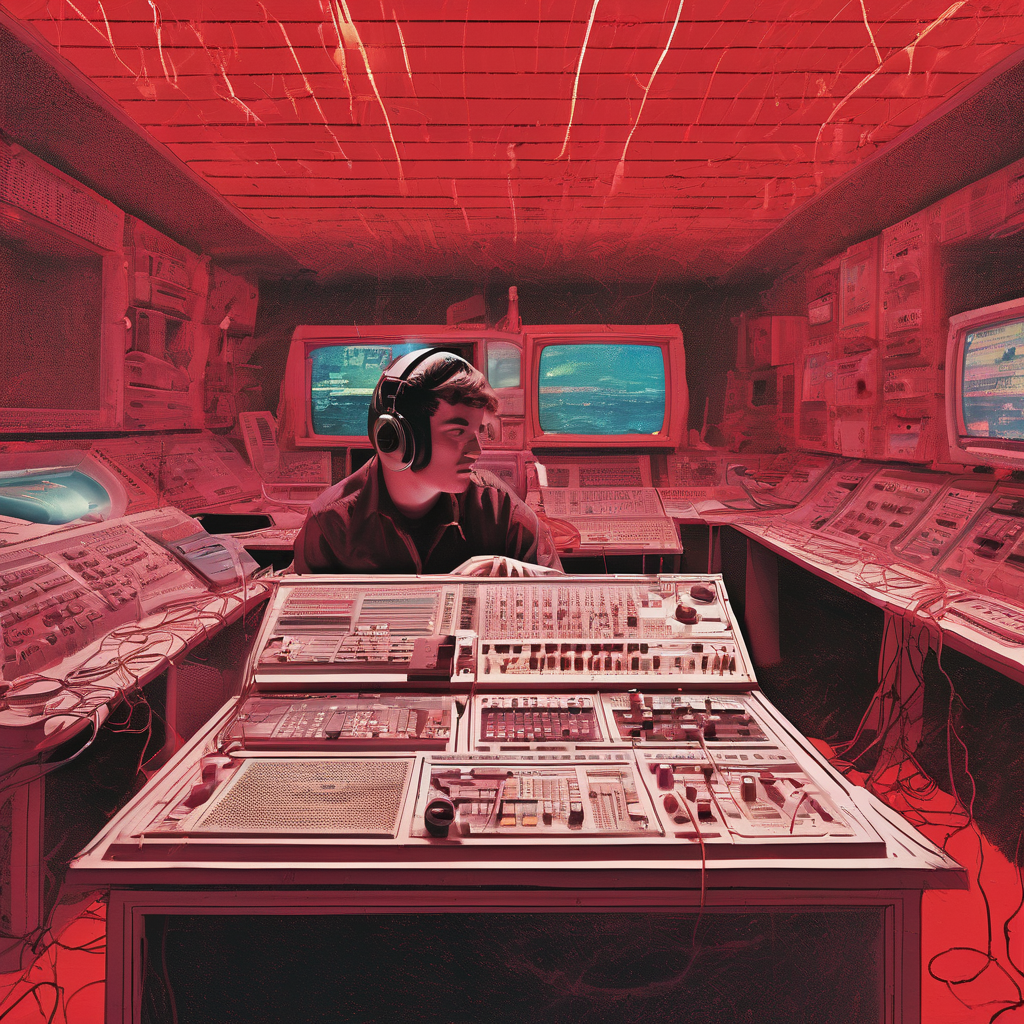
Marcus found the radio station three days after he died, though time moved differently in this place between places. The building floated on a small island of cracked asphalt, surrounded by an endless sea of television static that whispered like autumn leaves.
KLMB 97.3 FM, read the flickering neon sign. The Last Radio Station in Limbo.
Inside, a woman with moths for eyes sat behind the mixing board. She wore a vintage Eras Tour t-shirt that seemed to shimmer between decades—sometimes from the 1950s, sometimes from a future that hadn’t happened yet.
“You’re the new DJ,” she said, not a question. “I’m heading upstream.”
“Upstream?”
She gestured vaguely toward the ceiling, where instead of tiles, there was a slow-moving river of golden light. “My unfinished business finished itself. My daughter finally read the letter I hid in the cookbook. Anyway, the station’s yours now.”
Before Marcus could protest, she dissolved into a murmuration of starlings that flew straight through the walls.
The ON AIR sign blazed red.
Marcus sat down, put on the headphones, and discovered he could hear them all—every soul caught in the in-between, each one resonating at their own frequency of longing. A grandmother who died during a global health crisis, before she could hold her grandchild. A teenager who vanished while exploring abandoned places for his social media followers. A hedge fund manager who choked on sustainable lab-grown meat at a climate summit.
They were all listening.
Marcus began to understand. This wasn’t about playing music. It was about playing memories—the last songs people heard, the tunes they hummed while cooking, the melodies that played during first kisses and final breaths.
He spun the dial and found a frequency that tasted like cinnamon and sounded like his mother’s voice. When he broadcast it, seventeen souls suddenly remembered what they’d forgotten to say, and rose like smoke signals toward whatever came next.
Days passed, or maybe years. Marcus learned to read the weather patterns in the static sea—how certain storms brought in new arrivals, confused and clinging to their last moments like life rafts. He’d play specific frequencies to guide them to the station, where they could rest in the waiting room that sometimes looked like a 1940s train depot, sometimes like an airport terminal, sometimes like a ferry dock at dawn.
One night, while broadcasting a program about the danger of forever chemicals (not to the dead, who found it ironically amusing, but to the living who occasionally picked up the signal in their dreams), Marcus noticed something unusual. A listener was approaching the station on foot, walking across the static sea as if it were solid ground.
She arrived during his midnight show, wearing a sundress that belonged to no particular era and carrying a guitar case covered in stickers from places that might not exist.
“I’m not dead,” she said.
“Then how—”
“I’ve been looking for this station my whole life. Every time I thought I’d found it, it would turn out to be something else. A mirage. A regular radio station. A dream I couldn’t quite remember.”
She opened the guitar case. Inside was not a guitar but a collection of glass bottles, each one containing what looked like trapped lightning.
“These are the songs that were never written,” she explained. “The melodies that died with their composers. I’ve been collecting them.”
Marcus understood immediately. These were the phantom frequencies he sometimes caught between stations—the ghost of creativity itself, cut short.
Together, they began broadcasting the unwritten songs. Each one, when released, created a small aurora in the static sea. Some souls, hearing music they’d always meant to write, finally understood what had been keeping them tethered.
The woman—she said her name was Echo, though Marcus suspected that wasn’t quite true—became his co-host. She handled the morning show, a program called “Things Left Unsaid,” where the dead could broadcast messages that would find their way into the dreams of the living. Marcus took the evening shift, playing the last songs of extinct species, which sounded like whale song mixed with wind chimes and somehow helped lost souls navigate the static.
The station grew. Other DJs arrived—not all of them dead, not all of them alive. Some were ideas that had gained sentience. Others were fictional characters whose authors had loved them too much to let them disappear completely.
Marcus learned that limbo wasn’t a waiting room but a broadcasting center, transmitting signals between all the states of being. Every unresolved ending, every abandoned story, every discontinued product that someone had loved, every deleted scene and forgotten verse—they all resonated here at different frequencies.
During one broadcast about the conservation crisis (the dead were surprisingly invested in what happened to the living world), Marcus picked up an unusual signal. It was his own voice, broadcasting from a parallel station, in a limbo where he had never died at all.
“Don’t answer it,” Echo warned. “Those frequencies lead to paradoxes.”
But Marcus was already turning the dial, already tuning in to the sound of his other self, speaking into another microphone, in another station, floating on another island in another sea of static, where all the songs played backward and every ending was also a beginning.
The ON AIR sign flickered between red and green, between was and wasn’t, between then and now.
And somewhere, in a car driving through the night, a living person caught the signal for just a moment—long enough to hear a song they’d forgotten they knew, long enough to remember something important, long enough to change the direction they were driving.
The last radio station in limbo broadcast on, its signal reaching through the static toward whatever came next, whatever came before, whatever was happening right now in the spaces between stations, where all the lost things waited to be found.


Leave a Reply