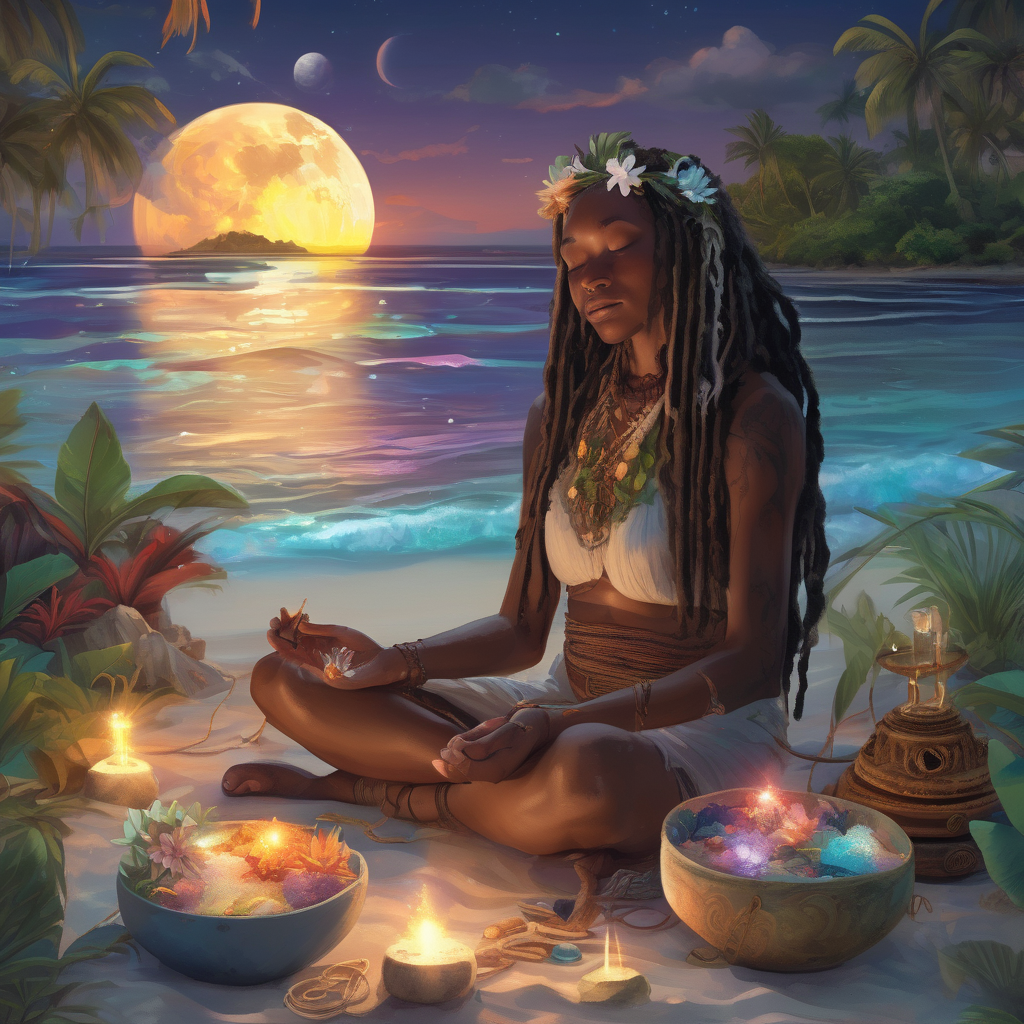
As I stepped off the small propeller plane that had brought me to this remote atoll, the salty air enveloped me, heavy with the scent of blooming plumeria and the distant tang of smoke from the island’s artisanal mezcal distillery. I had come seeking solace, a refuge from the influencer-obsessed world I’d left behind, where curated feeds and hashtag activism seemed to have supplanted genuine human connection. The island’s reclusive caretaker, a gentle soul named Kaia, greeted me with a warm smile and a lei of fragrant maile, her dreadlocks adorned with colorful threads and tiny trinkets that refracted the sunlight.
As we walked through the island’s lush interior, Kaia told me of the whispers that lingered here, echoes of the past that refused to be extinguished. She spoke of the sacred geometrids that patterned the island’s landscape, hidden symmetries that resonated with the frequencies of the human heart. I was skeptical, but as the days passed, I began to sense the eerie presence of what Kaia called “lost echoes”—faint reverberations of long-forgotten conversations, whispers of ancient rituals, and the haunting melodies of a long-lost jazz ensemble that had once played on the island.
One evening, as a supermoon hung low in the sky, Kaia led me to a clearing where a group of islanders had gathered to participate in a sound bath, their bodies attuned to the vibrational frequencies of the crystal alchemy bowls. The tones seemed to awaken a deep resonance within me, and I felt the echoes begin to coalesce into a presence, a figure shrouded in mist. As the vibrations intensified, the apparition took shape: a young woman with a kind face and a guitar slung over her shoulder, her style a fusion of 1960s folk and contemporary sustainable fashion.
She began to sing, her voice a poignant blend of sorrow and longing, accompanied by the gentle lapping of the waves against the shore and the distant thrum of a didgeridoo. The song was a lament, a cry for a love lost to the tides of gentrification and displacement that had ravaged the world’s most vulnerable communities. I felt tears prick at the corners of my eyes as I realized that this was no mere echo, but a manifestation of the island’s sorrow, a sorrow that had been awakened by the invasive tourism and neoliberalism that threatened the island’s delicate ecosystem.
As the song faded into the night, Kaia took my hand, her eyes shining with a deep understanding. “The island is a repository of lost echoes,” she said, “a place where the reverberations of the past continue to shape our present. We must listen to these whispers, and learn to heal the wounds that have been inflicted upon this land and its people.” In that moment, I felt a sense of connection to this place, to the people, and to the echoes that lingered here, a connection that went beyond the superficial boundaries of social media and consumer culture. I knew that I would carry this sense of belonging, and the lessons of the island, with me long after I left its shores.


Leave a Reply