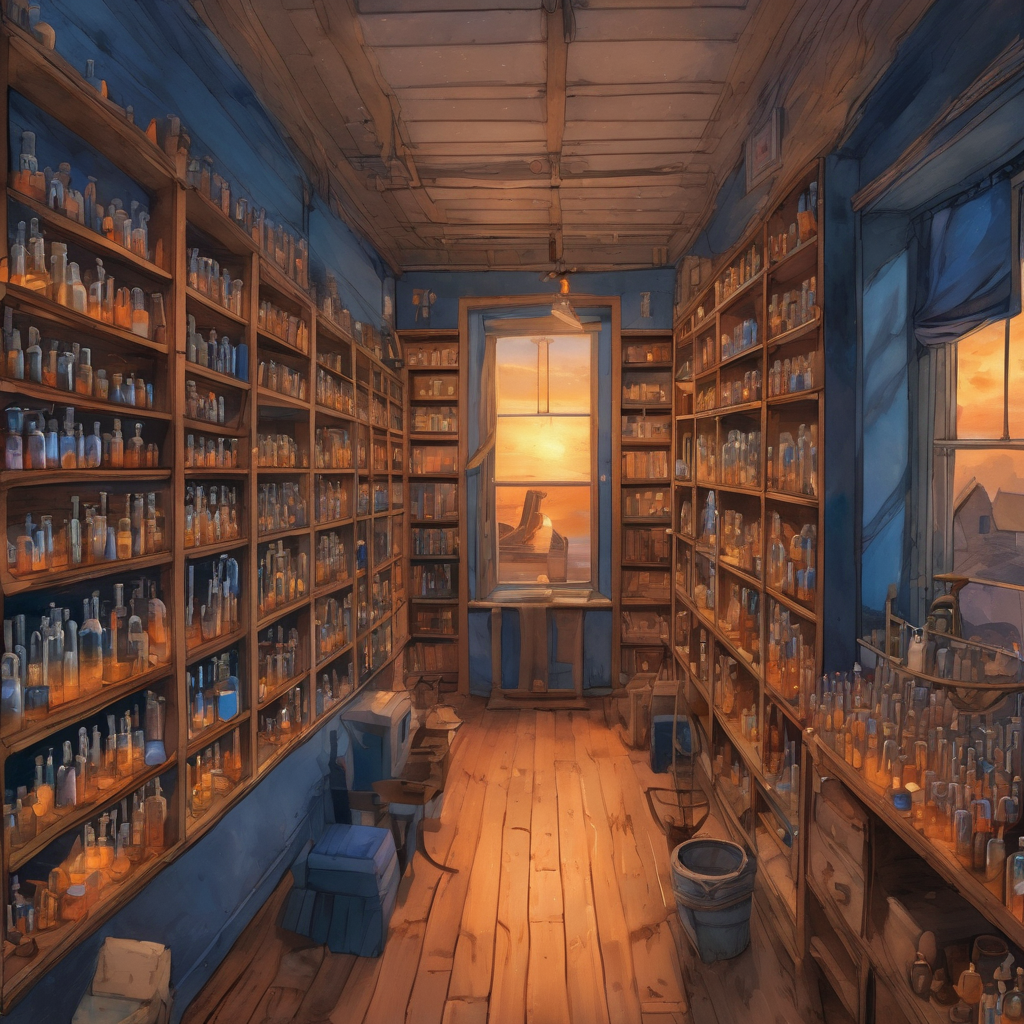
The shop smelled of cinnamon and forgotten dreams when Mira first stepped inside. Glass vials lined the walls from floor to ceiling, each one glowing with a different hue—amber for first loves, deep blue for childhood summers, silver for final words spoken to the dying.
Ezra looked up from his ledger, his fingers stained perpetually violet from handling memories of grief. “We’re closing soon,” he said, though the sun had only just begun to set.
“I heard you buy memories,” Mira said, clutching her worn coat tighter. “I need the money.”
He studied her face, noting the premature lines around her eyes, the way she held herself as if bracing against invisible wind. “What are you selling?”
“My mother’s lullabies. The taste of my grandmother’s bread. Christmas morning when I was seven.” She paused. “My wedding day.”
Ezra set down his pen. In forty years of business, he’d grown accustomed to desperation, but something in her voice made him hesitate. “Those are precious things to lose.”
“So is eating.” Mira’s laugh held no humor. “How much?”
He named his prices—generous ones, though she didn’t know that. The lullabies alone would feed her for a month. Her wedding day, with all its joy and hope intact, could keep her housed through winter.
As Ezra prepared the extraction equipment, brass tubes and crystal collectors that hummed with ancient magic, Mira wandered between the shelves. She paused before a section labeled “Final Stock—Shop Closing Forever” and felt her stomach drop.
“You’re the last one, aren’t you?” she whispered.
“People don’t want to buy memories anymore,” Ezra said, not looking up from his work. “They prefer to make new ones, or forget the old ones entirely. No one understands the value of experience distilled and preserved.”
Mira picked up a vial marked “First Time Seeing the Ocean—1847.” The memory swirled like captured seafoam. “What happens to these when you close?”
“They fade. Return to nothing.”
She thought of all the love, loss, wonder, and wisdom trapped in these bottles—lifetimes of human experience waiting to vanish. Her empty stomach cramped, but she found herself asking, “How much to buy them all?”
Ezra finally looked at her. “More than you’ll ever have.”
“What if I don’t sell my memories? What if I give them freely, and you give me these in return?”
“You’d starve.”
“Maybe. But I’d have ten thousand lifetimes to remember what bread tastes like.”
For the first time in years, Ezra smiled. He began pulling bottles from the shelves, one by one, explaining each precious moment they contained. Mira accepted them with reverence, feeling the weight of centuries settling into her bones.
When the exchange was complete, she owned every memory in the shop, and Ezra owned nothing but an empty building and profound gratitude. As he locked the door behind them, Mira was already experiencing her first borrowed moment—a child’s wonder at snowfall in 1692.
She would never taste bread again, but she would remember the joy of harvest festivals from twelve different centuries. She would know hunger, but also the satisfaction of a hundred different satisfying meals. She had become the last memory merchant, trading her own simple story for the vast complexity of human experience.
Walking into the night, her pockets full of other people’s lives, Mira finally understood wealth.


Leave a Reply