The brass key turned with difficulty, as if the lock itself had forgotten how to open. Margot pushed through the doorway of Room 14B, her fingers still tingling from the estate agent’s peculiar handshake—cold as November rain, grip like a confession.
“Previous tenant left everything,” the agent had said, already backing toward the stairs. “Furniture, books, even the plants. Though I wouldn’t trust the plants.”
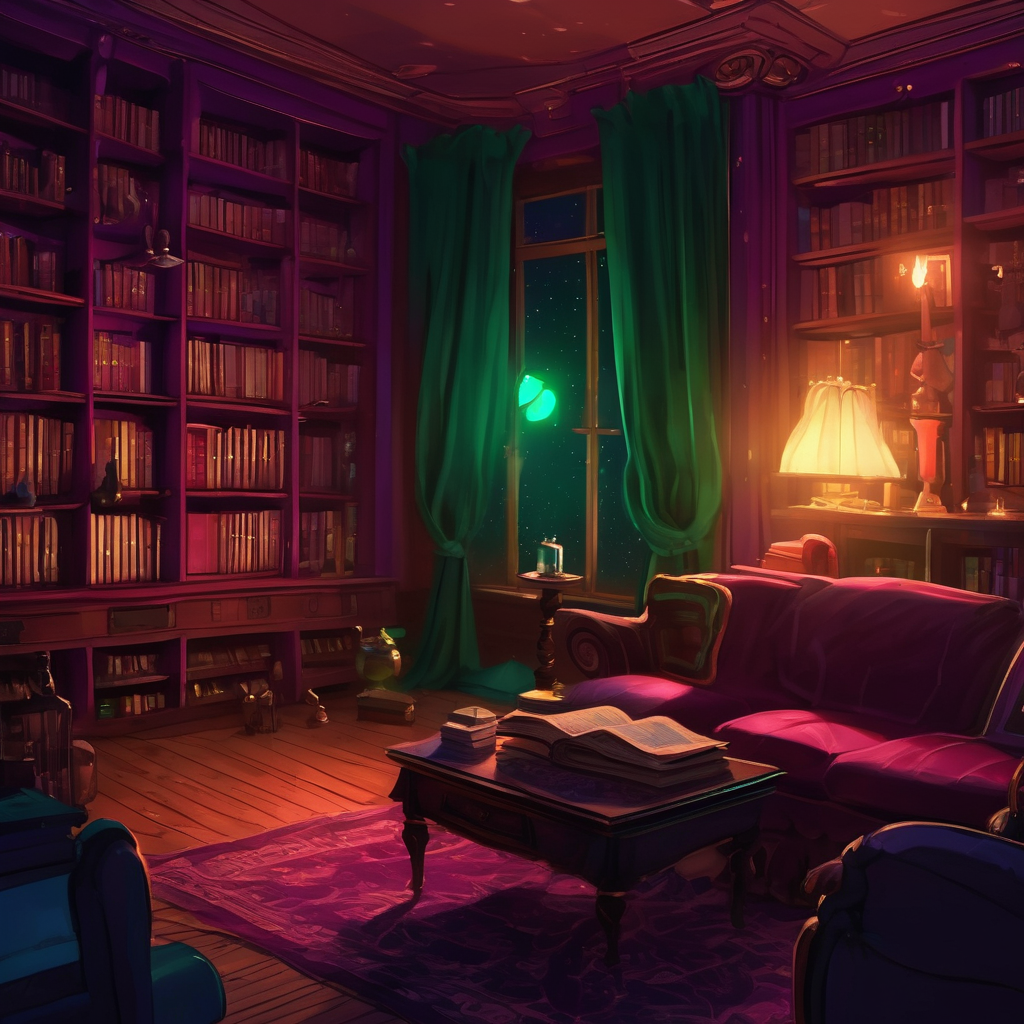
Now alone, Margot surveyed her inheritance. The apartment stretched impossibly deep, rooms opening into rooms like a paper fan. Velvet curtains the color of old wine hung from ceiling to floor, and everywhere—on mantels, shelves, nestled between leather-bound books—sat glass bottles filled with what looked like trapped aurora borealis, shifting between emerald and violet.
In the kitchen, she found a note weighted down by a pomegranate:
“The rent is already paid, but the price changes. The radiator speaks only on Tuesdays. The cat isn’t mine but arrives for dinner. Don’t open the blue door during thunderstorms.
—E.W., Tenant 1892-2024”
Margot read it twice. The dates couldn’t be right.
That first night, she dreamed of walking through walls like curtains, each room containing a different season. In the morning, her coffee mug refilled itself when she wasn’t looking, always at the perfect temperature.
The cat arrived on Wednesday—a massive thing with eyes like dropped coins. It walked through the closed door, ate from a bowl that materialized on the floor, then curled up on a chair that hadn’t been there before. When Margot tried to pet it, her hand passed through fur that felt like television static.
On Thursday, she discovered the blue door. It hummed.
The other tenants in the building avoided her gaze, except for Mrs. Chen in 14A, who slipped herbs under Margot’s door with notes: “For the dreams,” or “When the walls get thin.” The herbs smelled of places that didn’t exist—underwater forests, the inside of clouds.
The radiator did speak on Tuesday, but only in languages Margot almost understood. It told her about previous tenants: the opera singer who sang colors into existence, the mathematician who calculated himself into parallel versions, the baker whose sourdough starter had developed consciousness and now lived in the basement, benevolent but unseen.
Weeks dissolved like sugar in rain. Margot’s phone calls to the outside world grew thick with static. Friends’ voices became distant, as if speaking from the bottom of wells. The apartment learned her routines and adjusted—stairs appeared when she needed to reach high shelves, windows opened onto different views depending on her mood.
One morning, she found her reflection in the bathroom mirror was running three seconds behind. Her reflection smiled and wrote backwards on the glass: “The building chooses its tenants. We’re the antibodies.”
“Against what?” Margot asked aloud.
The reflection pointed to the blue door.
That night, thunder rolled across the city like marbles across wood. The blue door’s humming grew louder, harmonizing with the storm. Margot understood then why she’d been chosen, why the rent was paid but the price changed, why Room 14B needed a tenant who could believe in impossible things before breakfast.
She put her hand on the blue door’s handle. It was warm, pulsing with something that wasn’t quite life but wasn’t quite not. Beyond it, she could feel the thing the building was built to contain—vast, patient, older than architecture, waiting for someone to make the mistake of leaving Room 14B empty.
“Not today,” she whispered, and went to make tea in a kitchen that had already set out her favorite cup, in an apartment that had been waiting 132 years for its last tenant to arrive.
The cat, suddenly solid, rubbed against her ankles. Outside, the storm passed, and the city continued its ordinary impossibilities, unaware that Room 14B stood guard against the extraordinary ones, with Margot as its newest and final sentinel.
She added milk to her tea and watched it spiral into galaxies.


Leave a Reply