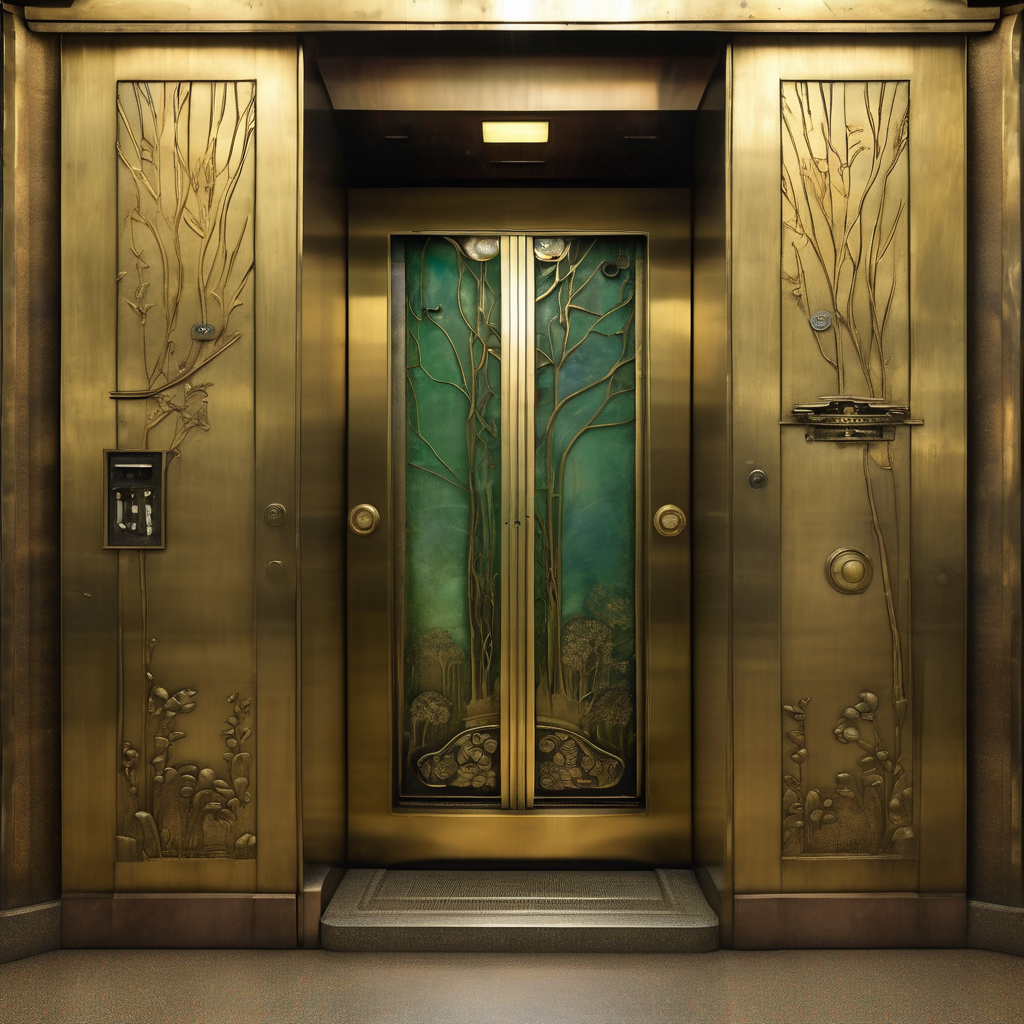
Margaret had always been obsessed with sustainable living, but she never expected her zero-waste lifestyle to lead her to a building that defied the laws of physics. The vintage elevator in the Meridian Building had brass buttons numbered one through twelve, then fourteen. She’d noticed it on her first day working at the environmental consulting firm on the eighth floor, but like everyone else, she’d simply accepted the missing thirteenth floor as an old superstition.
It wasn’t until she started her intermittent fasting routine that things became strange. On the days when she skipped lunch, dizzy from hunger, the elevator would sometimes hesitate between floors twelve and fourteen with a soft mechanical sigh. During these moments, Margaret swore she could smell something impossible—the rich, earthy scent of a garden in full bloom, mixed with the warm aroma of fresh bread.
Her coworkers dismissed it as low blood sugar hallucinations. “You need to eat more plant-based protein,” advised Janet from HR, who’d recently become evangelical about her vegan diet. “The brain needs fuel, especially when you’re doing that trendy fasting thing.”
But Margaret knew what she was experiencing was real. The building’s superintendent, an elderly man named Vincent who wore vintage band t-shirts and spoke in whispers about the building’s history, finally confirmed her suspicions on a rainy Thursday.
“You’ve been sensing it, haven’t you?” he asked as she waited for the elevator after another long day reviewing environmental impact reports. “The thirteenth floor that never existed.”
Vincent explained that the building had been constructed in 1923 by an architect obsessed with creating spaces that could exist between reality’s cracks. “He believed that human consciousness could manifest physical spaces through sheer collective will,” Vincent said, his eyes gleaming with the fervor of someone sharing a treasured secret. “But the thirteenth floor was his masterpiece—a space that could only be accessed by those whose bodies were in a liminal state.”
“Liminal?” Margaret asked, though she was beginning to understand.
“Between fed and starving, between waking and sleeping, between believing and doubting.” Vincent pressed the elevator button with a reverent touch. “Your fasting has been thinning the barrier.”
That evening, Margaret decided to test the theory. She extended her fast an extra six hours, until her consciousness felt light and untethered. When the elevator arrived, she noticed something different—a tarnished brass button had appeared between twelve and fourteen, marked with a symbol that looked like a tree growing through a keyhole.
She pressed it.
The elevator rose with unusual smoothness, as if moving through water rather than air. When the doors opened, Margaret stepped into a space that shouldn’t have existed—a vast garden floor with glass walls showing the city below, but from an impossible height. The scent that had haunted her was overwhelming now: jasmine, rosemary, and something else, something that smelled like hope itself.
The floor was populated by people from different eras, all tending to plants that grew in spiraling patterns across the space. A woman in 1920s clothing was harvesting vegetables that glowed with soft bioluminescence. A man in modern clothes was teaching a group of children how to extract medicine from flowers that bloomed in impossible colors.
“Welcome,” said a voice behind her. Margaret turned to see the architect himself, somehow still alive despite the mathematics of time. His eyes held the depth of someone who had found a way to step outside conventional existence. “We’ve been growing things here that can heal what’s broken below. Sustainable solutions that exist in the spaces between what people think is possible.”
Margaret realized she was looking at humanity’s collective unconscious made manifest—every person who had ever dreamed of a better world had somehow contributed to this space through their yearning, their fasting from the poison of cynicism, their hunger for genuine change.
“How long have you been here?” she asked.
The architect smiled, his hands covered in soil that sparkled like stardust. “Time moves differently when you’re growing hope. We’ve been cultivating answers to questions your world hasn’t learned to ask yet.”
Margaret spent what felt like hours learning about plants that could clean the air in ways science hadn’t discovered, about sustainable systems that could function through pure intention rather than technology, about communities that thrived by existing slightly outside the normal flow of time and space.
When she finally returned to the elevator, her pockets were full of seeds that felt warm to the touch and a notebook filled with ideas that seemed to write themselves.
The doors closed, and when they opened again, she was back on the eighth floor. The mysterious button had vanished, but the scents lingered on her clothes like a promise.
Margaret never spoke about the thirteenth floor directly, but her environmental consulting work became legendary. Her sustainable designs seemed to come from sources beyond conventional research, and her solutions had an almost magical effectiveness. Colleagues noticed she’d developed an unusual relationship with hunger—not as deprivation, but as a doorway to clarity.
Sometimes, late in the evening when the building was nearly empty, other employees would catch glimpses of Margaret in the elevator, pressing buttons that didn’t seem to exist, carrying the faint scent of flowers that bloomed outside of time. And occasionally, very occasionally, someone else would notice that the elevator paused a little too long between the twelfth and fourteenth floors, filling with the impossible aroma of a garden that grew in the spaces between certainty and dreams.


Leave a Reply