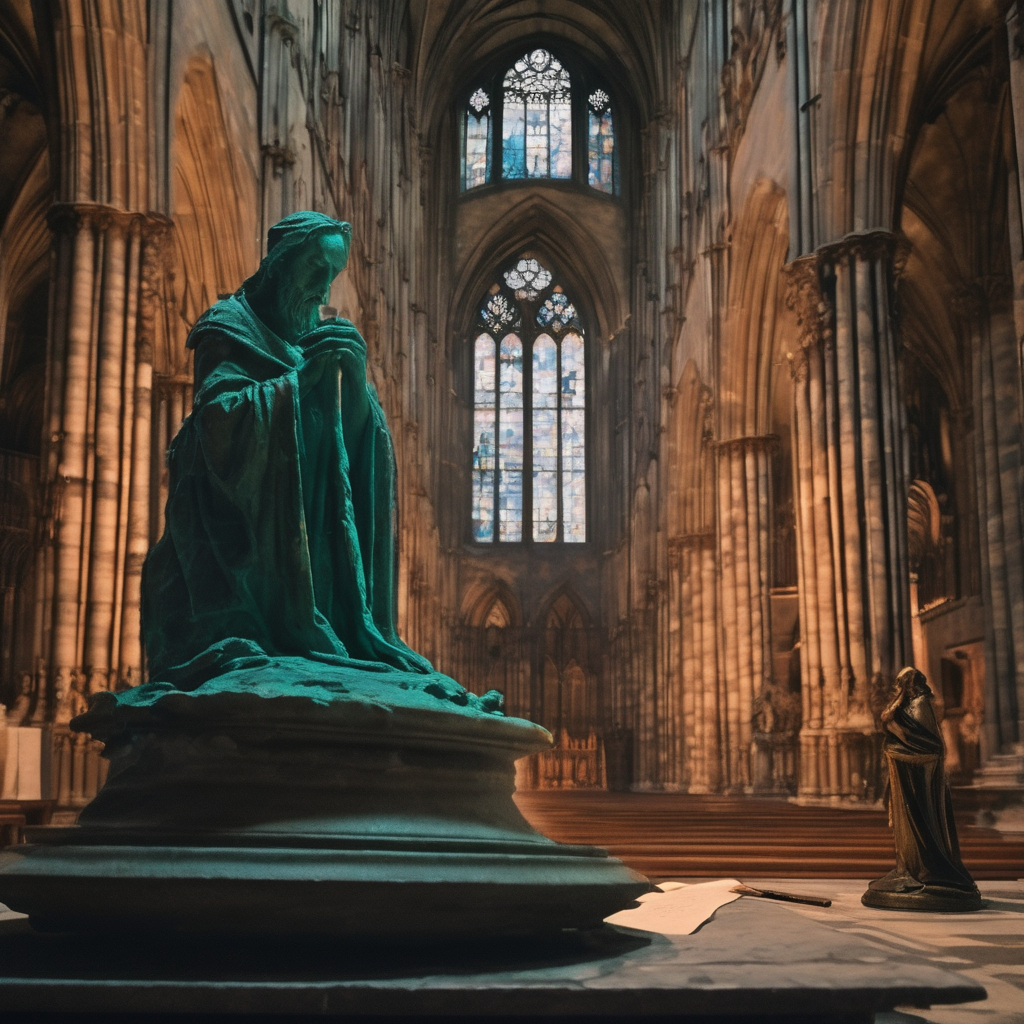
The cathedral’s shadow stretched across the cobblestones like spilled ink when Margot found the loose brick behind the statue of Saint Jerome. She’d been looking for it ever since her grandmother’s deathbed confession about the resistance network that had operated here during the occupation, back when sustainable living meant surviving on turnip soup and hope.
Inside the hollow was a brass cylinder, green with age. The paper within crackled as she unrolled it, revealing not wartime secrets but something far stranger—a love letter dated three days from now.
“My dearest L,” it began in handwriting that shifted between copperplate and something more fluid, almost alive. “The mindfulness exercises you taught me have failed. I cannot quiet my thoughts of you. Meet me where the beeswax candles never burn out, where the inclusive choir of the departed still sings matins.”
Margot’s fingers trembled. The paper felt warm, and when she held it to the fading light, she could see words appearing and disappearing in the margins like breathing: *immunity to time*, *boundaries dissolving*, *the veil wears thin in October*.
She knew she shouldn’t return the next night, but she did. And the next. Each time, a new letter waited, each more impossible than the last. They spoke of a city that existed parallel to this one, where the medieval walls had never fallen, where plague doctors distributed wildflowers instead of medicines, where the referendum to remain corporeal had failed by a single vote.
On the seventh night, she left her own message: “Who are you?”
The response came within minutes, the ink still wet: “I am everyone who ever loved here. We are the aggregate of longing, pooled like rainwater in the spiritual gutters of this place. But you—you are the first living soul to find our dead drop in three hundred years.”
Margot laughed, then cried, then wrote back: “How do I know this is real?”
The next letter contained a prediction: tomorrow, a woman would come to the cathedral wearing a blue coat lined with synthetic fur, carrying marigolds. She would kneel at the third pew and pray for her son’s recovery from an illness no doctor could name. And if Margot waited, she would see the woman’s shadow remain behind when she left, kneeling still, praying forever in that parallel place.
It happened exactly as described.
The letters grew more urgent. The boundary was weakening. The inclusive nature of death was calling to her, promising connection beyond the isolation of singular existence. All she had to do was write her name in the ancient ink they’d left for her, the kind made from crushed beetles and midnight rain.
But Margot had learned about boundaries in her own way. Her grandmother had survived the occupation by knowing when to act and when to wait, when to trust and when to run. The sustainability of the soul, she realized, meant knowing which invitations to decline.
She wrote one final message: “Thank you for the mystery. But I choose the difficult beauty of being alone and alive.”
When she returned the next night, the brick wouldn’t budge. The cathedral’s shadow had shifted, and Saint Jerome’s expression seemed different—sadder, perhaps, or simply more resigned.
But sometimes, when she passes the cathedral at dusk and sees the light falling just so, Margot swears she can see them through the windows: the transparent congregation of everyone who ever loved and lost within these walls, still writing their letters, still waiting for someone else to discover that the dead, too, need community.
She lights a beeswax candle for them when she can afford it, and walks home alone through streets that belong only to the living, grateful for the weight of her shadow, the immunity of her solitude, the referendum of each heartbeat saying yes, yes, yes to this one unrepeatable life.


Leave a Reply