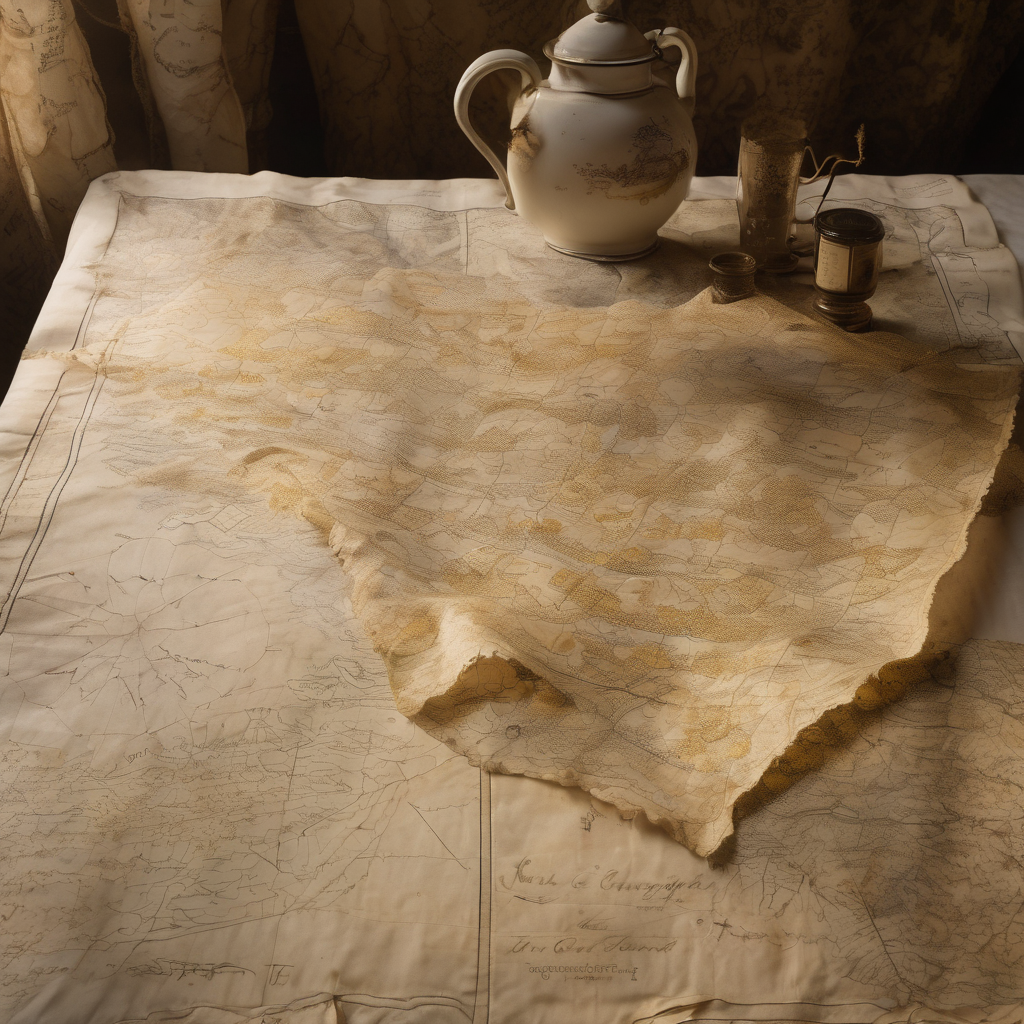
Isla pressed her fingertips against the weathered map spread across her grandmother’s kitchen table, feeling the raised ink beneath her touch. The cartographer’s mark in the corner had begun to fade, but she could still make out the signature: *E. Cartwright, Memory Cartographer, 1847*.
“Your great-great-grandfather was quite the character,” her grandmother said, settling into the chair beside her with two cups of chamomile tea. “People thought he was touched in the head, drawing maps of places that existed only in people’s minds.”
The map showed no continents or countries, no rivers or mountain ranges. Instead, delicate lines traced the geography of recollection—the winding path of a first love’s smile, the jagged coastline of childhood fears, the fertile valleys where laughter had once grown wild.
“How did he make them?” Isla asked, running her finger along what appeared to be a bridge made of golden birthday candles.
“He’d sit with people for hours, listening to their stories. Said memories had their own coordinates, their own weather patterns. Look here.” Her grandmother pointed to a cluster of storm clouds hovering over a small village. “That’s where Mrs. Henderson’s son went missing during the war. Ezra could feel the weight of her grief, map it like barometric pressure.”
Isla studied the intricate details. Tiny houses lined streets named after forgotten pets. A forest of winter mornings stretched toward a lake shaped like her great-great-grandmother’s hands kneading bread. In one corner, a carnival spun eternal, its Ferris wheel marking the spot where two teenagers had shared their first kiss during the harvest festival of 1823.
“The townspeople started commissioning them,” her grandmother continued. “Wanted their own inner landscapes documented before they forgot them entirely. Some said Ezra’s maps helped them find their way back to pieces of themselves they’d lost.”
As evening light slanted through the window, Isla noticed something peculiar. The map seemed to shimmer, and new details emerged—a railway station that smelled of her grandmother’s perfume, a lighthouse beaming across decades of Sunday dinners, a small island where every bedtime story ever told had washed ashore like sea glass.
“Grandma,” she whispered, “I think this map is still growing.”
Her grandmother smiled, her eyes bright with unshed tears. “Ezra always said memories were living things. They multiply when they’re shared, create new territories to explore.” She squeezed Isla’s hand. “Perhaps that’s why he left this one unfinished. Some maps are meant to be completed by the next generation.”
That night, Isla dreamed of taking up her ancestor’s tools—not compass and ruler, but empathy and patience, the ability to listen for the hidden geography that existed in every human heart. When she woke, she found a blank piece of cartographer’s paper on her nightstand, waiting for the first careful lines of her own design.


Leave a Reply