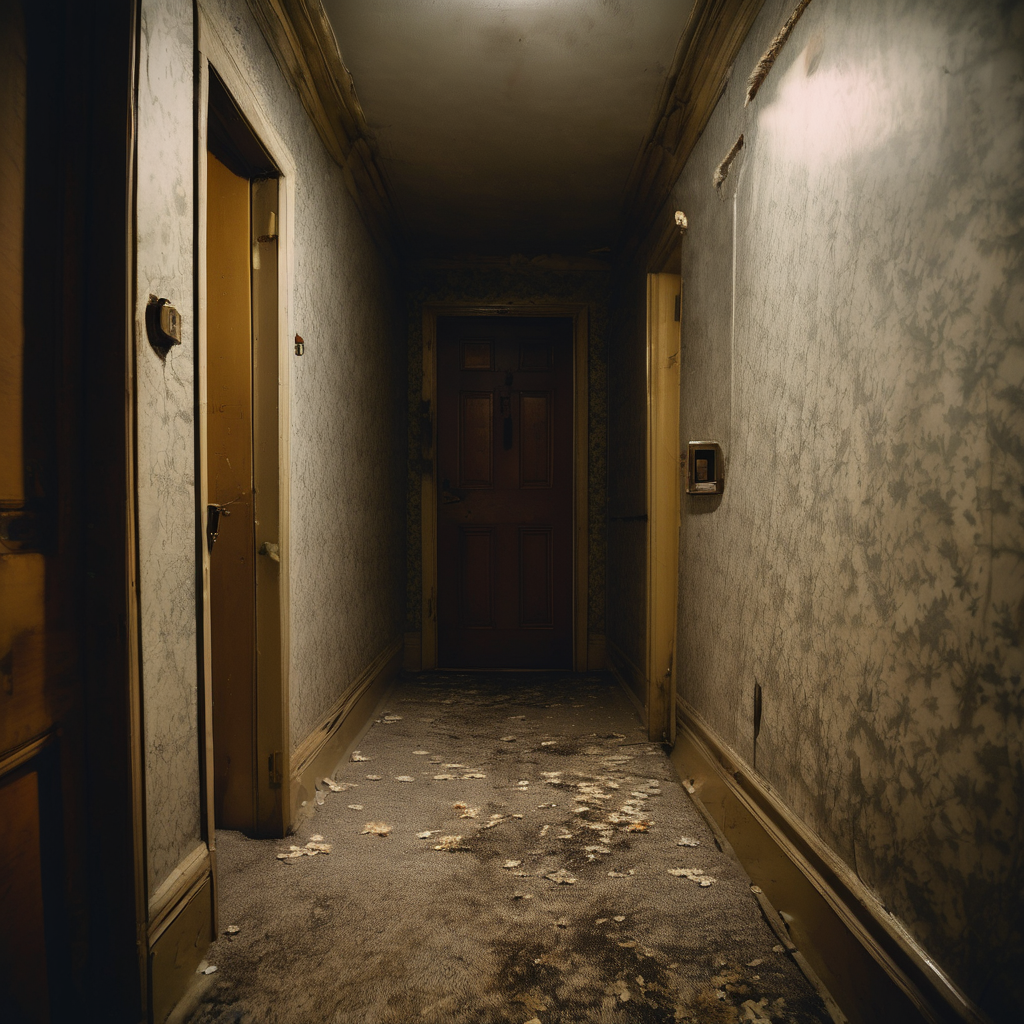
The wallpaper in Room 237B had been breathing for three days before Margot noticed. Not the steady rise and fall of sleeping lungs, but something more desperate—the way a moth trapped under glass beats against its prison.
She’d moved into the boarding house after her divorce papers were signed under October’s hunter moon. The landlady, Mrs. Haversham, had shown her every room except this one, insisting it was occupied. But Margot heard no footsteps through the thin walls, no water running, no muffled television. Only that peculiar rustling that she’d initially blamed on mice.
The first time she saw the previous tenant’s things, she was borrowing sugar from the communal kitchen. A leather journal sat abandoned on the windowsill, its pages swollen with pressed flowers that had turned the color of old blood. Inside, someone had written recipes—but not for food. “For Remembering Mother’s Voice: three drops of rainwater from a Tuesday storm, whispered names of childhood pets, one button from a coat worn to a funeral.”
Mrs. Haversham found her reading it. “Oh, that belonged to Sienna,” she said, her fingers worrying the amber beads at her throat. “Lovely girl. Paid her rent in advance for the whole year. Said she was writing a cookbook.”
But Margot had seen Sienna’s other notes tucked between the building’s mail slots. Grocery lists that read like incantations: “Cardamom for sorrow, honey for the space between words, eggs laid during thunderstorms.” Once, she found a sketch of the building’s floor plan with Room 237B marked as “the stomach.”
The breathing grew louder after the November elections, when the whole city felt like it was holding its breath. Margot pressed her ear to the shared wall and heard something that sounded like swallowing. The next morning, she found wet footprints in the hallway that smelled of brine and led to nowhere.
She started keeping her own journal, documenting the house’s strange digestion. The way certain tenants’ faces blurred in the hallway mirrors. How Mr. Chen from 234A hadn’t aged in the twenty years he’d lived there, according to the mailman. The fact that everyone who left did so in the middle of the night, without goodbyes.
The breakthrough came when she discovered the building’s original blueprints in the library’s archive. Room 237B hadn’t existed in the original structure. It was added in 1943, the same year seventeen residents of the building vanished during a blackout. The construction permit was signed by someone named S. Haversham, and the stated purpose was “digestive renovation.”
That night, Margot climbed the fire escape and peered through 237B’s window. The room was empty except for walls lined with what looked like pink silk—until she realized it was moving, contracting in slow, rhythmic waves. And there, in the center of the floor, lay a pile of vintage clothing, jewelry, photographs, and personal effects. She recognized Mr. Chen’s jade ring, still warm.
She confronted Mrs. Haversham at dawn, but the old woman just smiled sadly. “Every building needs to eat, dear. Better it takes one every decade than collapses and takes us all. Sienna understood. She seasoned herself for months, made herself… palatable. A cookbook indeed.”
Margot packed that afternoon, but as she reached the front door, she felt the building shudder. The walls groaned. Paint flakes fell like snow. Mrs. Haversham appeared beside her, trembling.
“It’s still hungry,” she whispered. “Sienna wasn’t enough. She made herself too bitter with all that sorrow she’d been collecting.”
Margot looked at her suitcase, then at the other tenants gathering in the hallway—the young couple from 231, the artist from 240, the grandmother who lived alone in 225. She thought of the city beyond, where rent climbed like fever and people were pushed further into the margins every day.
“What does it want?” she asked.
“A story,” Mrs. Haversham said. “It feeds on stories. The richer the life, the longer it stays satisfied.”
Margot set down her suitcase. She thought of her own story—divorce papers and empty wine bottles, a life lived in the spaces between other people’s happiness. Then she looked at the others, each carrying their own weight of memory and hope.
“Then we’ll give it stories,” she said. “All of us. We’ll take turns. Feed it memories, dreams, lies if we have to. Small portions. Enough to keep it sleeping but not enough to lose ourselves.”
And so they began. Every night, they gathered outside Room 237B and slipped pages under the door. Love letters, shopping lists, childhood nightmares, recipes both real and imagined. The breathing in the walls softened to a purr.
Margot never left. None of them did. They became curator-priests of a hungry architecture, feeding the building just enough story to keep it from feeding on them. And sometimes, late at night, Margot could swear she heard Sienna’s voice through the walls, reading aloud from her cookbook of sorrow, teaching the building to digest something other than flesh—teaching it to survive on the one thing humans had in endless supply: their need to be remembered.


Leave a Reply