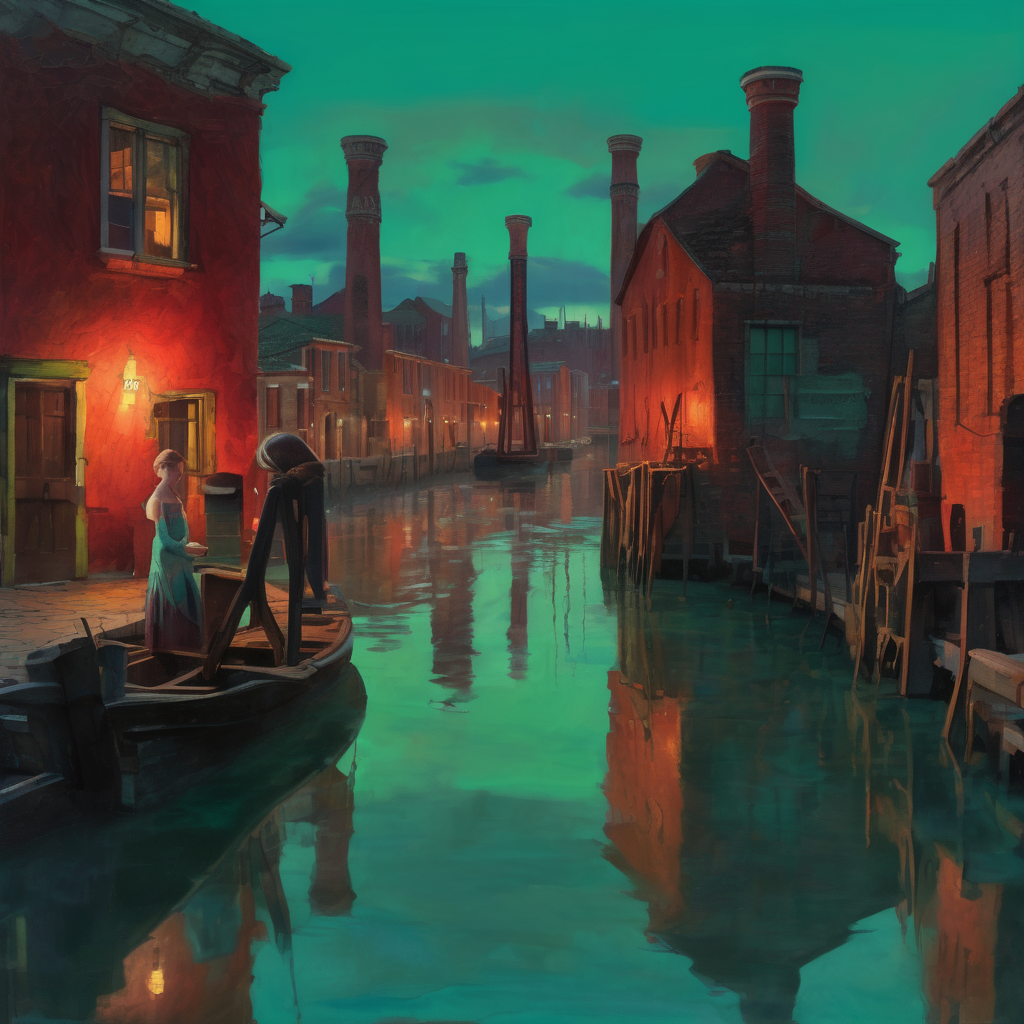
The city of Vetrovia exhaled a humid, canal-scented breath as the sun bled out behind the spires. In his workshop, suspended over the sluggish green water, Silas prepared for his work. For fifty years, he had performed the vespers, the sacred art of capturing the city’s final mood of the day in glass. He would gather the ambient sigh of a thousand souls into his blowing iron, and with the fire’s alchemy, turn it into a solid, luminous globe.
Tonight, something was wrong. It had been wrong for months, a slow curdling he first mistook for his own aging heart. The city’s emotional weather had turned. It was a vibe shift so profound he could taste it on his tongue, like rust and ozone. The soft melancholy of dusk, once his most pliable material, was now shot through with a brittle, anxious energy.
He dipped the iron into the furnace’s molten heart. The gather glowed like a captive star. He brought it to his lips, but instead of the usual gentle hum of contentment and weariness from the streets below, a discordant shriek vibrated up the pipe. A new kind of emotional inflation, a surfeit of an unnamed, frantic despair, was poisoning the aether. He blew, and the glass ballooned violently, too fast. Before it could form, it shattered, spraying the stone floor with razor-thin shards that held no light at all.
His apprentice, Elara, swept them up without a word. She had been with him a year, a quiet girl with hands too steady for her age. She had a way with the furnace, a peculiar charm that soothed the roaring flames. The other apprentices, gossiping in the courtyard, had a new word for it. Rizz. Elara had it. Silas only knew that when she banked the coals, they seemed to settle with a sigh.
The next morning, Guild-Prefect Lorenzo paid a visit. Lorenzo was the son of the last Prefect, a true artist of the furnace. But the son was all ledgers and edicts, a nepo baby who saw the vespers not as a sacred rite but as a production line. “Breakage rates are up seventeen percent, Silas,” he said, tapping a lacquered fingernail on his tablet of polished slate.
“The aether is agitated, Prefect. The… the feeling is wrong.”
Lorenzo gave a patronizing smile. “The aether is the same as it has always been. Sourced from the Sunken Quarries, delivered by the same skiffs. The supply chain is unbroken.” He leaned closer, his voice a conspiratorial whisper. “It’s the furnace fumes, old man. They make the mind play tricks after a lifetime of breathing them in. You’re imagining it.”
It was a masterful stroke of gaslighting. For a moment, Silas wavered. Was he just a tired old man, his senses failing? He looked at the racks of globes from decades past. A soft pink from a spring festival fifty years ago. A deep, contented blue from a winter of heavy snow and hearth-warmed homes. A shimmering silver of city-wide relief after the Great Fever broke. His memory wasn’t failing. The new globes, the few that survived the blowing, were a murky, unsettling grey, like a stirred puddle.
The Prefect was delulu, convinced his regulations could chart and contain the very soul of Vetrovia. He couldn’t feel the change. So Silas did what many of the other old artisans were doing. He began the process of quiet quitting. He still came to the workshop. He still heated the furnace and gathered the glass. But the fire in his own chest was banked. He’d report a flawed gather, a cracked pipe, any excuse to avoid the agony of blowing the city’s new, ugly soul into form. His great, final era was to be one of managed decline.
That evening, Elara approached him as he stared into the dying furnace. “You didn’t blow today,” she stated, not a question.
“The glass is angry,” Silas mumbled.
“Let me try,” she said. Her audacity was breathtaking. An apprentice did not perform the vespers.
“It is not your place.”
“And it is no longer yours,” she retorted, her voice soft but unyielding. “You’ve given up. I see it. Everyone does.”
The truth of it struck him, sharp as the shards on the floor. He had already quit. He was just waiting for his body to follow his spirit. He looked at her, at the determined set of her jaw, the ‘main character energy’ the young people whispered about. He sighed, a plume of coal dust and defeat, and stepped aside.
Elara did not approach the furnace with his solemn reverence. She moved with a light, almost dancing step. She gathered the glass, and when she brought the iron to her lips, she did not fight the chaotic energy vibrating within it. Silas could feel it from across the room, the furious inflation of a thousand private griefs, of envy and quiet desperation. It was the worst he had ever felt. The globe would surely explode.
But Elara didn’t try to contain it. She didn’t try to purify it into a single, perfect mood. She swayed with the pipe, her breath not a single, forceful gust, but a series of quick, rhythmic puffs. She was harmonizing with the chaos. She worked with the jagged edges of the city’s feeling, spinning the anxiety into fine, silver threads inside the glass. She folded the murky despair into deep, velvety whorls. She wasn’t capturing a mood; she was chronicling a moment, in all its fractured, complicated ugliness.
The globe she pulled from the flame did not glow with a pure, single light. It was a storm caught in glass, a sphere of exquisite turmoil. Streaks of bruised purple clashed with frantic veins of silver. Patches of oily dark swirled against moments of startling, pinprick clarity. It was hideous. It was beautiful. It was true.
Silas stared, his breath caught in his throat. He had spent his life trying to distill the city’s soul into a single, perfect note. He was from an old world, a world of simpler feelings. Elara was not. She had been born into the noise, the chaos, the shift. She knew you couldn’t contain a storm. You could only describe its terrible, frantic grace.
He looked from the globe to her face, flushed with effort and triumph. His era was not over. It had just changed. His vespers were done. Hers were just beginning. He picked up a polishing cloth, the first real work he had chosen to do in months, and walked towards her.


Leave a Reply