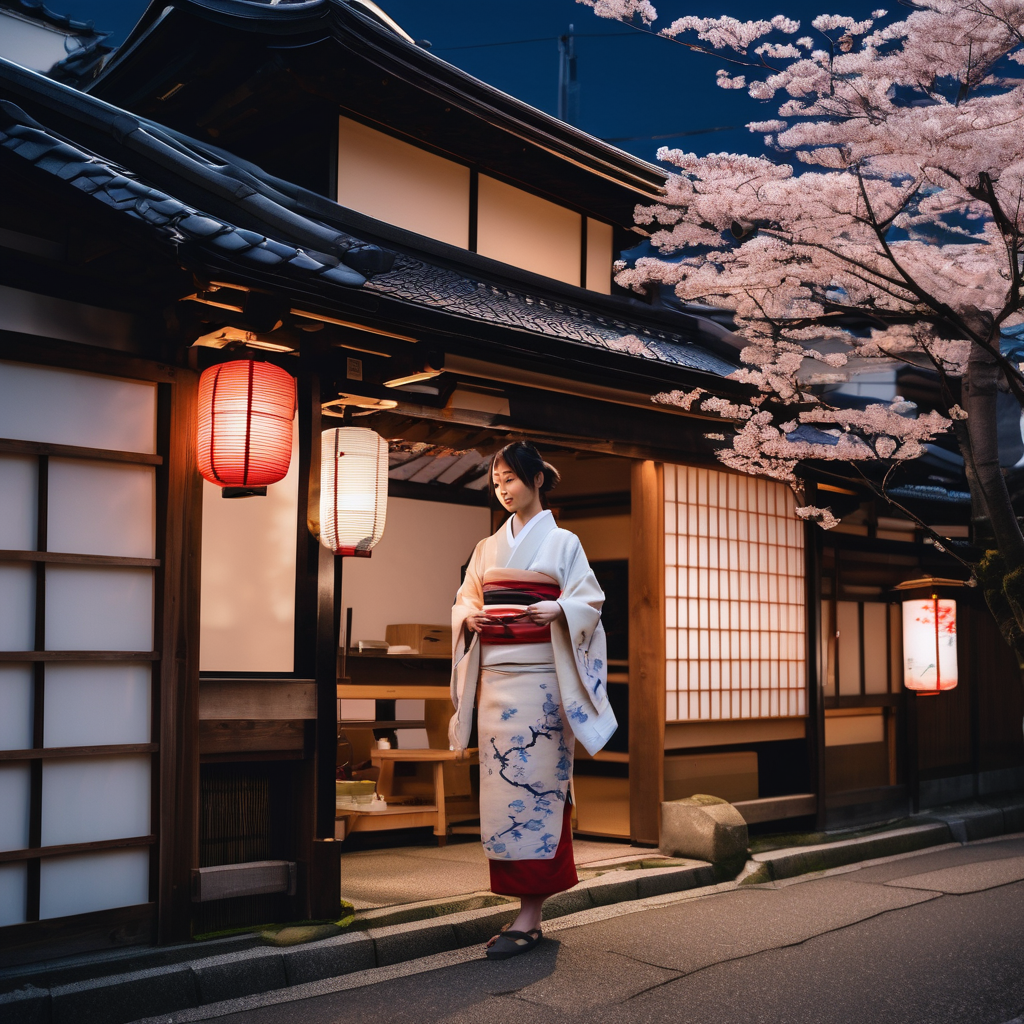
In the narrow alleys of Gion, where geishas still glided with the grace of specters, a young woman named Emiko lived a life woven from the threads of tradition and revolution. Her mother, a renowned silk weaver, had taught her the ancient art of creating fabrics that shimmered like the moon on the Katsura River. As a child, Emiko would watch in awe as her mother’s fingers danced across the loom, infusing every thread with a whispered prayer or a snippet of a haiku. The resulting silk was said to possess a subtle magic, capable of calming the most frayed of nerves and soothing the most restless of spirits.
As Emiko grew older, she became increasingly fascinated with the world beyond Kyoto’s temples and gardens. She devoured books on feminism and sustainability, marveling at the ways in which women around the world were challenging the status quo and redefining their places within society. Her mother’s traditional craft, once a symbol of obedience and domesticity, now seemed to Emiko a potent tool for self-expression and social change.
One evening, as the cherry blossoms bloomed in the temple grounds, Emiko’s mother handed her a precious skein of silk threads dyed in the vibrant hues of the Japanese sunset. “Weave a fabric that captures the essence of our time,” she said, her eyes shining with a mixture of pride and trepidation. Emiko accepted the challenge, pouring her heart and soul into the loom as she wove a tapestry that blended the intricate patterns of traditional Kyoto with the bold, expressive strokes of modern street art.
As she worked, Emiko’s thoughts turned to the young activists she had met in the city’s cafes, discussing the intersections of culture and climate justice, and the ways in which ancient traditions could be reimagined for a more sustainable future. She infused the fabric with the whispers of these conversations, the silk threads seeming to absorb the emotions and ideas like a sponge.
When the tapestry was complete, Emiko’s mother gazed upon it with tears in her eyes. “This is not just a fabric,” she said, “but a bridge between worlds, a testament to the power of tradition and innovation to transform our lives.” As news of the tapestry spread, Emiko found herself at the forefront of a cultural movement, her silk weavings sought after by artists, designers, and social entrepreneurs from around the globe. In the ancient city of Kyoto, where the past and present collided in a swirl of color and sound, Emiko’s creations embodied the spirit of a new era, one in which the beauty of tradition was reborn in the service of a more compassionate, more sustainable world.


Leave a Reply