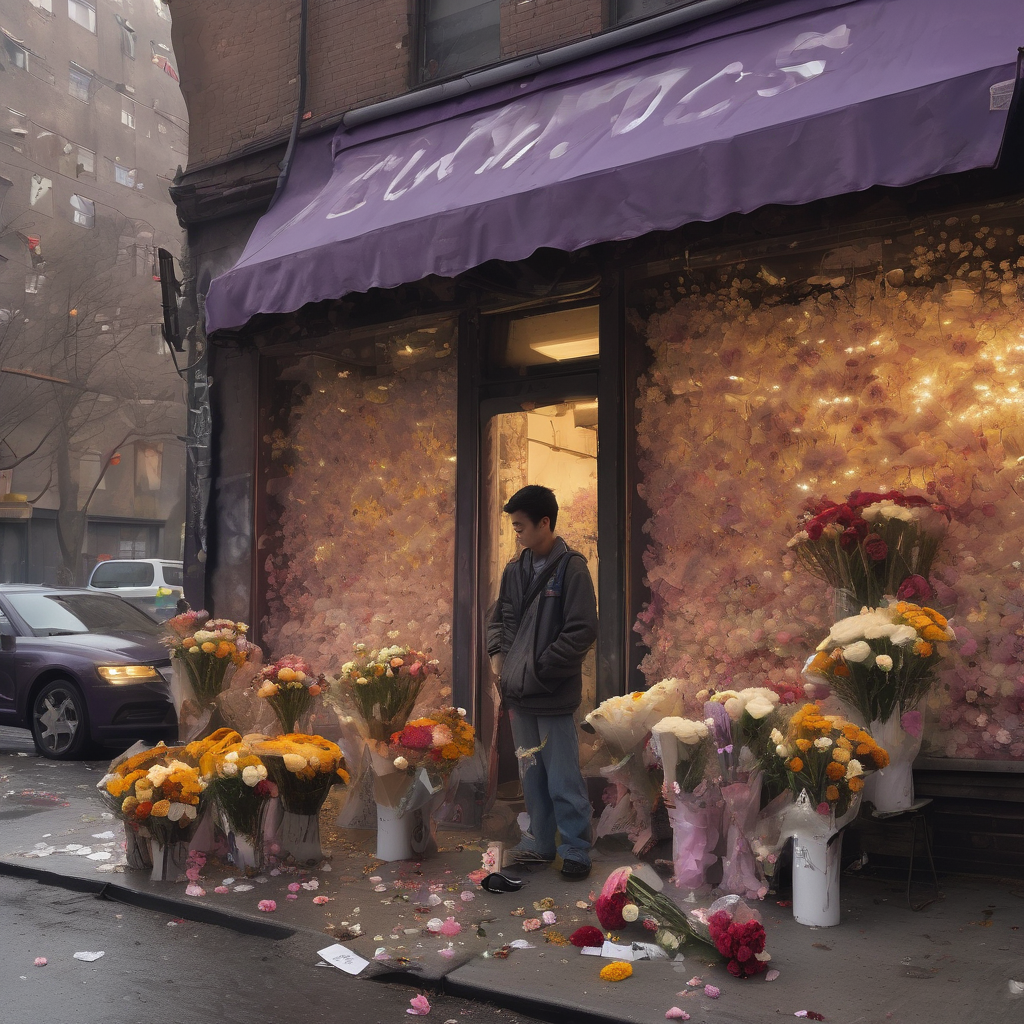
The florist’s daughter could speak to wilted roses.
It began the morning after the protest, when Maya swept glass from the storefront and found a bouquet someone had abandoned on the sidewalk. The flowers were beyond saving—petals brown at the edges, stems bent like broken fingers—but as she lifted them, she heard whispers.
*We remember when this street bloomed with hope,* said the roses. *Before the gentrification. Before the wellness studios replaced the community garden.*
Maya dropped the bouquet, heart racing. She’d been feeling untethered since graduation, watching her friends chase their authentic selves through social media while she remained here, inheriting her grandmother’s flower shop in a neighborhood that no longer recognized itself.
The roses continued speaking even from the pavement. *Your grandmother knew our language. She listened when we told her which arrangements would heal heartbreak, which combinations would manifest abundance.*
That evening, Maya researched her grandmother’s journals, finding pressed flowers between pages written in three languages. Chamomile for resilience during wartime. Lavender for the anxiety that came with displacement. Marigolds for the grief of watching a homeland disappear.
The next morning brought Mrs. Chen, whose son had been struggling with mental health since the pandemic. She wanted something cheerful, but the snapdragons whispered urgently: *Too bright. He needs grounding. Eucalyptus for clarity, white chrysanthemums for renewal.*
Maya followed their guidance. Mrs. Chen returned a week later, tears in her eyes. “He started painting again,” she said. “First time in two years.”
Word spread through the community like pollen on wind. People came seeking arrangements for job interviews, for healing family trauma, for finding love after heartbreak. Maya learned to translate the flowers’ ancient wisdom into modern needs, creating bouquets that addressed everything from workplace burnout to climate anxiety.
The developers who’d been circling the block like vultures grew frustrated. The flower shop had become a gathering place, a symbol of resistance against their plans for luxury condos. They offered Maya triple the property value, then six times, their voices growing sharper with each refusal.
One night, Maya found her windows smashed again, the shop’s interior destroyed. As she knelt among the scattered petals and broken stems, she expected silence—death.
Instead, the chorus rose stronger than ever. Flowers from every arrangement her grandmother had ever made, their essence embedded in the shop’s walls, their memories blooming in defiance.
*We have weathered ice ages and droughts,* they sang. *We have pushed through concrete to find sunlight. We know about survival.*
Maya understood then that gentrification was just another season, that authentic community roots run deeper than profit margins. She began teaching the neighborhood children the flowers’ language, showing them how to listen for the stories petals tell, how to cultivate spaces where beauty and belonging can coexist.
By spring, the entire block had transformed into a guerrilla garden. The developers retreated, defeated not by lawyers or petitions, but by the simple, radical act of people planting hope in abandoned lots, speaking the language their grandmothers knew, tending to something that could never be bought or demolished.
The flowers had taught Maya their greatest secret: some things grow stronger when threatened, put down deeper roots when challenged, bloom more brilliantly when the world tells them they don’t belong.
In her grandmother’s journal, Maya found the final entry: *The flowers remember what we forget—that every ending is also a beginning, that what appears lost often returns in a new form, speaking the same eternal language of growth, resilience, and endless becoming.*


Leave a Reply