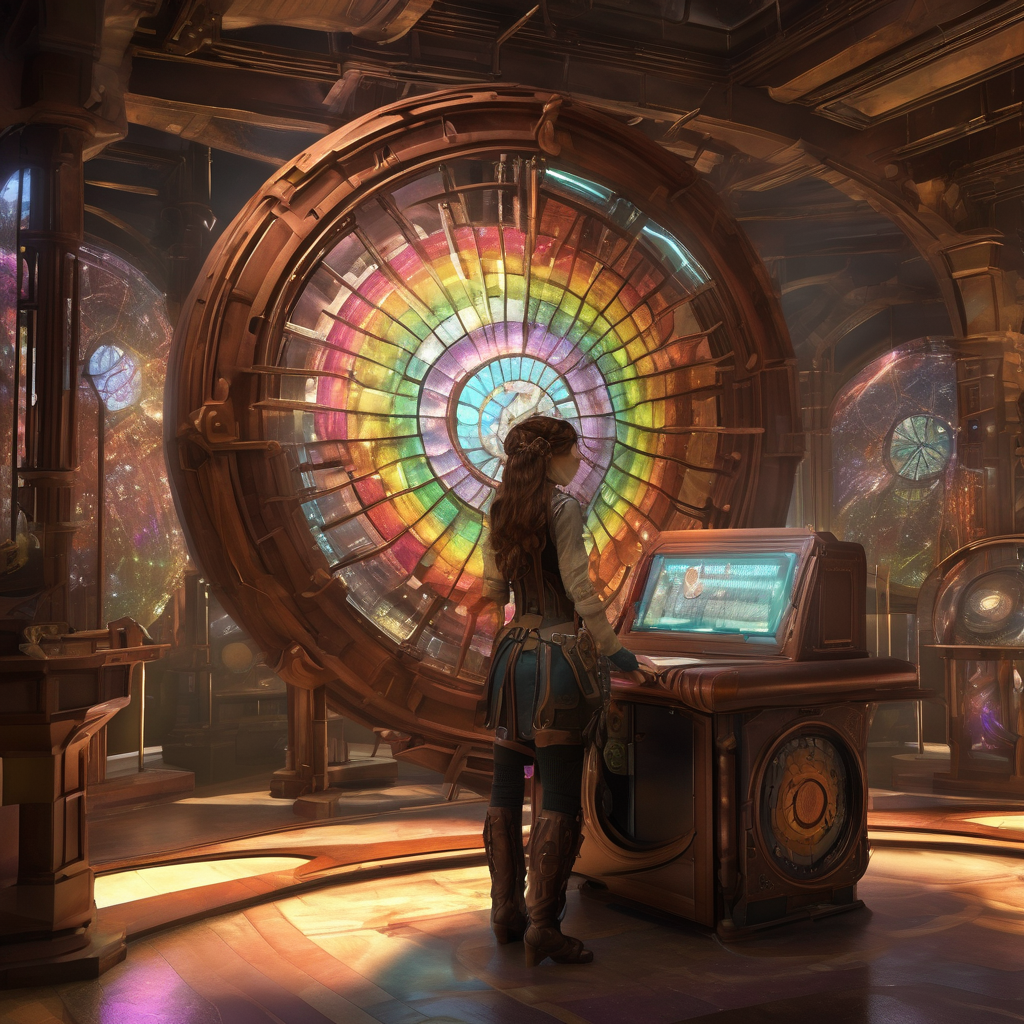
The brass gears of Memory Station clicked their final rotation as Elara descended the spiral staircase into the archives. She’d inherited the position of Keeper from her grandmother, who had inherited it from hers, stretching back through generations of women who maintained the world’s last repository of genuine human memories.
In this age, most people preferred the manufactured recollections sold in glass vials at the night markets—perfect summer days that never happened, first kisses with idealized lovers, childhoods free from all the sharp edges of reality. But Memory Station held the raw, unfiltered experiences that people had willingly surrendered, thinking them too painful to carry.
Elara ran her fingers along the mahogany drawers, each labeled with copper nameplates. Today she sought something specific: the memory of rain. Real rain, from before the Great Drying, when water still fell freely from clouds instead of being rationed through the municipal pipes.
The sustainability council had commissioned her to extract the essence of environmental memories, hoping to inspire the younger generation to join the restoration efforts. But as she pulled out drawer after drawer, she noticed something wrong. The memories were fading—not just growing dim, but actually dissolving like sugar in water.
She rushed to the pneumatic tube system and sent an urgent message to Marcus, the Station’s chief engineer. He arrived within minutes, his leather apron still dusted with the rust-colored powder from the gear works.
“It’s the resonance,” he said, placing his ear against the wall. “The Station’s heartbeat is off-rhythm. Someone’s been here, trying to extract memories using the old algorithm.”
The algorithm—her grandmother had spoken of it only once, late at night after too much elderflower wine. It was the original method for harvesting memories, brutal and indiscriminate, pulling not just single experiences but entire lifetimes from unwilling subjects. It had been banned centuries ago, replaced by the gentle extraction methods they used now.
Together, they followed the trail of disturbed memories through the Station’s labyrinthine corridors. The path led them deeper than Elara had ever ventured, past the archived memories of extinct animals, through the hall of forgotten languages, until they reached a door marked with symbols she couldn’t read.
Behind it sat a figure hunched over an ancient brass console, feeding memories into a crystalline apparatus. The thief turned—it was Councilor Thorne, his usually pristine uniform disheveled, his eyes wild with desperation.
“My daughter,” he gasped. “She’s sick with the Forgetting. The healers say nothing can help, but if I can just find the right memory, the perfect moment of health and vitality, I can transfer it to her.”
Elara understood his anguish. The Forgetting had claimed thousands, leaving them as hollow shells, unable to form new memories or recall old ones. But she also knew what he didn’t—that stolen memories were poison to the recipient, creating a discord in the mind that was worse than any disease.
“There’s another way,” she said softly, approaching him with careful steps. “The Station doesn’t just store memories—it can create bridges between them. Your daughter doesn’t need someone else’s past. She needs a thread to connect her to her own.”
She led them to the Station’s heart, where the great Memory Wheel spun endlessly, its spokes made from crystallized experiences. Here, she explained, memories weren’t just stored but woven together, creating a tapestry that connected all human experience.
Working through the night, they crafted a new kind of algorithm—not one that extracted or imposed, but one that gently reminded. They gathered fragments: the smell of bread from the baker’s memories, the sound of laughter from a street performer’s collection, the feeling of sunrise from a shepherd’s archived mornings. These weren’t specific memories but universal experiences, the shared currency of human existence.
When they brought the distilled essence to Thorne’s daughter, she didn’t suddenly remember her past. Instead, she began to notice the present—the texture of her blanket, the warmth of her father’s hand, the play of light through the window. Slowly, like a garden after rain, her ability to form new memories returned.
The council, witnessing this success, restructured their entire approach to wellness and mental health. Memory Station evolved from a mere archive into a healing center, where people came not to deposit painful memories or purchase perfect ones, but to understand the connection between their experiences and those of others.
Elara kept the old algorithm locked away, but she didn’t destroy it. It served as a reminder that in their desire to edit and perfect their lives, people sometimes forgot that memories—even painful ones—were the threads that wove them into the larger human story.
As the years passed and the restoration efforts finally brought back the rains, Elara would often stand in the Station’s highest tower, watching water fall from actual clouds. She knew that somewhere in the archives below, the memory of the last natural rainfall before the Great Drying sat preserved in its drawer. But she no longer needed to access it. She was creating new memories of rain, real and imperfect and absolutely true.
The Station’s gears continued their eternal clicking, no longer counting down to an end, but marking the rhythm of an endless, ever-renewing present.


Leave a Reply