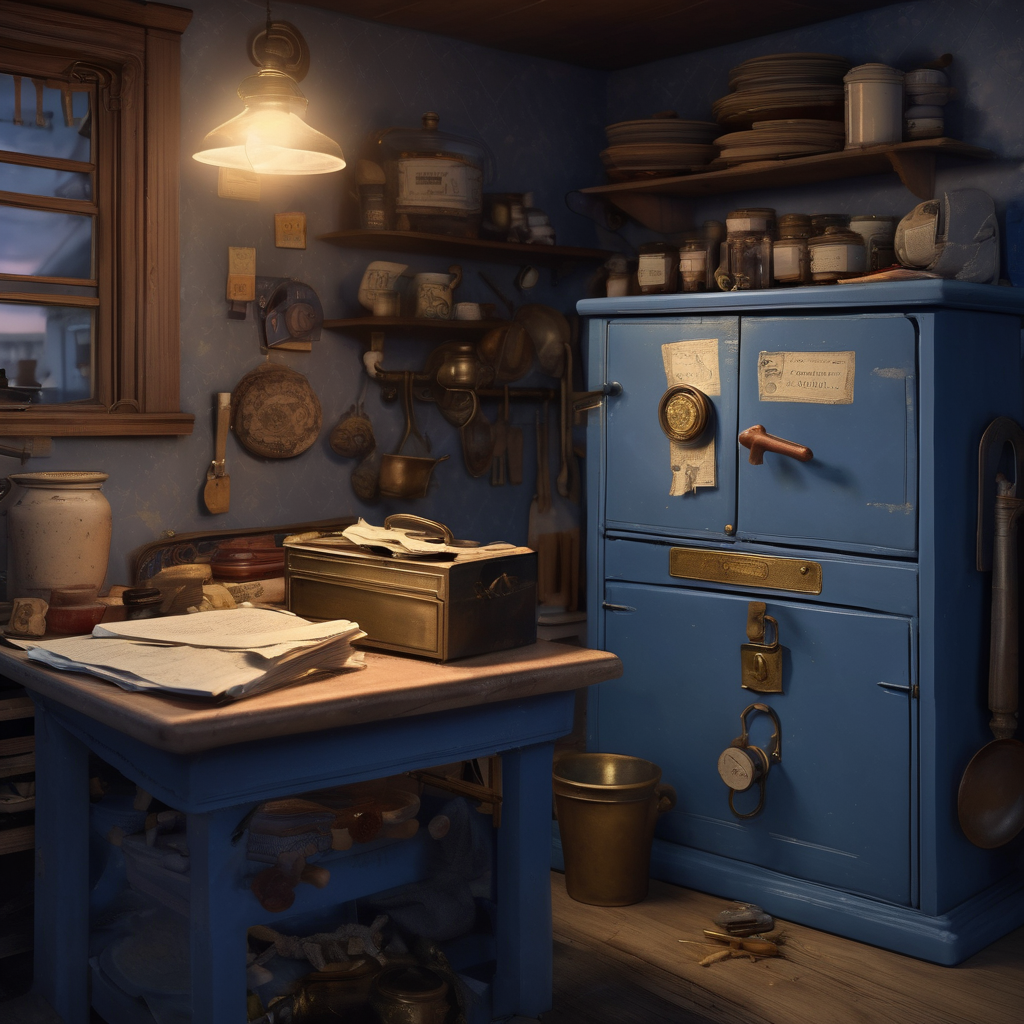
Marlowe discovered the mailbox on a Tuesday that felt like drowning. Her grandmother’s house sat heavy with grief, each room thick with the scent of lavender and unfinished conversations. She’d been clearing out the garden shed when she found it—a peculiar brass mailbox with no slot for retrieval, only for sending.
The inscription read: “For correspondence requiring temporal adjustment.”
That night, unable to sleep, Marlowe wrote her first letter. Her pen scratched against paper as she poured out everything she’d never said to Gran about the art scholarship, about dropping out, about the way fear had calcified around her dreams like barnacles on a ship’s hull.
She folded the letter, kissed it once, and slipped it through the slot.
Morning arrived gray and unremarkable until Marlowe found herself humming—actually humming—while making coffee. The melody came from nowhere, something Gran used to sing while kneading bread. But stranger still was the canvas propped against the kitchen window, a half-finished painting she didn’t remember starting.
The brushstrokes were bold, unapologetic. Colors that demanded attention rather than asking permission.
That evening, she wrote again. This time about Marcus, about the breakup that had felt like swallowing glass, about how she’d ghosted him instead of admitting she was scared of being loved that completely. She wrote until her hand cramped, then fed the letter to the impossible mailbox.
Wednesday morning brought a text from Marcus: “Been thinking about you. Coffee sometime?”
By Thursday, Marlowe understood the mailbox’s cruel mathematics. Each letter she sent somehow reached yesterday’s version of herself—the one who still had time to make different choices, to speak before silence calcified into regret. Yesterday’s Marlowe would read the warnings, the encouragements, the desperate love letters to her own potential.
But today’s Marlowe only inherited the consequences, waking each morning in a life slightly more honest than the one she’d lived before.
She wrote to herself about painting again, about calling her mother, about the way sunlight looked different when you weren’t hiding from it. Each letter was a small revolution, a rebellion against the tyranny of missed moments.
The mailbox grew warm under her touch, humming with temporal electricity. Sometimes she caught glimpses of other senders—a boy leaving apologies to his younger self, an old woman posting love letters to decades past, all of them trying to heal time’s wounds with yesterday’s medicine.
Friday’s letter was the hardest. She wrote about Gran’s last day, about sitting beside the hospital bed holding a hand that felt like tissue paper and regret. She wrote about all the visits she’d postponed, all the stories she’d meant to ask about, all the love she’d assumed would wait.
Saturday morning, Marlowe woke to find photos scattered across her kitchen table—pictures she’d never seen of Gran as a young artist, paintings hidden in the attic, and a note in familiar handwriting: “She always knew you’d find your way back to the easel. Love finds a way, even through time.”
The mailbox had grown cold and silent, its brass surface reflecting nothing but sky.
Marlowe picked up her paintbrush and began mixing colors that tasted like forgiveness, like second chances, like all the tomorrows that yesterday’s letters had been trying to reach.


Leave a Reply