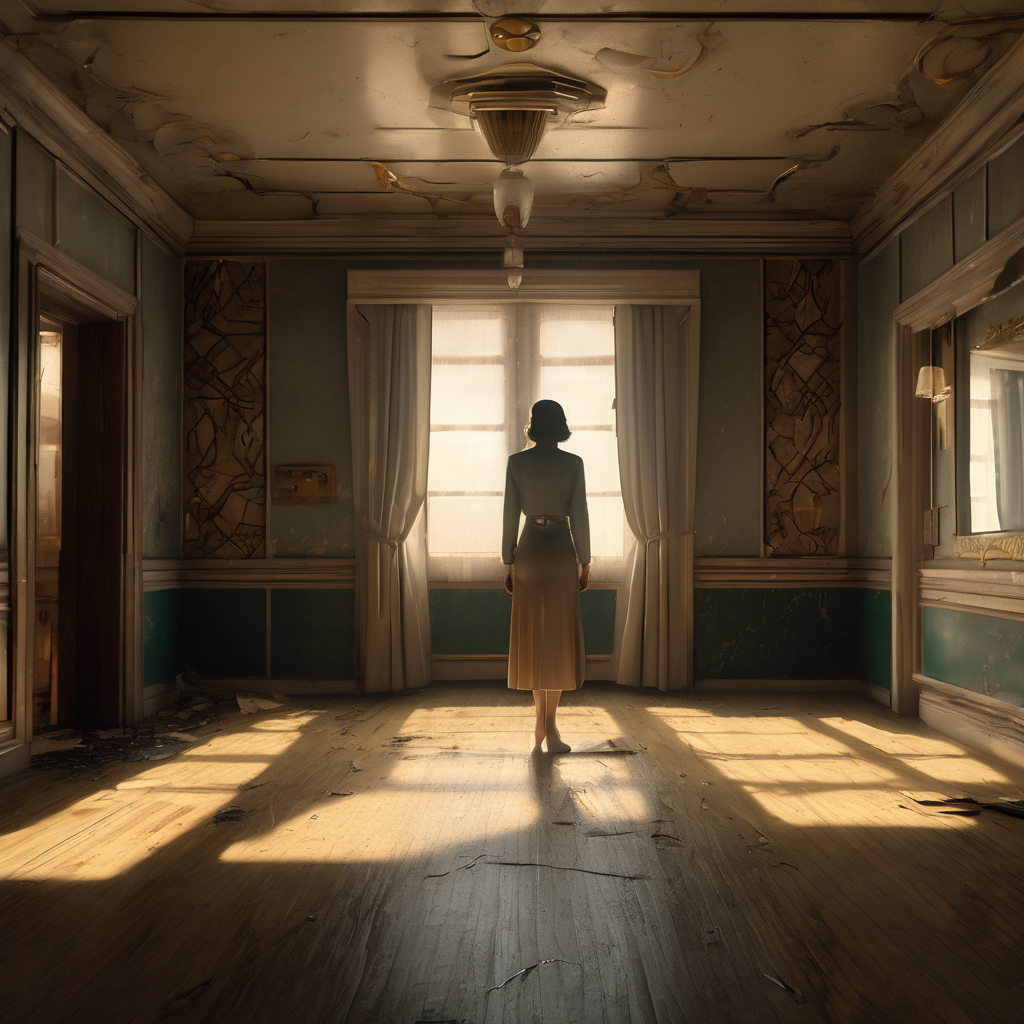
The vintage hotel had stood empty for decades, its art deco façade crumbling like yesterday’s makeup. When Maya inherited the Grandview from her great-aunt’s estate, she discovered that Room 237 held more than dust and forgotten dreams—it held pieces of people’s lives.
The first memory appeared as she swept cobwebs from the ornate mirror. A flash of warmth, the taste of cinnamon, and suddenly she was eight years old, watching her grandmother braid challah bread. But Maya’s grandmother had died when she was three, and they’d never baked together.
Dr. Chen, the neurologist she consulted, suggested stress-induced hallucinations. “You’re processing grief,” he explained, adjusting his wire-rimmed glasses. “The mind creates false memories to fill emotional voids.” But Maya knew better. These weren’t her memories at all.
As renovation began, the episodes intensified. Each night in Room 237, she experienced fragments: a soldier’s last letter home, a jazz singer’s debut performance, an elderly woman’s final sunset. The memories layered like sediment, decades of human experience trapped within the room’s wallpaper and floorboards.
She started a journal, documenting each vision with obsessive detail. The handwriting changed—sometimes spidery cursive, sometimes bold block letters—as if the memories were writing themselves. Local historians confirmed details she couldn’t possibly have known: the soldier had died in Normandy, the singer at the old Cotton Club downtown, the woman in the hospice that once occupied the building’s third floor.
Maya’s contractor, James, found her one morning sitting motionless in the empty room, tears streaming down her face.
“Whose memory was it this time?” he asked gently. He’d stopped questioning her sanity weeks ago.
“A mother losing her child,” Maya whispered. “The fever broke just after midnight. She never forgave herself for falling asleep.”
James helped her stand, his calloused hands steady and warm. “You can’t carry all of this alone.”
But Maya realized she wasn’t carrying anything—she was releasing it. Each memory she experienced seemed to fade from the room afterward, like steam dissipating from a mirror. The oppressive weight that had pressed against her chest during those first visits gradually lifted.
On the final night before the room’s restoration, Maya sat cross-legged on the bare wooden floor. One last memory surfaced: her great-aunt Stella as a young woman, dancing in this very room during the hotel’s golden age. Stella’s joy filled Maya completely—the music, the laughter, the sense of infinite possibility that comes with being twenty and beautiful and alive.
When it ended, the room felt truly empty for the first time.
Maya opened her eyes to find James standing in the doorway with two cups of coffee and a concerned expression.
“It’s finished,” she said simply.
The renovation proceeded without incident. Room 237 became the hotel’s crown jewel—guests often remarked on its peaceful atmosphere, how they slept better there than they had in years. Maya kept the original mirror, now reflecting only the present moment, and hung her great-aunt’s photograph nearby.
Some nights, when moonlight streamed through the restored windows, Maya thought she could hear distant music. But these weren’t memories anymore—they were echoes of joy, finally free to dance.


Leave a Reply