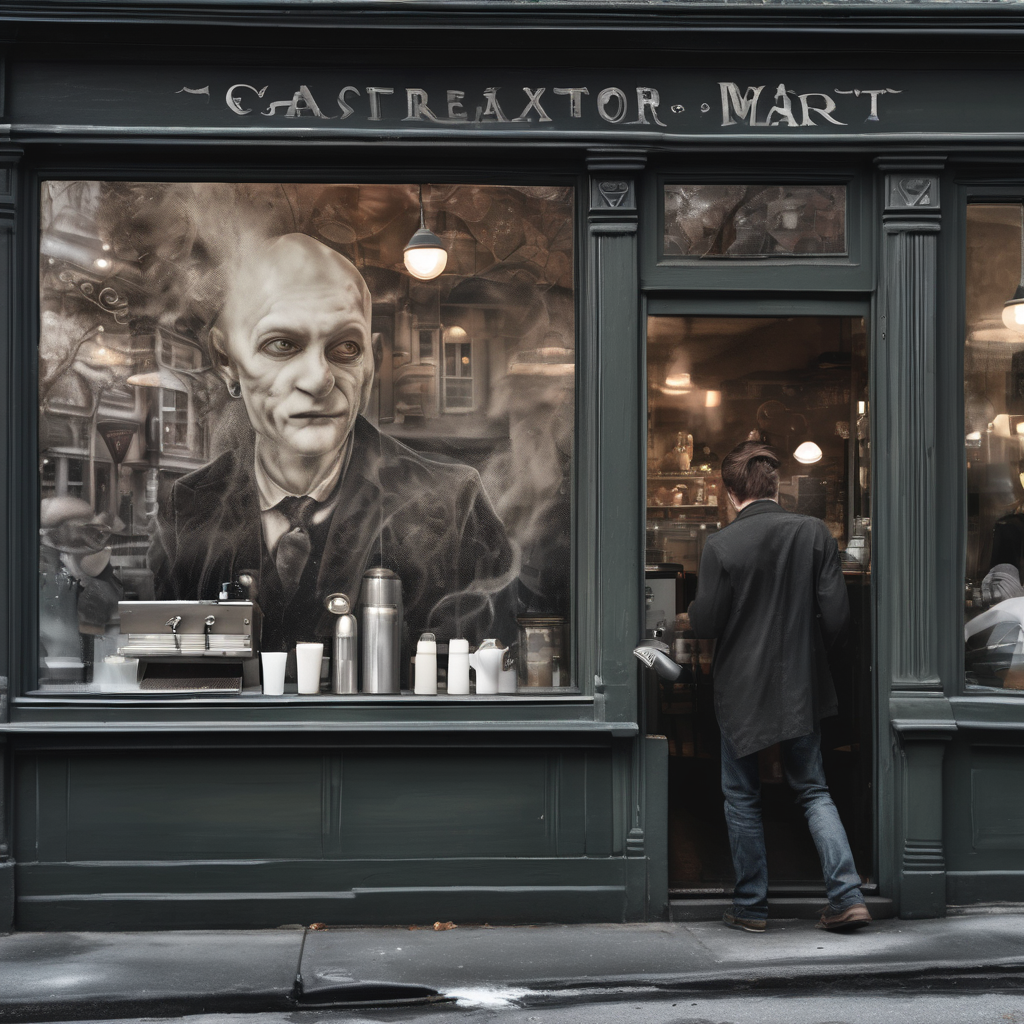
The first time it happened, Elias was watching a barista pour steamed milk into espresso. The white cloud billowed into the dark liquid, a perfect, fleeting heart. And then it wasn’t fleeting. The heart held its shape. The barista’s arm, tattooed with ivy, was locked in its graceful arc. A man outside the café window, mid-sneeze, was a gargoyle of arrested motion. The whole world had become a photograph, and Elias was the only one still walking through it. He touched the column of steam rising from his own cup; it felt like spun sugar, solid and cool. The moment lasted for what felt like ten minutes, then the world lurched back into motion with a soundless whump, the barista finishing the latte art, the man outside letting out a convulsive “Achoo!”
He learned the triggers were memories of her. Not the big, cinematic ones, but the tiny, sharp-edged fragments. A brand of tea she liked, the scent of rain on hot asphalt, the particular shade of blue on a ceramic bowl. Each one was a key turning a lock in the machinery of the universe, bringing everything to a grinding halt.
He called it his stillness era.
At first, it was a secret torment. He lived in terror of it, of being caught alone in the silent, static world. He tried to fight it with a desperate, frantic cheer. He embarked on a period of what the magazines called dopamine dressing, buying a canary-yellow scarf and a pair of garish orange socks. But when the world froze, the scarf was just a stiff, bright ribbon around his neck, the colour loud and pointless in the profound silence.
The fear eventually curdled into a strange kind of comfort. He began to seek it out. He would walk through the market, his eyes scanning for the triggers—the specific cut of a peony, the glint of a silver locket. When the freeze came, he would explore. He’d walk up to strangers and study the lines around their frozen eyes, the tension in their unmoving hands. Everyone was a perfect statue, a beautiful, lifeless doll. The uncanny valley of it all used to unnerve him; now, it was the only place he didn’t feel watched. Here, in the stopped heart of a second, he was utterly alone, and therefore, safe.
He built a life around the affliction. He curated his apartment with an air of quiet luxury—a heavy wool blanket, a single, perfect piece of pottery on the mantle, a hand-bound journal he never wrote in. It was an armor of maturity and control, a facade to hide the truth: that on most days, he was deep in goblin mode, shuffling through the frozen city in his slippers, eating cold beans from a can because lighting the stove felt like too much of a commitment to the flow of time.
One Tuesday, a woman on the bus let out a peal of laughter. It was identical to hers—the same cascade of notes, the same hitch of breath at the end. The world didn’t just stop; it seized. The brake was absolute. This time, the silence was deeper, the light colder. Elias got off the bus and walked. He walked for hours through the motionless city. A flock of pigeons hung in the air like a scattered handful of grey stones. A child’s balloon, escaped, hovered two feet from her grasping, still fingers.
He saw his own reflection in a darkened shop window. A pale, haunted man in a silent world. A ghost haunting a museum of a single moment. He was not living. He was curating his own grief, polishing the artifacts, dusting the exhibits. He had become the caretaker of a dead second.
He looked at the frozen face of the laughing woman on the bus, forever joyful. He had been clinging to these moments because they were perfect, untarnished by what came after. But a memory was not a life. A photograph is not a home.
He closed his eyes. He didn’t think of her laugh. He forced himself to think of the silence *after* her laugh. He thought of the single, lonely step he took away from her front door for the last time. He thought of the inhale he took right after the final exhale of her name. He focused not on the stasis, but on the lurch, the painful, terrifying, vital return to movement.
He willed the world to turn.
A shudder ran through the pavement. The air stirred. The pigeons above suddenly completed their wing-beats and soared away. The child’s balloon slipped from view, and her tiny, moving fingers grasped at empty air before her face crumpled into a cry. The woman’s laugh finished, and she turned to her friend, her face settling back into a neutral expression. Sound returned—the rumble of traffic, the murmur of conversation, the frantic beating of his own heart.
The world was moving again. It was messy and unpredictable and full of endings. And for the first time in a year, Elias felt he might be able to move with it.

Leave a Reply