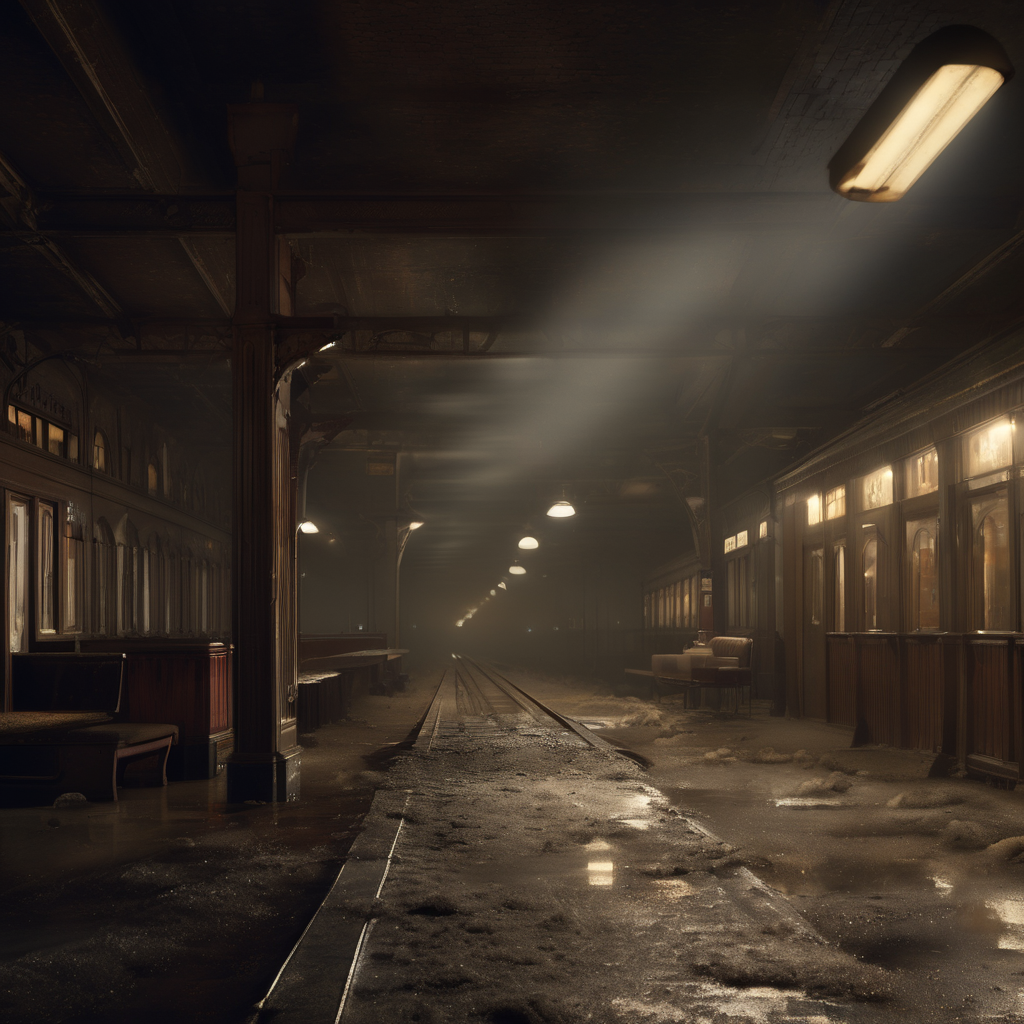
The first time Celeste noticed the footprints, she was three hours into her shift at the abandoned railway station, sorting through decades of lost belongings for the historical society’s upcoming exhibit. The prints appeared in the dust near Platform 7, leading backward from the edge toward the old waiting room—as if someone had walked in reverse or arrived from thin air.
By moonlight, the impressions looked fresh. By sunrise, they had vanished.
Celeste mentioned it to her supervisor, Dr. Patel, who nodded absently while cataloging a box of vintage postcards. “Old buildings settle strangely,” he said. “Probably just drafts shifting the dust.”
But that night, Celeste brought her grandmother’s polaroid camera—the kind that developed photos instantly, immune to digital manipulation. She positioned herself in the shadows of the old ticket booth and waited.
At 11:47 PM, the temperature dropped fifteen degrees in seconds. The air shimmered like heat waves in reverse, and footprints began appearing in the dust—heel first, then toe, walking backward across the platform. But no feet filled them. No body cast shadows in the lamplight Celeste had strung up for her work.
She snapped three photos in rapid succession.
The footprints paused at Platform 7’s edge, where the tracks stretched into darkness. For a moment, Celeste could have sworn she heard breathing—slow, labored, desperate. Then the presence continued its backward journey toward the waiting room and faded away.
When she developed the polaroids, they showed only empty platform.
The next morning, Celeste drove to the county library and pulled archived newspapers from 1952. The headline made her stomach clench: “LOCAL WOMAN VANISHES FROM MIDNIGHT TRAIN—FOOTPRINTS LEAD TO PLATFORM EDGE.”
Margaret Holbrook, 28, had been seen boarding the 11:52 PM service to Chicago. Witnesses reported her taking a window seat in car three. But when the train reached the next station, her seat was empty. Her shoes were found on Platform 7, and her footprints led backward from the platform edge to the waiting room, where they simply stopped.
She was never found.
Celeste read the article twice, then checked the date: October 13th, 1952. Seventy-one years ago to the day.
That evening, Celeste arrived at the station with more than just her camera. She’d brought Margaret’s file from the historical society—passenger records, police reports, and a single photograph of a young woman with dark hair and hopeful eyes, clutching a suitcase and smiling at someone just outside the frame.
At 11:30, Celeste placed the photograph on the bench where Margaret had waited for her train. At 11:45, the cold came again, fierce enough to turn her breath to vapor.
This time, Celeste didn’t hide.
At 11:47, the footprints appeared—but instead of moving backward across the platform, they approached the bench. They stopped beside the photograph.
“Margaret?” Celeste whispered.
The air moved, papers rustling without wind. Celeste felt a presence settle beside her on the bench, and though she could see nothing, the space felt warm and grateful.
“The train,” a voice said, barely louder than settling dust. “I missed my train.”
Celeste looked at her watch: 11:51. One minute until the train Margaret had been meant to catch seventy-one years ago.
“No,” Celeste said softly. “You’re right on time.”
The midnight air filled with the distant sound of a locomotive—impossible, since the tracks had been defunct for decades. A light appeared in the darkness beyond Platform 7, growing brighter.
The presence beside Celeste stood. Footprints appeared in the dust, walking forward this time—eager, purposeful steps toward Platform 7’s edge.
As the phantom train’s whistle echoed through the station, Celeste heard something she hadn’t heard in the recordings or police reports: laughter. Light, relieved, and finally free.
The footprints reached the platform edge and stopped. The train sounds faded. The cold lifted.
When morning came, the dust on Platform 7 was smooth and undisturbed. In the historical society’s files, Margaret Holbrook’s case had changed from “Missing Person” to “Resolved”—though no one could explain when or why.
Celeste kept the polaroids, even though they showed only empty platforms. Sometimes the most important things couldn’t be captured in photographs. Sometimes they could only be witnessed, honored, and finally allowed to rest.
The backwards footprints never appeared again.

Leave a Reply