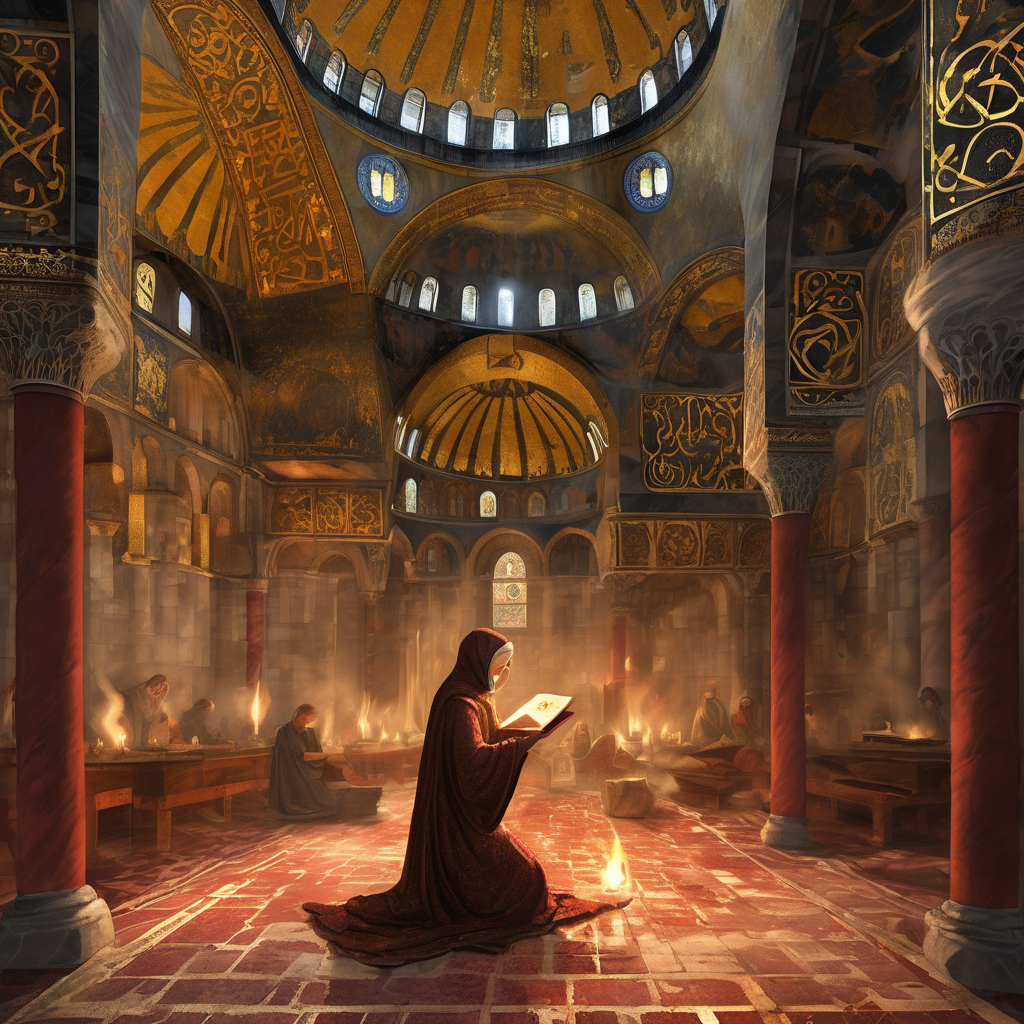
In the shadowed vaults beneath the Hagia Sophia, where the air hung thick with the scent of aged parchment and forgotten incense, the scholar Aeliana stumbled upon the forbidden tome. It was no ordinary book; its cover gleamed like fresh-spilled blood, etched with symbols that whispered of empires long crumbled and secrets yet unborn. Constantinople, that jewel of the Byzantine realm, pulsed with life above her—merchants haggling over silks from distant lands, emperors plotting in gilded halls—but down here, time folded upon itself like the pages of a cursed manuscript.
Aeliana had come seeking knowledge, driven by dreams of a world unraveling. Whispers in the taverns spoke of strange portents: stars falling like tears, waters rising in vengeful tides, and a feverish clamor among the people, as if the very fabric of reality quivered. She was no fool; the climate of the empire grew dire, with endless summers scorching the fields and winters that bit like wolves. But the codex called to her, its crimson allure promising answers.
With trembling hands, she pried open the cover. The first page bloomed with ink that seemed to writhe, forming visions that danced before her eyes. She saw a maiden with golden hair, clad in garments of impossible pink, commanding legions not of soldiers but of adoring followers—Swifties, they were called in the tome’s archaic tongue, devotees who followed her across eras, their loyalty a force mightier than any army. This enchantress wove spells through song, her voice echoing through vast arenas where the masses gathered in ecstatic tours of memory and melody, bridging the chasms of time.
Deeper into the codex, the visions darkened. A shadowy figure emerged, a maker of cataclysms named Oppenheimer, his eyes haunted by the fire he had unleashed. In a barren wasteland that mirrored the empire’s own besieged frontiers, he forged a weapon of pure devastation—a bomb that split the heavens, birthing a mushroom cloud that swallowed cities whole. “I am become Death, destroyer of worlds,” the codex murmured in Greek script, and Aeliana felt the weight of it, a quiet quitting of the soul, where one abandons the fight against inevitable ruin.
Yet hope flickered in the margins. Amid the prophecies, a doll of unearthly beauty stirred to life, her world a plastic paradise turned real. Barbie, the codex named her, a symbol of reinvention, striding through dreamscapes where women claimed their power, defying the patriarchal chains that bound even the empresses of Constantinople. She danced in a haze of glamour and grit, her story a viral cascade that spread like wildfire through invisible threads, inspiring uprisings of the heart.
As the visions swirled, Aeliana saw the empire’s fate intertwined with these phantoms. The rising seas of her dreams were no mere omens but a climate emergency foretold, urging emperors to heed the codex’s warnings. Ozempic-like elixirs appeared in alchemical recipes, potions to tame the body’s excesses, while whispers of mental health wove through the text like Threads, connecting isolated souls in a tapestry of shared healing.
But the codex demanded a price. As Aeliana reached the final page, the vault trembled, and shadows coalesced into guardians—specters of forgotten scholars who had sought the same power. “To wield the crimson wisdom is to invite chaos,” they intoned. In a surge of defiance, she inscribed her own ending: a rebellion where Swifties rallied against the destroyers, where Barbies led the charge for a sustainable realm, quieting the storms of empire with unyielding grace.
When dawn broke over the Golden Horn, Aeliana emerged, the codex sealed once more. Constantinople endured, its secrets buried deep, but in her heart burned the fire of futures glimpsed—a reminder that even in the heart of antiquity, the trends of tomorrow could reshape the world.

Leave a Reply