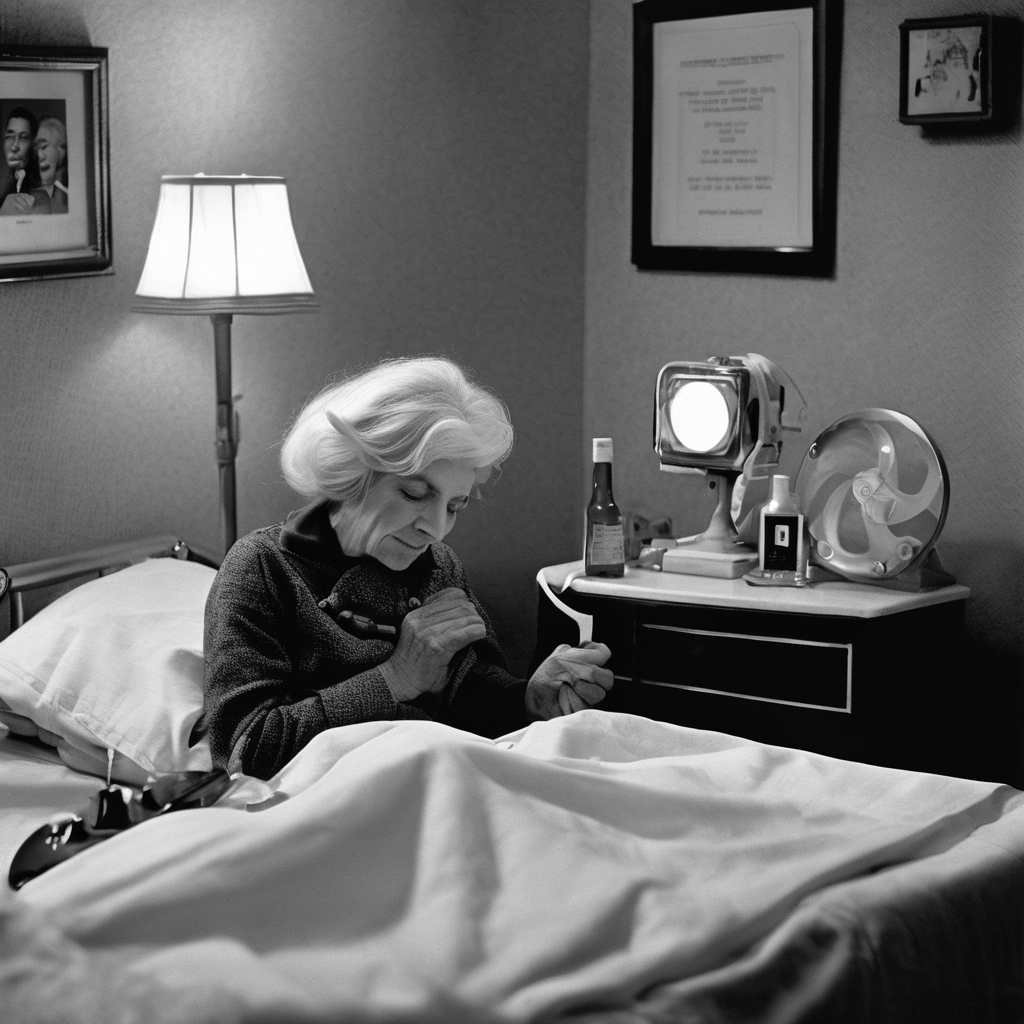
The oxygen mask slipped from Clara’s face as she reached for the vintage photograph on the nightstand. Room 237 had been her sanctuary for three months now, ever since the diagnosis made her world smaller, quieter, more precious. The hospice staff called it “preparing for transition,” but Clara preferred to think of it as finally having time to remember.
The photograph showed her standing beside Marcus in 1967, both of them young and defiant, holding protest signs outside the Pentagon. Her hair was long then, streaming like a banner in the wind. His smile was crooked, the same smile that had convinced her to leave everything behind and follow him to a commune in Oregon where they grew their own food and believed love could change the world.
“Sustainable living,” she whispered to the empty room, the words carrying a bitter irony now that her own sustainability had an expiration date. They had been ahead of their time, she and Marcus, composting before it was trendy, refusing plastic bags decades before anyone spoke of microplastics or carbon footprints.
A knock interrupted her reverie. Dr. Patel entered with her usual gentle efficiency, checking Clara’s vitals while humming something that sounded almost like a meditation chant. The young doctor had mentioned she practiced mindfulness between patients, a way to stay centered in a place where people came to die.
“How are we feeling today, Clara?”
“Grateful,” Clara said, surprising herself with the honesty. “And curious about something.”
Dr. Patel raised an eyebrow as she adjusted the IV drip.
“I keep dreaming about a garden,” Clara continued. “Not any garden I’ve ever planted, but one that grows without soil, without sun. The plants shimmer like they’re made of starlight, and when I touch them, I feel… connected to everything. Every person who ever loved, every tree that ever grew, every raindrop that ever fell.”
The doctor’s pen paused over her chart. “Dreams can be very vivid during this time. Some people call them visitations.”
Clara nodded, though she wasn’t entirely convinced this was just her mind creating comfort. The dreams felt too real, too purposeful. In them, she could hear Marcus’s voice—not memory, but actual presence—explaining that consciousness wasn’t what they’d always believed. That it was more like mycelium, the underground network that connected forests, allowing trees to communicate and share resources across vast distances.
“In my dream, Marcus tells me we’re all part of the same network,” Clara said. “That dying is just changing addresses within it.”
Dr. Patel sat down, abandoning her professional distance. “My grandmother in Mumbai used to say something similar. She believed the breath we release at death becomes the breath that fills newborn lungs. A recycling of souls.”
Through the window, Clara could see the hospice garden where volunteers had planted native species to support declining bee populations. Even here, at the edge of everything, people were thinking about regeneration, about how endings could become beginnings.
The morphine made her drowsy, but Clara fought against it. She wanted to stay present for whatever was coming. In her pocket, she clutched a small stone Marcus had given her fifty years ago, smooth river rock that had witnessed countless seasons of change.
As afternoon light slanted through the blinds, casting moving shadows that looked almost like dancing figures, Clara felt her breathing becoming shallower. But instead of fear, she felt a profound sense of expansion, as if the boundaries of her skin were dissolving.
The last thing she heard was Dr. Patel’s voice, soft and reverent, saying something about how the room felt different now, charged with an energy that reminded her of temple spaces back home where the veil between worlds grew thin.
Clara smiled as her vision blurred, because she could finally see the starlight garden spreading beneath her closed eyelids, infinite and welcoming, where every breath she had ever taken was waiting to be transformed into something new.

Leave a Reply