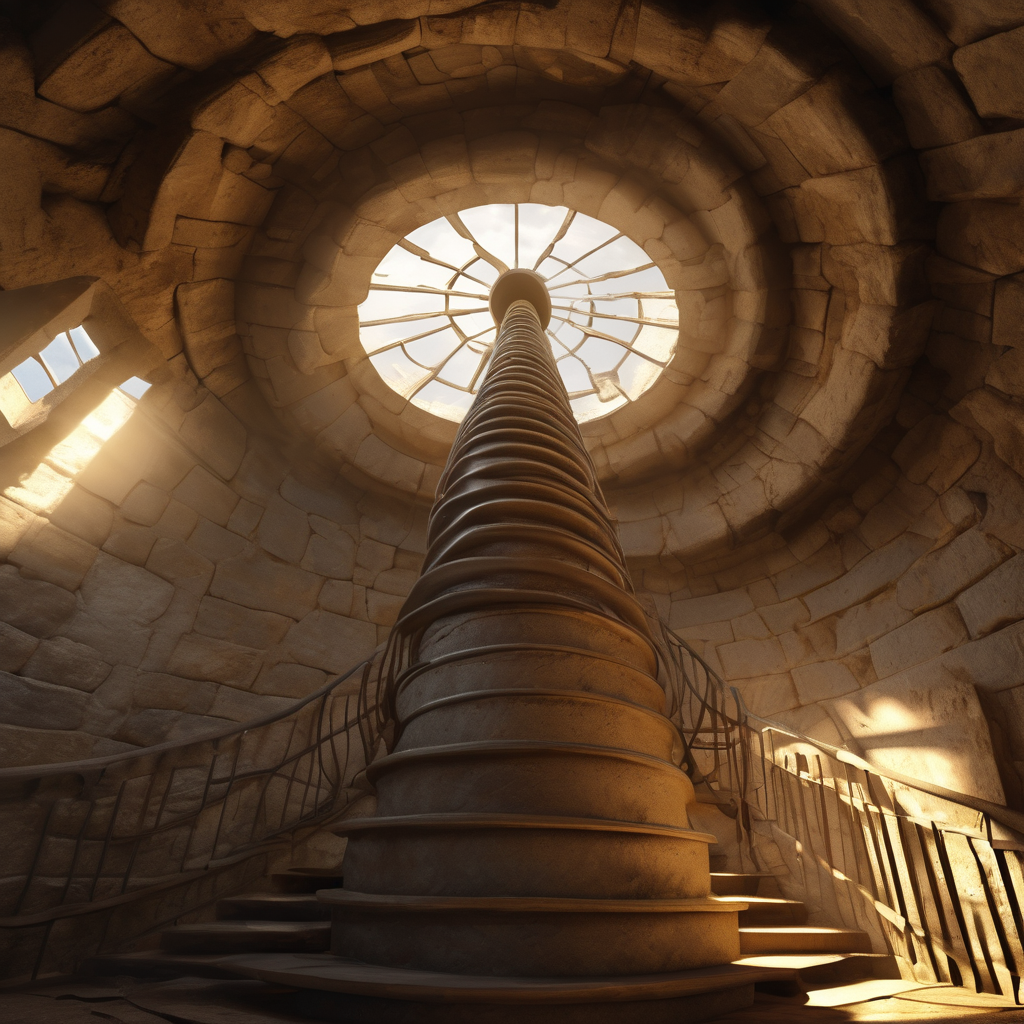
The lighthouse keeper’s daughter found it wedged between two stones in the tower’s highest room, where the old Fresnel lens caught dawn light like trapped honey. The envelope bore no address, only a water stain shaped like a moth.
Inside, the letter began: “To whoever finds this during the next solar eclipse—”
Mara had come to the lighthouse to settle her late father’s estate, though the word “estate” felt too grand for three rooms of maritime charts and a collection of brass sextants. The coastal town below had transformed since her childhood. Where fishing boats once bobbed, influencers now posed against weathered pilings, their ring lights competing with the sunset. The old cannery had become a wellness retreat offering something called “oceanic mindfulness immersion.”
She unfolded the letter completely. The handwriting looked familiar yet impossible—it was her own, but aged somehow, as if she’d written it decades from now.
“The lighthouse holds more than ships at bay. On the thirteenth step, press the barnacle that resembles a closed eye. But only during the eclipse, when the shadow economy becomes visible.”
Shadow economy. Her father had mumbled about it during his final days, when the morphine made him speak in poetry. She’d assumed it was delirium, like his claims about seeing market traders from the 1800s haggling over pearls in the abandoned gift shop.
The eclipse was tomorrow. The news channels were calling it the event of the decade, though they called everything that now. Hotels had tripled their prices. Someone had already started a festival featuring sustainable food vendors and a DJ who claimed to mix “cosmic frequencies.”
That night, Mara dreamed of her father young again, trading something golden with a woman whose dress seemed sewn from kelp. When she woke, salt crystals had formed on her pillow in the shape of words: “Some debts transcend currency.”
The morning of the eclipse arrived gray as oyster shells. Tourists gathered on the beach with their special glasses, phones raised skyward. Mara climbed the lighthouse stairs, counting each one. On the thirteenth step, she found it—a barnacle with a vertical crack like a sleeping eye.
As the moon began its passage across the sun, she pressed it.
The wall swung inward, revealing not a room but a market that shouldn’t exist. Vendors in clothing from every century sold impossible things: bottled fog that whispered secrets, paintings that changed based on who viewed them, letters that hadn’t been written yet. The currency wasn’t money but memories, traded like coins of condensed time.
A woman in Victorian dress approached, her face kind but urgent. “You received my letter, then. Your father owed us a memory—the moment he first saw your mother. He couldn’t bear to pay it, knowing it would be gone forever. But debts in the shadow economy compound differently. If unpaid by sunset, they take related memories from the bloodline. Yours.”
Mara thought of her mother, dead these fifteen years, how her father had described their meeting: a bookshop, rain, her mother reading Neruda aloud to no one. The only version of her mother young and alive that Mara could access.
“What if I trade something else?” Mara asked.
“The debt specifies the currency.”
Around them, the shadow market flickered as the eclipse deepened. A man sold tomorrow’s newspapers. A child traded her imaginary friend for a real one. The ghostly commerce of things that shouldn’t be bought or sold continued, indifferent to Mara’s dilemma.
She thought of her father’s last words: “Some things are worth forgetting if it means others can remember.”
From her pocket, she pulled the letter—her own letter, somehow written from a future where she’d made this choice before, or would make it again. Time worked differently here. She understood now why she’d written it, why she’d hidden it for herself to find.
“I’ll pay,” she said.
The woman held out her hand. Mara grasped it, and the memory flowed out like water from a cup. Her father’s voice describing her mother’s laugh, gone. The color of the dress in his story, vanished. But something else flowed back—not the memory itself, but something the shadow economy had extracted from it, refined into something purer.
When the eclipse ended and the wall sealed, Mara stood on the thirteenth step holding a pearl that contained not the memory but its essence—love distilled into nacre. She couldn’t remember her father’s story anymore, but she could feel its truth in her palm, warm and luminous.
That evening, as influencers posted their eclipse selfies and the festival wound down, Mara sat in the lighthouse’s highest room. She wrote a letter to herself, to find during the next eclipse, when she would need to remember why forgetting had been a form of keeping. She sealed it with wax from a candle that burned without consuming itself—another impossible thing from an impossible market, paid for with currency that no economist could chart.
She wedged it between two stones where morning light would find it first, then descended the stairs, counting backward from thirteen, carrying the pearl that held what remained of love when all its details were stripped away—its weight, its light, its tendency to endure.

Leave a Reply