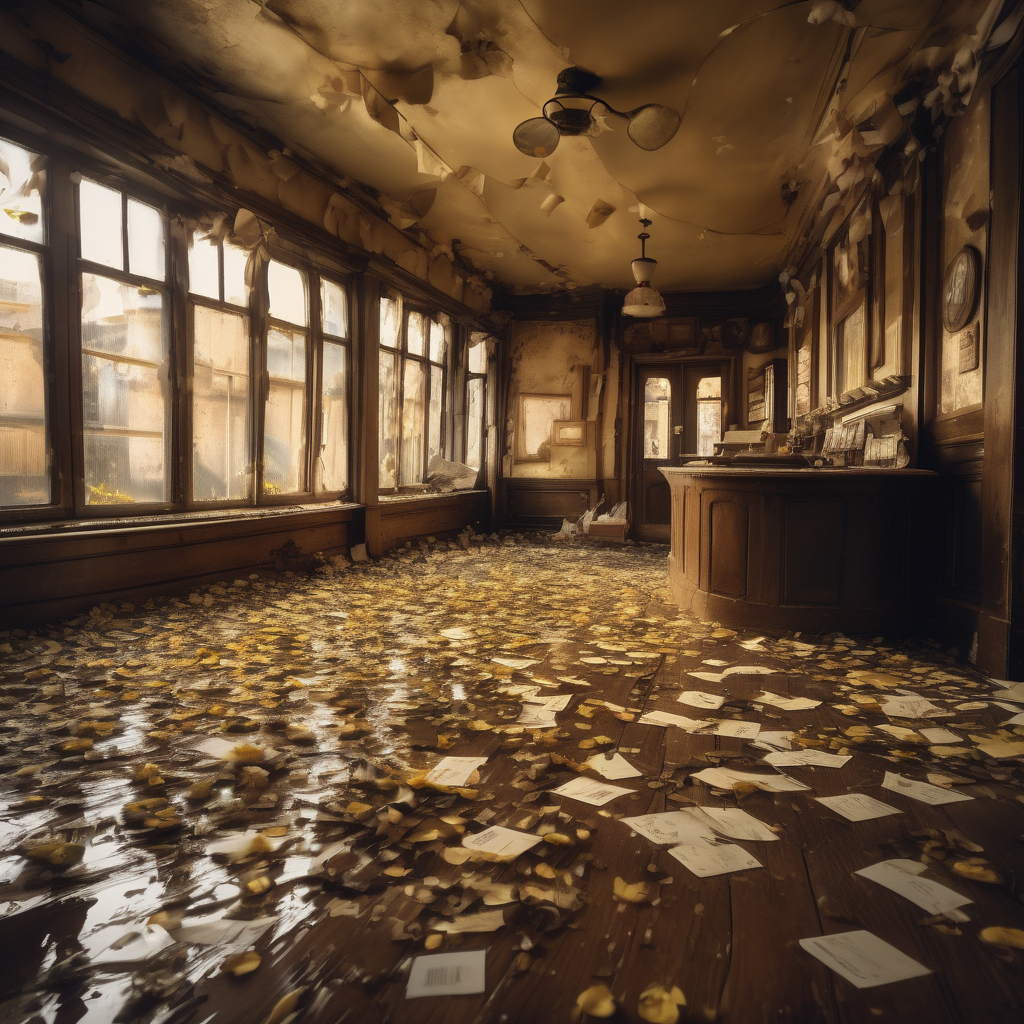
The café smelled of cardamom and burnt coffee when I discovered them—dozens of letters scattered beneath the floorboards like pressed flowers. The building had been gutted by the recent floods, and I was helping Maya clear out what remained of her grandmother’s shop when my foot went through a rotted plank.
“What is it?” Maya asked, looking up from a box of waterlogged books.
I pulled out an envelope, yellowed with age. The handwriting was elegant, looping: *To the one who makes the morning stars jealous*. No address. No stamp.
“Love letters,” I said, gathering more from the hidden space. “Dozens of them.”
Maya set down her box and joined me on the floor. We read in silence as the afternoon light shifted through the broken windows. Each letter was signed simply *H*, written to someone who remained nameless, addressed only through endearments that grew more desperate with each page.
*My dearest one who tastes of summer rain…*
*Beloved who laughs like silver bells in wind…*
*To you who will never read these words…*
“They’re beautiful,” Maya whispered. “But so sad. Look—none of them were ever sent.”
I studied the final letter in the stack. The handwriting was shakier, as if written by an older hand: *I have loved you for forty-seven years through the glass of this window. Tomorrow the soldiers come. I wish I had been brave enough to cross the street just once.*
“H,” Maya repeated. “Who do you think—” She stopped, her eyes widening. She scrambled to her feet and moved to the window that faced the street. Across the narrow cobblestones stood another old building, its ground floor boarded up, a faded sign barely visible: *Holloway Tailoring*.
“Maya, what is it?”
“My grandmother.” Her voice was barely audible. “Her name was Helena. And she used to stand at this window every morning, watching the tailor’s shop.” She turned back to me, tears starting. “She never married. Said the only man she ever loved died in the war before she could tell him.”
I looked down at the letters again, then back at the empty shop across the street. “What was the tailor’s name?”
Maya was quiet for a long moment. “Samuel. Samuel Holloway.” She wiped her eyes with the back of her hand. “He never married either. Died just last spring.”
The late afternoon sun slanted through the damaged café, illuminating dust motes that danced like tiny spirits. I thought of Helena, young and then old, writing letter after letter to a man who stood perhaps fifty feet away, both of them trapped by shyness, by propriety, by the cruel mathematics of chance and time.
“Maya,” I said gently. “What if we delivered them?”
She looked at me strangely. “But he’s—”
“To his grave. To his family. Someone should know how deeply they were loved, even if they never knew it while they lived.”
That evening, we discovered Samuel had a great-nephew who lived above the old tailor shop, sorting through his own inheritance of memories. When we knocked on his door and explained what we’d found, he listened with the kind of attention usually reserved for prayers.
“Uncle Sam,” he said finally, “kept a journal. Want to know something strange? For decades, he wrote about a woman in the café window. Called her his ‘morning angel.’ Said he was too much a coward to speak to her.”
Maya and I looked at each other.
“He wrote letters too,” the nephew continued. “Never sent them. Found them after he passed. They’re addressed to ‘the woman who makes coffee taste like hope.’”
Sometimes love is not about the letters we send, but the ones we write anyway, believing in the possibility of connection across impossible distances. Helena and Samuel lived their entire love story in the space between two windows, in the daily ritual of seeing and being seen, in the fierce tenderness of unspoken devotion.
We buried both sets of letters together in the small cemetery behind the old church, each writer finally reaching their intended reader in the only way left to them. The earth received them gently, these words that had waited so long to find their home.

Leave a Reply