The aurora borealis had been behaving strangely for three months when Isla first noticed her grandmother’s memories dissolving like sugar in rain. Green curtains of light danced across the Orkney sky at all hours, defying every law of physics her meteorology degree had taught her. But it wasn’t until Gran started forgetting the names of her own roses that Isla understood the lights weren’t natural phenomena—they were harvesters.
“The red ones,” Gran said, pointing with a trembling finger toward her prize-winning David Austin varieties. “What do you call the red ones again, dear?”
Isla’s throat tightened. Those weren’t red roses. They were deep coral pink, and Gran had spent forty years perfecting their cultivation. She’d named them after her late husband, called them her “Bertie’s Blush” roses, and had fought the Royal Horticultural Society for three years to get them officially recognized.
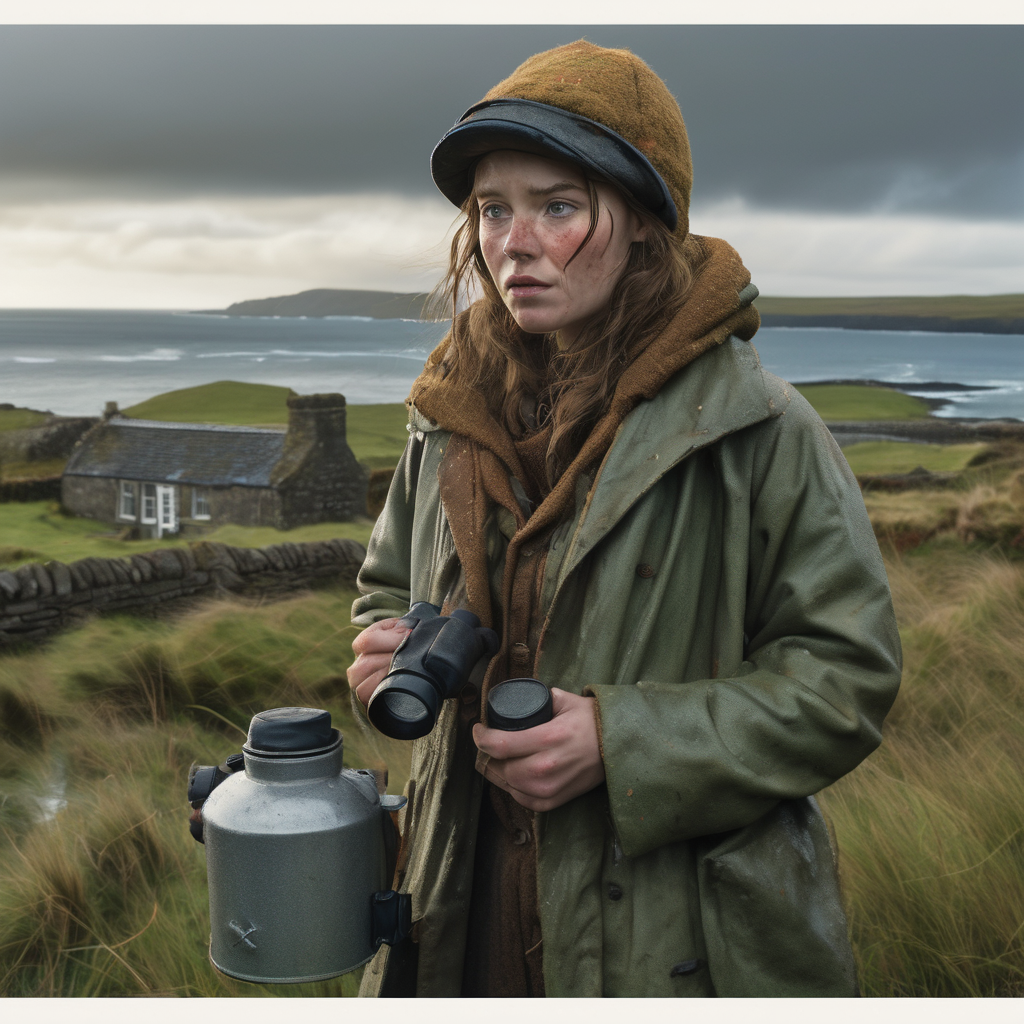
That night, Isla stood in the garden with a thermos of coffee and her father’s old binoculars. The aurora writhed overhead like living silk, and she could swear she saw shapes moving within the luminescence—elongated forms that seemed almost… purposeful.
Her phone buzzed. A text from her colleague at the weather station: “You seeing this? My mum just asked me to explain what snow is. She’s lived in Scotland for eighty-seven years.”
Then another: “Dad forgot how to tie his shoes. The muscle memory is just… gone.”
Isla lowered the binoculars and watched her grandmother through the kitchen window. Gran stood motionless at the sink, staring at the dirty plates as if they were ancient artifacts from a civilization she’d never encountered.
The aurora pulsed brighter, and Isla felt something brush against her mind—gentle as a moth’s wing, hungry as a winter tide. In that moment of contact, she understood. They weren’t from Proxima Centauri’s second planet, as the emergency broadcasts would later claim. They were far older than that, wanderers who fed on the accumulated wisdom of sentient species. Memory was the most potent energy source in the universe, and Earth’s elderly population represented a feast beyond imagination.
But they hadn’t anticipated human stubbornness.
Isla ran inside and grabbed her grandmother’s hand. “Tell me about Bertie,” she said urgently. “Tell me about the day you met him.”
Gran’s eyes clouded, then cleared slightly. “He was… he had kind eyes. Green as sea glass.”
“And the roses? Tell me about the roses.”
For the next six hours, Isla became a living archive, asking questions, recording answers on her phone, writing frantically in notebook after notebook. Every story Gran told seemed to strengthen her, to rebuild the neural pathways the aurora had tried to steal.
The creatures in the light grew agitated. The aurora began to flicker and writhe more violently, and Isla realized they were struggling against something. Memory, she understood, wasn’t just individual—it was collective. It belonged not just to the person who held it, but to everyone who shared it.
As dawn broke, the aurora faded to pale green whispers. Gran stood at the kitchen window again, but this time her eyes were bright and alert.
“Isla, dear,” she said, “would you help me prune the Bertie’s Blush roses today? They’re looking a bit wild.”
Isla smiled and reached for her grandmother’s gardening gloves. The memory thieves would return—she could feel their frustration echoing across space—but now she knew how to fight them. Stories shared were stories preserved. Love remembered was love that could never truly be stolen.
In gardens across Scotland, other grandchildren were learning the same lesson, one rescued memory at a time.

Leave a Reply