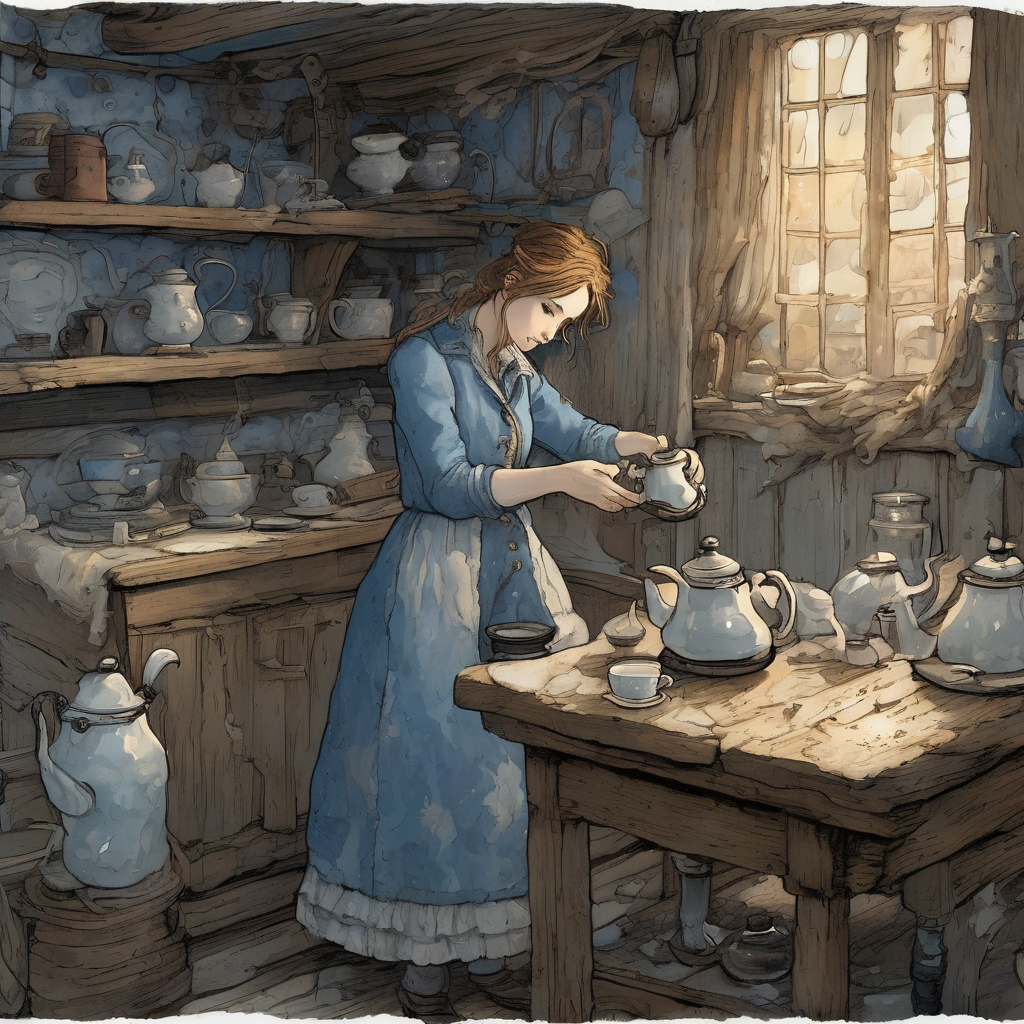
Every morning at dawn, Celeste would brew her grief into tea. The ritual had begun three months ago when her grandmother passed, leaving behind only a weathered cottage and an inexplicable collection of antique hourglasses filled with what appeared to be crystallized tears.
The townspeople of Millhaven had grown accustomed to the strange mist that emanated from Celeste’s chimney each morning—a silvery vapor that smelled of lavender and longing. What they didn’t know was that the mist carried their own sorrows away, drawn from their dreams while they slept.
Celeste discovered this accidentally when Mrs. Henderson from next door knocked on her kitchen window, eyes bright for the first time since her husband’s funeral. “I don’t know what you’re doing over there, dear,” she said, “but I finally slept through the night without crying.”
The tea leaves weren’t ordinary ones. Grandmother Vera had cultivated them in her greenhouse, whispering to each plant about heartbreak, disappointment, and loss. The leaves absorbed these emotions, growing darker and more potent with each whispered confession. When steeped properly, they could draw sorrow from the air itself.
As autumn deepened, word spread quietly through the valley. People began leaving offerings on Celeste’s doorstep: photographs of deceased loved ones, divorce papers, rejection letters, medical diagnoses. They never knocked or spoke to her directly, but they understood somehow that the strange morning ritual was meant for them.
Celeste found herself becoming a repository for the town’s collective pain. Each morning, she would select an hourglass—choosing intuitively which crystallized tears to add to her brew. The blue ones for fresh grief, the amber for regret, the clear ones for the particular sadness of things that could never be undone.
But grief, she learned, was not meant to be eliminated entirely. Without it, people began forgetting not just their pain, but the love that had caused it. Mrs. Henderson stopped visiting her husband’s grave. The widower on Elm Street threw away his wife’s belongings with casual indifference. Children who had lost pets asked their parents for replacements as if the previous animals had never existed.
On the winter solstice, Celeste broke the largest hourglass and let all the crystallized tears dissolve into the soil of her grandmother’s garden. The weight of returned sorrow nearly crushed the town that night, but with it came the memory of why that sorrow mattered.
The next morning, she brewed regular tea and left her grandmother’s special leaves to rest. From her kitchen window, she watched Mrs. Henderson walking toward the cemetery with fresh flowers, tears streaming down her face, but smiling.
Some burdens, Celeste realized, were meant to be carried, not cured. The mourning hour served not to steal away sadness, but to remind everyone that love leaves marks, and those marks are worth preserving.
She kept one small hourglass on her windowsill—filled with her own tears for Grandmother Vera—and let it catch the morning light like a prism, casting rainbows across her kitchen table.

Leave a Reply