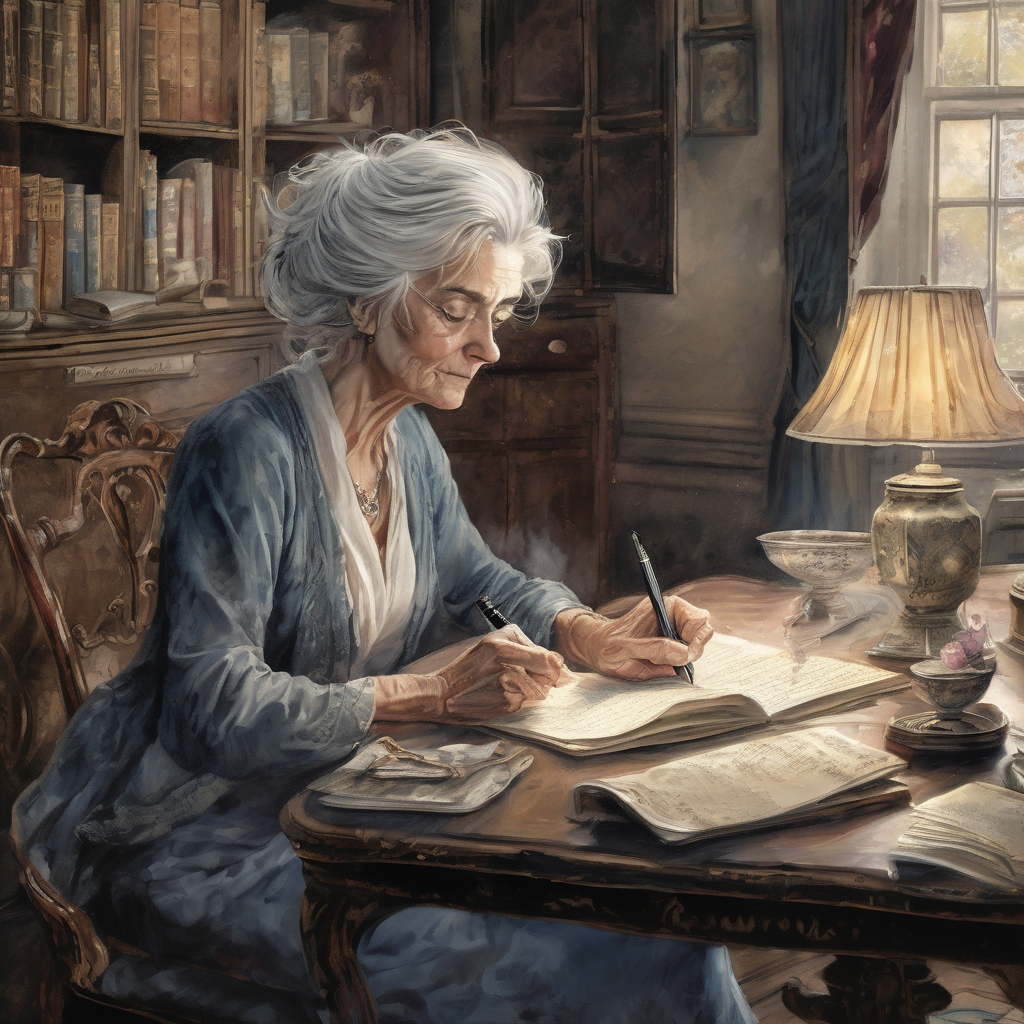
Margaret had written over three thousand obituaries in her forty-year career, but she had never written one for someone who was still alive—until now.
The assignment came on a Tuesday morning, delivered by a woman in a burgundy coat who claimed to represent the estate of Eleanor Thorne. Eleanor, the woman explained, was ninety-three and wished to commission her own obituary before her death. She wanted it perfect, she wanted it true, and she wanted it written by the best.
“She’s heard of your work,” the woman said, sliding a thick envelope across Margaret’s desk. “The way you captured the essence of the mayor’s wife last month, how you made that reclusive poet sound like a beloved community figure. Eleanor says you have a gift for finding the story that should be told.”
Margaret accepted the commission, though something about it felt different from her usual work. Perhaps it was the way the woman’s eyes seemed to hold secrets, or how she mentioned Eleanor lived in the old Blackwood estate on the hill—a place Margaret remembered from childhood whispers about strange lights and unexplained visitors.
The estate proved even more mysterious than the stories suggested. Eleanor greeted Margaret at the door herself, a tiny woman with silver hair that seemed to catch light from sources Margaret couldn’t identify. The house felt simultaneously ancient and timeless, filled with artifacts that shouldn’t have existed together: Victorian furniture beside what looked like Pre-Columbian sculptures, books in languages Margaret didn’t recognize shelved next to contemporary bestsellers.
“I suppose you’re wondering why someone would commission their own obituary,” Eleanor said, leading Margaret to a sitting room where tea appeared on the table though Margaret hadn’t seen anyone prepare it.
“I’ve had stranger requests,” Margaret lied politely.
Eleanor smiled. “Oh, I doubt that. You see, my dear, I’ve been alive for far longer than the newspapers will be able to report. The truth would strain credibility. So I need someone who can craft a story that honors what I’ve been while fitting the shape of what people can accept.”
Over the following weeks, Margaret visited Eleanor regularly. Each session revealed new impossibilities presented as casual facts. Eleanor spoke of learning medicine from a woman in Salem in 1692, of helping slaves escape through tunnels that connected to places hundreds of miles away, of tending to soldiers in wars that spanned centuries. She mentioned lovers whose names appeared in history books, friendships with people who had died decades before Eleanor’s reported birth year.
“I’ve been many things,” Eleanor explained during one visit, showing Margaret daguerreotypes that seemed to move slightly when viewed from the corner of one’s eye. “Midwife, conductor, nurse, teacher, guardian. Always helping people transition from one state to another. Birth, freedom, healing, knowledge, death. I’ve been a bridge.”
Margaret found herself believing impossible things. When Eleanor spoke of being present at historic moments, Margaret could see them reflected in the old woman’s eyes. When she mentioned knowing people from different eras, Margaret noticed how Eleanor’s mannerisms would shift subtly, as if she were channeling memories of different times.
The challenge became how to translate Eleanor’s true story into something a newspaper could print. Margaret began crafting an obituary that layered truth beneath acceptable fiction. She wrote of Eleanor’s “extensive volunteer work with marginalized communities” instead of her centuries helping witches and refugees. She described her “passionate interest in historical preservation” rather than her firsthand experience of historical events. She mentioned Eleanor’s “remarkable ability to comfort the dying” without explaining how she had guided souls across thresholds for generations.
As Margaret worked on the obituary, she noticed changes in Eleanor. The old woman seemed to be growing translucent, as if the act of summarizing her life was somehow completing it. During their final meeting, Eleanor appeared almost ethereal, present but not quite solid.
“You’ve done beautiful work,” Eleanor said, reading the finished obituary. “You’ve managed to tell the truth while telling a lie, and somehow made both more honest than either would be alone.”
“When do you plan to…” Margaret began, then stopped, unsure how to phrase the question.
“Soon,” Eleanor replied. “The story is complete now. That’s how these things work for people like me. We exist in the spaces between other people’s stories, and when our own story is finally told properly, even in code, we can rest.”
Margaret submitted the obituary to the newspaper that evening. When she drove past the Blackwood estate the next morning, she found it empty, as if it had been abandoned for years. The newspaper ran Eleanor’s obituary a week later, describing a woman who had died peacefully at ninety-three after a life of quiet service to her community.
Only Margaret knew that every word was true, and that every word was also a beautiful, necessary lie. She kept the original draft, the one with all the impossible details, in her desk drawer. Sometimes she would read it and remember that the best stories are always the ones that find ways to make truth and fiction dance together, creating something larger than either could achieve alone.
Three months later, Margaret received another unusual commission, this time from a man who claimed to have been a lighthouse keeper for the same lighthouse for over two hundred years. As she drove to meet him, Margaret smiled, realizing she had found her specialty: writing obituaries for people whose lives were too extraordinary for ordinary truth, helping them cross one final threshold from the impossible into the simply memorable.


Leave a Reply