The auction house smelled of mothballs and old money. Eleanor adjusted her vintage blazer—thrifted, naturally, though she’d never admit it to her colleagues—and studied the Victorian mansion’s listing. The price was almost too good to be true, which in her experience meant it absolutely was.
“Beautiful bones,” murmured the real estate agent, a woman whose entire personality seemed curated for Instagram. “Very authentic. The previous owners were quite the collectors.”
Eleanor nodded, running her fingers along the wallpaper. The house had that particular stillness that came with decades of careful preservation, as if someone had been desperately trying to keep time from moving forward. She could already envision the renovation: exposed brick, sustainable materials, maybe a little plant wall in the kitchen. Her followers would eat it up.
The cellar was where she heard them first.
She’d been measuring the space, mentally calculating the cost of waterproofing, when the sound drifted through the stone walls. Soft giggling, like children playing hide-and-seek. The agent had stepped outside to take a call, leaving Eleanor alone with the musty air and lengthening shadows.
“Hello?” she called out, feeling slightly foolish. The giggling stopped.
That night, Eleanor researched the property’s history with the obsessive thoroughness that had made her successful in both real estate and social media. The mansion had belonged to the Whitmore family for over a century. They’d been philanthropists, she discovered, known for their work with displaced children during various historical upheavals—the Depression, both world wars, even housing refugee families in the sixties and seventies.
The last Whitmore had died just six months ago. Estelle Whitmore, ninety-three, found peacefully in her garden among the heirloom tomatoes and rosemary. No living relatives. The entire estate, including the house and its contents, had been left to a children’s charity that promptly decided to liquidate everything.
Eleanor put in an offer that same night.
The children became more active once she moved in. She’d catch glimpses of them in her peripheral vision—small shadows darting between rooms, the sound of bare feet on hardwood floors when she was alone. They seemed particularly fond of the kitchen, where she’d wake to find cabinet doors slightly ajar or chairs pulled out from the table at odd angles.
She started leaving out small offerings. Cookies from the local bakery, glasses of milk, sometimes wildflowers from the overgrown garden. The gifts were always gone by morning, leaving behind only the faintest scent of lavender and childhood summers.
“You’re being ridiculous,” she told herself, though she continued the ritual. There was something deeply satisfying about the routine, like feeding stray cats or maintaining a sourdough starter. Besides, the house felt less lonely with its invisible occupants.
It was while renovating the cellar that she found the first room.
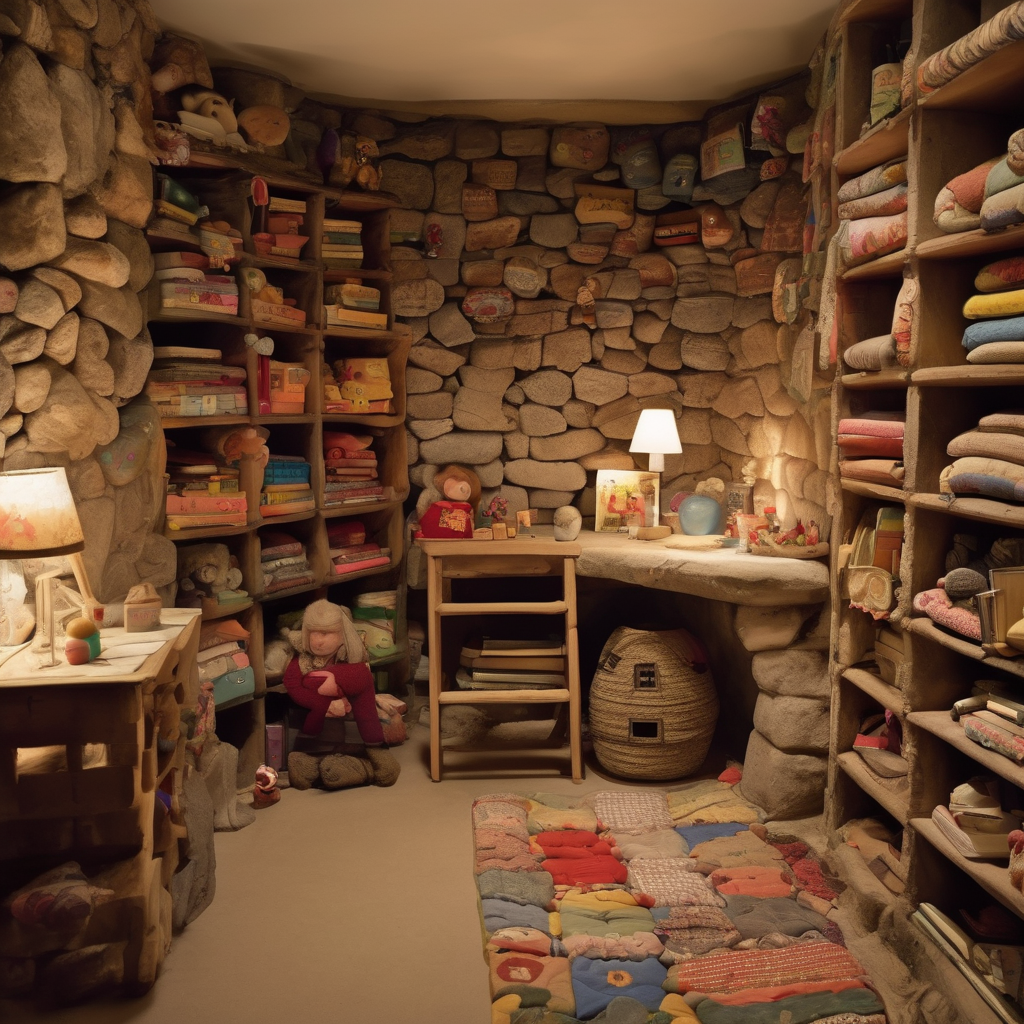
The wall had been bothering her for weeks—something about the proportions felt off. When she finally convinced her contractor to investigate, they discovered a space behind the stone that shouldn’t have existed according to the original blueprints. Inside, they found a cozy hideaway: built-in bunks, shelves lined with books and toys, even a small ventilation system that connected to the main house.
“Probably a speakeasy,” the contractor suggested. “These old houses are full of surprises.”
But Eleanor knew better. The books were in multiple languages, the toys spanning different decades. There were small clothes, carefully preserved, and on one wall, dozens of children’s drawings depicting the house and its gardens. At the bottom of each drawing, in careful adult handwriting, were names and dates: “Anna, age 7, 1943.” “Tommy and James, 1952.” “The Nguyen children, 1975.”
That night, Eleanor sat in the hidden room with a bottle of wine and read through a collection of journals she’d found tucked behind the books. Estelle Whitmore’s careful handwriting filled page after page with stories of children who’d needed sanctuary. Some stayed for weeks, others for years. Some had been escaping war, others poverty, still others situations too painful for a child to bear alone.
“We give them time,” read one entry from 1968. “Time to heal, time to play, time to remember what safety feels like. The house remembers them all.”
Eleanor understood then. The children weren’t ghosts—they were echoes, impressions left by decades of young lives that had found refuge within these walls. They were the laughter that had soaked into the floorboards, the dreams that had been whispered into pillows, the sense of belonging that had been cultivated so carefully it had become part of the house’s foundation.
She called the charity the next morning.
“I’d like to make a proposal,” she said. “About the house.”
Within six months, Eleanor had transformed the Victorian mansion into something new yet familiar. The hidden room became the centerpiece of a specialized bed-and-breakfast that catered to families in transition—refugees, relocating military families, anyone who needed a soft place to land while life sorted itself out.
She kept the old traditions: fresh flowers in every room, homemade cookies always available in the kitchen, and gardens full of herbs and vegetables that guests were encouraged to enjoy. The house’s Instagram account showcased not just its restored beauty, but the stories of the families who found temporary homes within its walls.
The children still visited, though less frequently now that the house was full of living voices. Sometimes Eleanor would catch a glimpse of them playing with the current young residents, teaching new arrivals the best hiding spots and the secret way to access the garden when the adults weren’t looking.
Late at night, when the house settled into peaceful quiet, Eleanor would sit in what had been Estelle Whitmore’s study and plan for the future. Applications arrived daily from families seeking sanctuary, and Eleanor found herself developing the same careful handwriting as she documented their stories, continuing a tradition that had begun long before she was born.
The house had taught her something about legacy that her real estate career never had: the most valuable properties weren’t the ones that showcased perfectly curated lives, but the ones that held space for lives in all their messy, complicated, beautiful reality.
In the margins of her planning notebook, Eleanor sometimes found small drawings—flowers, houses, smiling figures—that she didn’t remember making. She always smiled when she discovered them, adding them to the collection that grew on the wall of the hidden room, a gallery that now spanned nearly a century of children who had known, however briefly, what it meant to be safe.


Leave a Reply