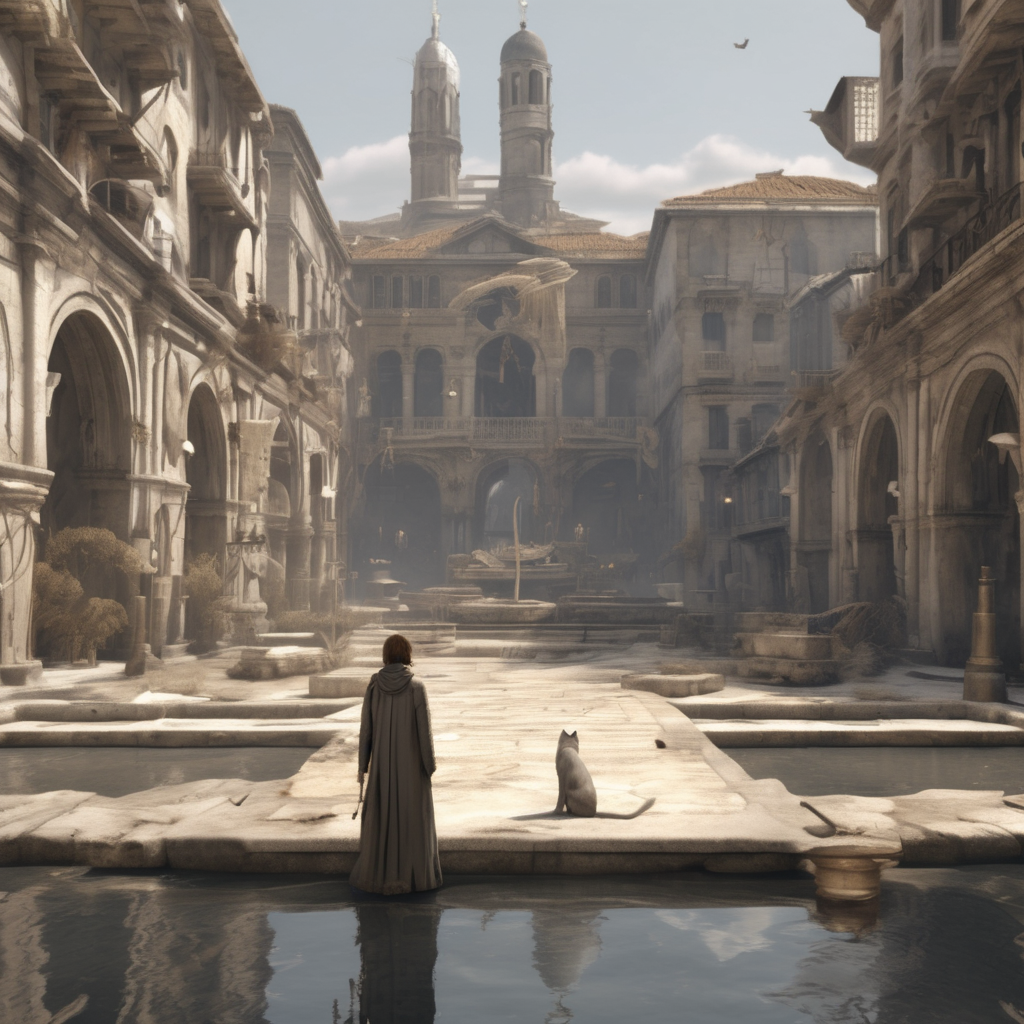
The city of Aurelia was built on a foundation of meticulously managed grief. Elara performed her duties at the Scriptorium with a placid efficiency that was neither joyful nor resentful. It was simply… done. Her heart acted its wage, and no more. She filed the requisitions for Sorrow-Seals, cross-referenced the ledger of Laments, and ensured every public display of mourning fell within the sanctioned guidelines.
There was a seal for a failed harvest (ochre, stamped with a withered stalk), one for a beloved pet’s passing (gray, a simple paw print), and a hundred and twelve variations for the loss of a relative, each tiered by blood proximity and the nature of their departure. This was the system. It prevented emotional floods, the chaotic tides of despair that had, according to the Founders, nearly washed the old world away.
Then Kael vanished.
He didn’t die. Death had forms, procedures. Kael, her younger brother, simply ceased to be present. One moment he was sketching the canal barges from their balcony, the next, the sketchbook lay open on the stone, his charcoal pencil rolling to a stop. The air smelled of rain on hot dust and a faint, electric tang.
Elara went to the Ministry of Emotional Temperance. The official, a man with a face as smooth and unreadable as river stone, listened patiently. “There is no seal for… ambiguous departure,” he stated, tapping a manicured finger on the great leather-bound book that gave her story its title. “An unsanctioned disappearance is not a Permitted Sorrow. Are you quite sure you recall the event correctly? Grief can invent such phantoms.”
It was masterful gaslighting, so gentle she almost believed him. But the hollow space in her chest, a void shaped exactly like her brother, was no phantom. Her sorrow was illicit, a contraband emotion. She was expected to go on as if Kael had been a dream she’d finally woken from.
In the evenings, she would unscroll the official parchment of griefs, her eyes tracing the list of sanctioned pains. It was a grim sort of doomscrolling through the misery of others, searching for a reflection of her own. She found none. The city whispered about people like her, the ones who felt things off-menu. They were the delulu, delusional enough to believe their private heartbreaks deserved public space. To see one weep for an uncatalogued loss was to feel a profound and sudden ick, a discomfort with the raw, the unregulated.
Her search for an outlet began as a side quest, a frantic detour from the main plot of her gray, ordered life. It led her to the Undercroft, a part of the city where the canals ran dark and secrets were a valid currency. Here, she found an old woman named Vessa who sold ‘wild feelings’ from a cart hidden beneath a tarpaulin.
“The Ministry wants you to think your little grief is nothing,” Vessa rasped, her eyes like chips of obsidian. “They changed the rules generations back. A total vibe shift. Before the Catalogue, every sorrow was a river. Now, they only give you a thimbleful of approved water and tell you to be grateful you’re not dying of thirst.”
Elara’s compact with the city was broken. It wasn’t a war, not yet. It was a situationship, undefined and volatile. She had spent her life engaged in a kind of emotional quiet quitting, and now she was being asked to feel everything at once.
The turning point came during the Festival of Placid Remembrance, a day of quiet, state-approved nostalgia. The city square was filled with citizens holding their Sorrow-Seals, weeping gentle, permissible tears for distant, catalogued tragedies. Ministry officials moved through the crowd, their presence a calming balm.
Elara walked into the center of the square. She held no seal. She wore no sanctioned color of mourning. She simply stood, and for the first time since Kael had vanished, she allowed the full, unbridled force of her grief to exist.
It wasn’t a scream. It was a silence more profound than any sound, a gravity that pulled at the air. Then, a single tear traced a path down her cheek. It wasn’t a permissible, salty tear. It was dark and smelled of rain on hot dust and the sharp tang of ozone. It hit the cobblestones with the softest hiss. Then another fell. And another.
A hush fell over the square. The gentle, authorized weeping stopped. All eyes were on her. This was it, then. Not a villain era, as the hushed stories of the Undercroft called it, but something stranger. A grief era. For the first time, the sorrow wasn’t happening *to* her; she *was* the sorrow. A storm of main character energy she had never asked for.
The rain began in earnest, but only around her. A small, personal downpour that smelled of her brother’s last moment. It soaked her clothes and plastered her hair to her face, a baptism in forbidden sadness. No one moved. The air in Aurelia, so long placid and controlled, crackled with the impossible. A new feeling was being written into the world, not in a book, but in the rain, on the stones, in the stunned silence of a thousand hearts that had forgotten they were allowed to break.


Leave a Reply