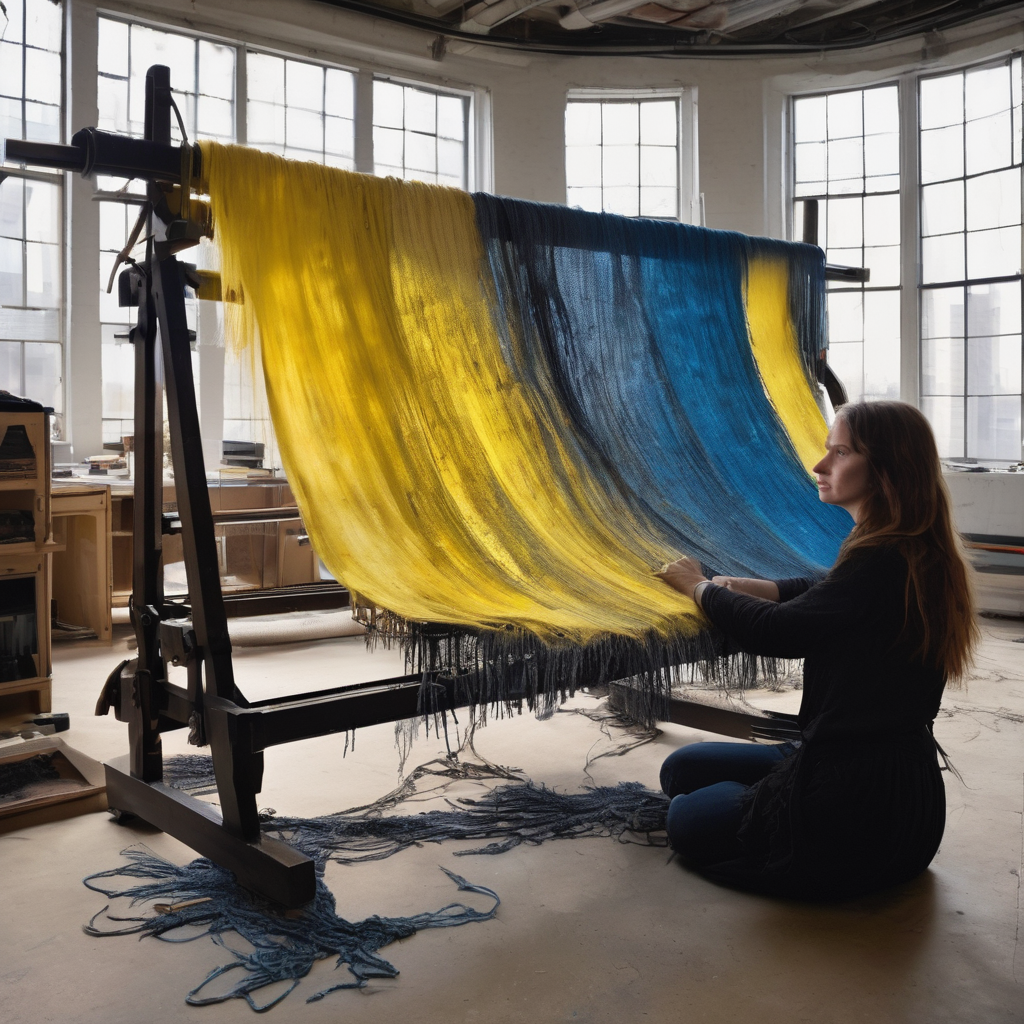
The city of Lumina had undergone a vibe shift. It wasn’t sudden, more like the slow fading of a watercolor left in the sun. Anja, a Chroma-wright, felt it most acutely. Her trade was the weaving of sentiment into tapestries, using threads dyed with pure emotion: joy-yellow, melancholy-blue, rage-crimson. But now, her spools were fraying, the colors bleeding into a fuzzy, listless grey.
The affliction had no official name, but people whispered of it in the muted cafes. It started at the edges of things—a lover’s blush becoming a faint, pixelated rash of pink; the deep emerald of the park leaves shivering with a colorless hum. It was a visual and spiritual malaise, a static that ate color.
Anja’s mentor, Elian, had entered his fading era. Once a master weaver whose works could make a king weep with remembered childhood, he now spent his days in a state of advanced goblin mode, huddled amidst dusty, half-finished tapestries, his fingers stroking the last vibrant threads as if they were dying pets. He barely spoke. Most of the guild had followed him into a state of quiet quitting, doing just enough to keep their studios from being shuttered, their will to create eroded by the creeping monochrome.
The Magistratum insisted it was a mass psychosomatic event. They broadcasted soothing assurances from the city’s clock tower, their magically-amplified voices telling citizens the phenomenon was merely a change in the season’s light. It was a masterful campaign of city-wide gaslighting, and for a while, it worked. People tried to ignore the staticky patches in the sky, the way a friend’s laughter sometimes sounded like grinding gravel and burst in a puff of television snow.
Anja spent her nights doomscrolling on her loom. Instead of weaving, she would thread it with a single, raw strand of uncut perception and watch the patterns of the Static’s encroachment. It was a tide of nothingness, and she was charting its inexorable rise. She was searching for a weakness, a logic, a core.
Then she met Kael. He wasn’t a wright, or a mage, or anyone of consequence. He was a storyteller who worked for tips in the bleached-out market square. But around him, the Static seemed to recede. The drab cobblestones at his feet held onto a memory of mossy green. The faded scarf of a woman in his audience would flicker with a defiant sapphire as she listened. The man had a kind of rizz that felt like its own primary color, an effortless charisma that life itself seemed to lean into. He wasn’t fighting the Static; he was simply too vibrant for it to gain purchase.
Anja approached him after a story, a simple tale of a fox and a star. “How do you do that?” she asked, gesturing vaguely at the pocket of faint but persistent color that surrounded him.
Kael shrugged, a gesture that shimmered with a fleeting gold. “Do what? I just talk.”
But it wasn’t just talking. Watching him was like watching a master artisan at an unknown craft. He connected with his audience, found the precise combination of words, pauses, and glances to evoke a feeling. He wasn’t commanding emotion, he was requesting it.
That was it. That was the key.
The Chroma-wrights had been trying to fight the Static, to weave spells of restoration and push it back. They were shouting commands into a void. Anja realized, with a jolt that felt like the return of a forgotten color, they had been using the wrong interface. The Static wasn’t an enemy to be vanquished. It was a system waiting for the right input. It lacked a purpose, a definition. It was noise because no one had told it how to be music.
This was a problem of prompt engineering.
She dragged Kael to her studio, the air thick with the smell of dust and dying hues. “I need you,” she said, pulling out her largest, emptiest loom. “Your…whatever it is. Your essence. I need to weave it.”
He looked confused, but intrigued. “Weave me? I’m not a thread.”
“No,” Anja said, her hands already flying, selecting not colors, but concepts: a thread of pure narrative structure, one of empathetic resonance, another spun from the idea of a question. “You’re the prompt.”
She worked for three days, Kael sitting nearby, telling her stories, asking her questions, simply existing in her space. His presence was the anchor. As she wove, she didn’t try to create color. She wove an inquiry. She took the formless, grinding chaos of the Static and began to give it syntax. Her loom did not glow; it went dark, absorbing the faint light of the room. It was the most terrifying thing she had ever done. She was not weaving a tapestry to be seen, but a question to be felt by the universe itself.
On the third night, with the final thread knotted, a change occurred. It wasn’t a flash of light. It was a profound silence. The buzzing in the air stopped.
Anja and Kael looked out the window. The grey hadn’t vanished. Instead, it had deepened, coalesced. The Chromatic Static had resolved. It was no longer an absence of color, but a new one, one for which there was no name. It was the color of vast, empty spaces finally being witnessed; the shade of a silence that has just been listened to. It shimmered with complex, melancholic beauty, filling the spaces between the other colors, not erasing them, but giving them a new and terrible depth.
The world was not healed. It was changed. The fading era was over. A new one, stranger and more profound, had just begun.

Leave a Reply