The last envelope arrived on a Tuesday, sealed with midnight-blue wax that smelled of cardamom and distant shores. Lyra found it slipped beneath her apartment door, her name written in her father’s careful script—impossible, since he’d been dead for three months.
Inside, a single sentence: “The map you seek lies where the lost things gather.”
Her father had been obsessed with what he called “emotional cartography”—the idea that feelings left traces in physical spaces, creating invisible territories that could be mapped and navigated. His colleagues at the university had dismissed it as pseudoscience, but Lyra had grown up watching him chart the geography of grief in hospital corridors, the topology of first love in coffee shops, the weather patterns of anxiety that swept through subway platforms.
After his funeral, she’d searched his study for the masterwork he’d always promised to show her—a complete atlas of the heart’s hidden countries. She’d found only empty drawers and a lingering scent of ink and longing.
Now, clutching the impossible letter, she remembered a story he’d told her as a child about a place where lost things accumulated like sediment. Not just car keys and single socks, but lost opportunities, lost words, lost moments of courage. He’d claimed it existed in the spaces between certainty and doubt, accessible only to those who understood that the most important territories couldn’t be measured in miles.
The phrase “where the lost things gather” tugged at her memory. As a graduate student in archaeology, she’d learned to read landscapes differently—to see the stories written in pottery shards and foundation stones. But her father had taught her something else entirely: how to read the stories written in the way people moved through spaces, the paths worn smooth by repeated heartbreak, the corners where joy had crystallized into something almost visible.
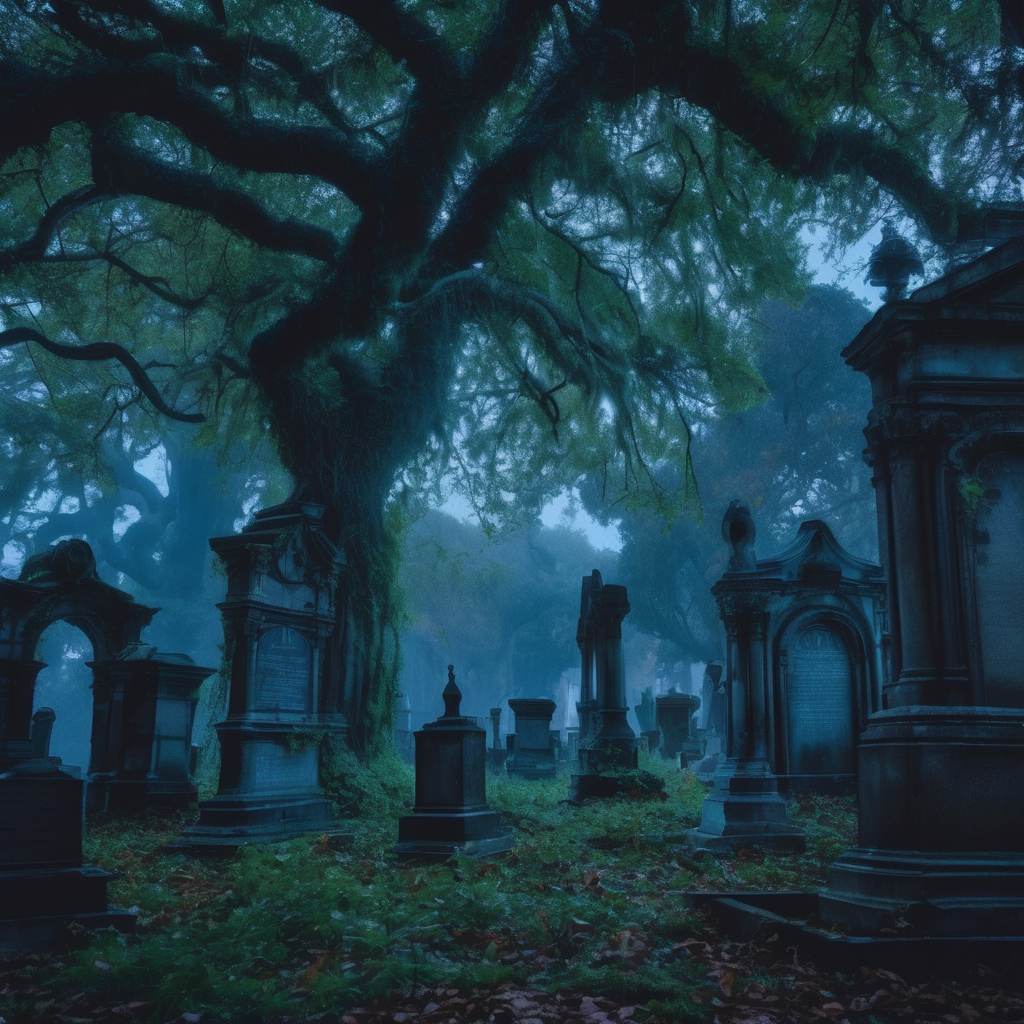
She spent the week visiting places that had mattered to them both. The botanical garden where he’d first explained how sorrow pooled in low places like morning fog. The bridge where he’d mapped the migration patterns of hope as it moved with the changing seasons. The old cemetery where he’d documented how memory accumulated in layers, each generation of mourners adding new strata to the emotional geology.
It was in the cemetery that she found it—not his atlas, but something better. A small brass compass tucked behind a loose stone in the wall where they used to sit and eat sandwiches during their mapping expeditions. The needle didn’t point north; instead, it trembled and danced, responding to currents she couldn’t name.
Following its erratic guidance, she walked deeper into the cemetery than she’d ever ventured. Past the orderly rows of headstones, beyond the newer sections with their geometric precision, into a wild tangle where old graves disappeared beneath decades of ivy and neglect. Here, the compass needle spun frantically, then suddenly went still, pointing toward what looked like empty air between two ancient oak trees.
She stepped forward and felt the world shift.
The cemetery remained, but overlaid with something else—a vast library with shelves that stretched impossibly high, filled not with books but with glowing orbs of every conceivable color. Each one pulsed with its own rhythm, and somehow she knew that each contained something lost, something precious that had slipped between the cracks of the world.
An elderly woman emerged from behind a shelf, wearing a cardigan that seemed to be knitted from starlight. “You must be Elena’s daughter,” she said, as if Lyra’s arrival had been expected for years. “Your father left something for you.”
She led Lyra to a reading table where a familiar leather portfolio lay open. Inside were maps unlike anything she’d ever seen—charts where topographic lines traced the contours of desire, where weather patterns showed the movement of dreams across decades, where X marked not treasure but the precise locations where people had chosen love over fear.
“He finished it just before he died,” the woman explained. “But he said the atlas would only make sense to someone who understood that the most accurate maps are drawn not with instruments, but with empathy.”
As Lyra turned the pages, she realized she was looking at more than her father’s life’s work. She was seeing a inheritance—not just the atlas itself, but the responsibility it represented. The world was full of lost souls wandering territories they couldn’t name, searching for destinations they couldn’t locate. They needed guides who understood that the heart’s geography was as real and navigable as any physical landscape.
She closed the atlas carefully, feeling its weight settle into her hands like a compass finding true north. Outside the library, the regular world waited—her apartment, her dissertation, her ordinary life. But now she carried with her the knowledge that there were other kinds of territories to explore, other kinds of distances to measure.
The woman smiled as Lyra prepared to leave. “Your father wanted you to know,” she said, “that the most important thing any cartographer can do is help people find their way home. Even when they don’t yet know where that is.”
Stepping back through the shimmer between worlds, Lyra found herself once again among the weathered headstones and overgrown paths. But the compass in her pocket hummed with purpose, and she could feel it already—the pull of unmarked territories, the call of hearts that had lost their way and needed someone to help them navigate back to themselves.
The real mapping work, she understood now, was just beginning.


Leave a Reply