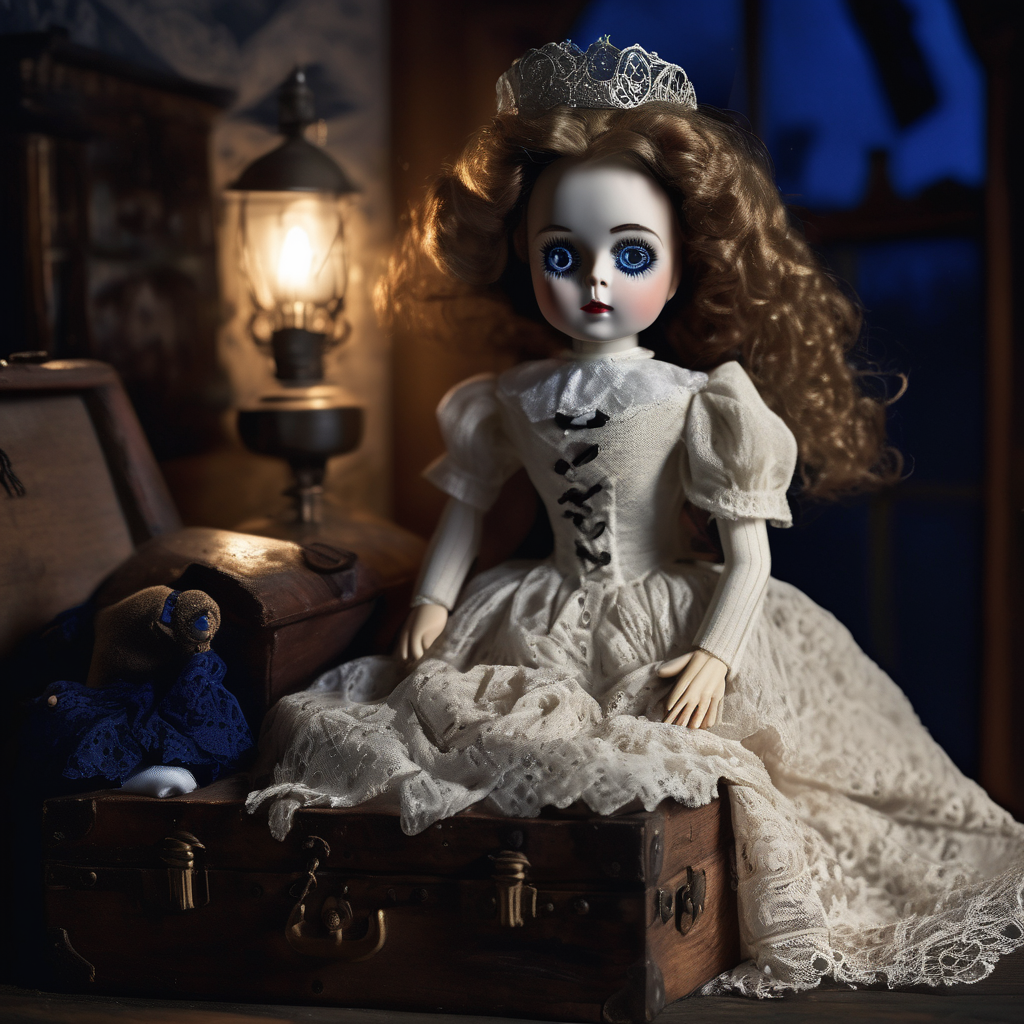
In the cluttered attic of her grandmother’s Victorian home, Elara discovered the doll tucked away in a forgotten trunk. Its porcelain face was flawless, with cheeks blushed like dawn-kissed roses and eyes of deep sapphire that seemed to hold the weight of centuries. She named it Seraphina, though it felt as if the doll had always borne that name, whispering it through the ether.
Elara was a seamstress in a quaint coastal town, where the sea whispered secrets of lost ships and the wind carried echoes of forgotten songs. Lately, the town buzzed with excitement over a traveling exhibit—a collection of antique toys that had gone viral on social media, drawing crowds eager for a touch of nostalgia amid the chaos of modern life. “It’s like stepping into an Eras Tour of childhood dreams,” one visitor gushed, comparing it to the grand spectacles of a famous singer whose concerts blended timelines like threads in a tapestry.
But Seraphina was no ordinary relic. On the first night Elara brought her home, as moonlight filtered through lace curtains, the doll’s gaze locked onto her. Elara felt a pull, a gentle unraveling of reality. Visions flooded her mind: a pink-hued world where dolls danced in plastic paradises, their lives a whirlwind of glamour and reinvention, much like the Barbie craze that had swept the globe, turning toys into icons of empowerment and endless possibility.
Yet the visions twisted darker. Seraphina showed her the shadow side—a barren landscape scarred by fire and ash, where a brilliant mind named Oppenheimer had unlocked forces that could unmake the world. Elara saw mushroom clouds blooming like deadly flowers, a stark warning amid talks of climate change and the urgent call for sustainable futures. “We build dreams, but they can shatter,” the doll seemed to murmur, her eternal gaze reflecting the fragile balance between creation and destruction.
Haunted yet inspired, Elara began sewing dresses for Seraphina, using fabrics woven from recycled threads, each stitch a step toward healing her own frayed mental health. The doll watched, unblinking, as Elara’s creations gained notice—a local challenge on TikTok turned her designs viral, spreading like wildfire across screens. Strangers messaged her, sharing stories of their own heirlooms, weaving a community bound by threads of resilience.
One stormy evening, as thunder echoed the doll’s silent prophecies, Elara realized Seraphina’s gaze wasn’t judgmental but guiding. It spanned eras, from whimsical play to apocalyptic warnings, urging humanity to choose wisely. In that moment, Elara placed a tiny crown on the doll’s head, whispering, “Your eyes see forever, but we shape what comes next.” And for the first time, she swore the doll smiled.

Leave a Reply