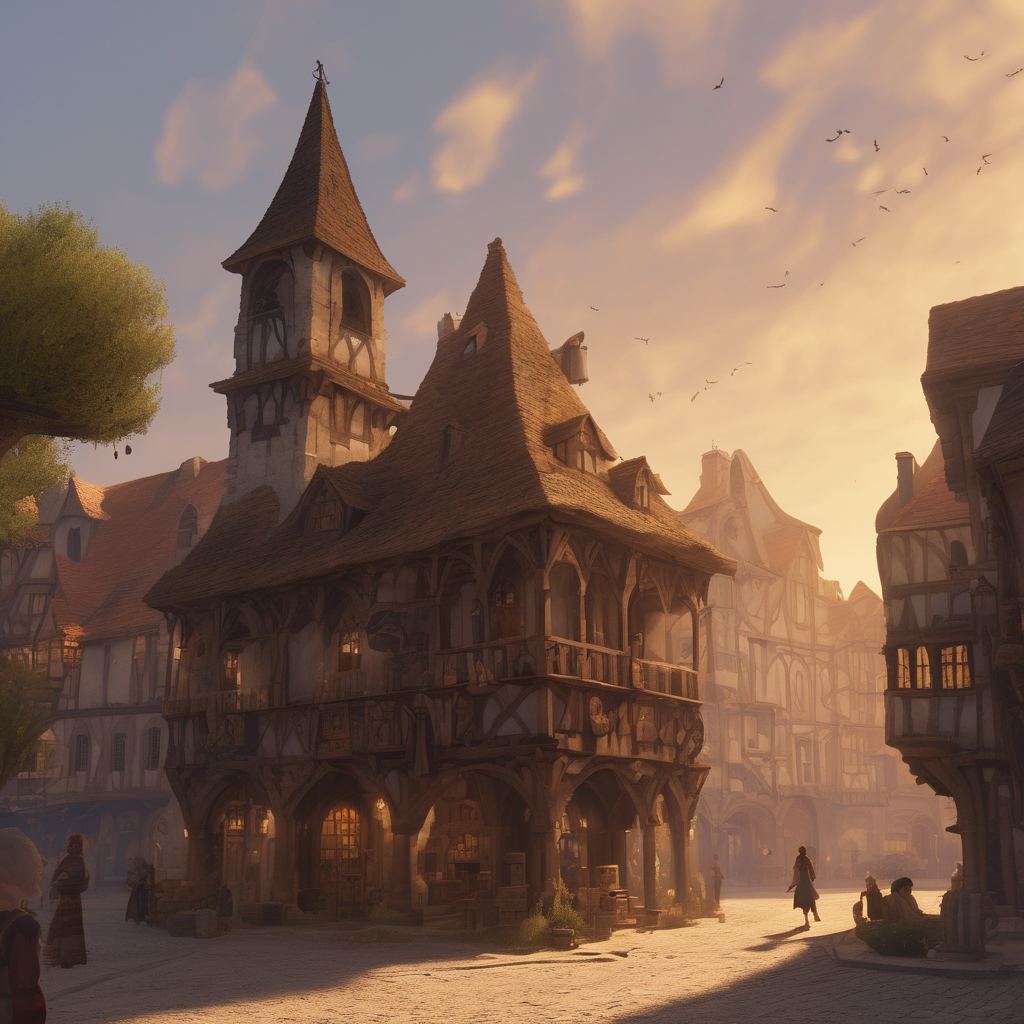
The town of Oakhaven was defined by its dust. It wasn’t the grim sort of city grime, but a fine, golden powder shed from the ancient timber of its eaves and the sun-baked clay of its roads. For generations, it had settled once, in the town’s mythic beginning, and had not been truly disturbed since.
Elara, the town archivist, felt she was in her soft living era. Her days were spent in the quiet company of scrolls, cataloging civic records so old the ink had turned the color of rust. The town’s collective philosophy was a form of quiet quitting on the world’s clamor. They had found their peace and intended to keep it.
Then Kael arrived.
He walked with a glaring main character energy, his coat always catching a breeze that didn’t seem to touch anyone else. He spoke of new possibilities, of waking from a long slumber. He told the baker his bread could be a legend, the weaver her tapestries could hang in foreign palaces. Within a week, the golden dust of Oakhaven was in constant motion.
Elara found herself in a strange, undefined situationship with him. He would appear at her archives, leaning against a centuries-old shelf, and speak of her potential until her head spun. He was intoxicating. But sometimes, when he smiled, a shadow in his eyes wouldn’t smile with him. A red flag, fluttering in the back of her mind.
He started dismissing her gentle warnings about tradition, about the town’s fragile balance. “You’re just afraid of the new narrative,” he’d say, his voice a soothing balm that made her question her own perception. She realized, with a jolt, that he was gaslighting the whole town, convincing them their contentment was a failing. And the worst part was, they were buying it. They were all a bit delulu, high on his promises of a grand new era.
After a few dates that felt more like recruitment meetings, Elara felt a profound and sudden aversion. It wasn’t one thing he did, but the accumulation of all of them. It gave her the ick, a deep, instinctual revulsion.
Kael declared the time was ripe for the “great awakening,” the promised vibe shift. He gathered the townsfolk in the square, promising to manifest their ambitions. He chanted words that had no history in Oakhaven’s archives, and a strange, green energy pulsed from his hands.
But the shift was not what anyone expected. It wasn’t inspiration that rained down, but a greedy, frantic hunger. The baker began hoarding flour, snarling at anyone who came near. The weaver tore apart her finest work to keep the threads for herself. The gentle townsfolk, one by one, devolved. Their eyes grew wide and feral, their movements sharp and selfish. They scuttled through the streets, grabbing at shiny pebbles, muttering to themselves, hiding their meager new treasures in hollow logs. Kael had not ushered in an era of greatness; he had plunged the town into goblin mode.
Horrified, Elara ran to the archives, the only place still untouched, its heavy door a bulwark against the chaos. Kael had preyed on their desire for more, and in doing so, had stripped them of everything they were. He stood in the square, laughing, the lord of a town of grasping, gibbering shadows.
Elara knew she couldn’t fight his magic with more magic. She had none. All she had was the dust. The memory.
She climbed to the belfry of the archive tower, a place no one had entered for a hundred years. With a monumental effort, she pulled the stiff rope of the oldest, deepest-toned bell. It was not a clang of alarm but a low, resonant hum that vibrated in the bones, a sound that had not been heard since the town’s founding.
It was an IYKYK sort of magic, a frequency only the true heart of Oakhaven could recognize.
Down below, a woman who had been trying to cram her neighbor’s porch gnome into her satchel paused. She looked up, her eyes clearing for a moment. The baker stopped guarding his flour, his shoulders slumping. The hum was a memory of shared bread, of festivals, of quiet evenings. It spoke not of individual glory, but of collective peace.
Kael’s laughter faltered. His power was built on noise, on hype, on individual ego. The bell’s deep, unifying tone was its antithesis. As the hum spread, his form flickered, the green energy around him sputtering out. The townsfolk slowly stood up straight, looking at their grimy hands and the strange, hoarded trinkets spilling from their pockets with shame and confusion.
Kael vanished, not in a flash of light, but like a story you forget halfway through telling. He simply wasn’t there anymore.
A new quiet descended on Oakhaven. A wind, gentle this time, stirred the streets. And for the second time in its long history, a fine, golden dust settled over everything. It was the same dust, but it felt heavier now, filled with the weight of a lesson learned. It was the dust of memory, the dust of community, the dust that had returned to claim its own.

Leave a Reply