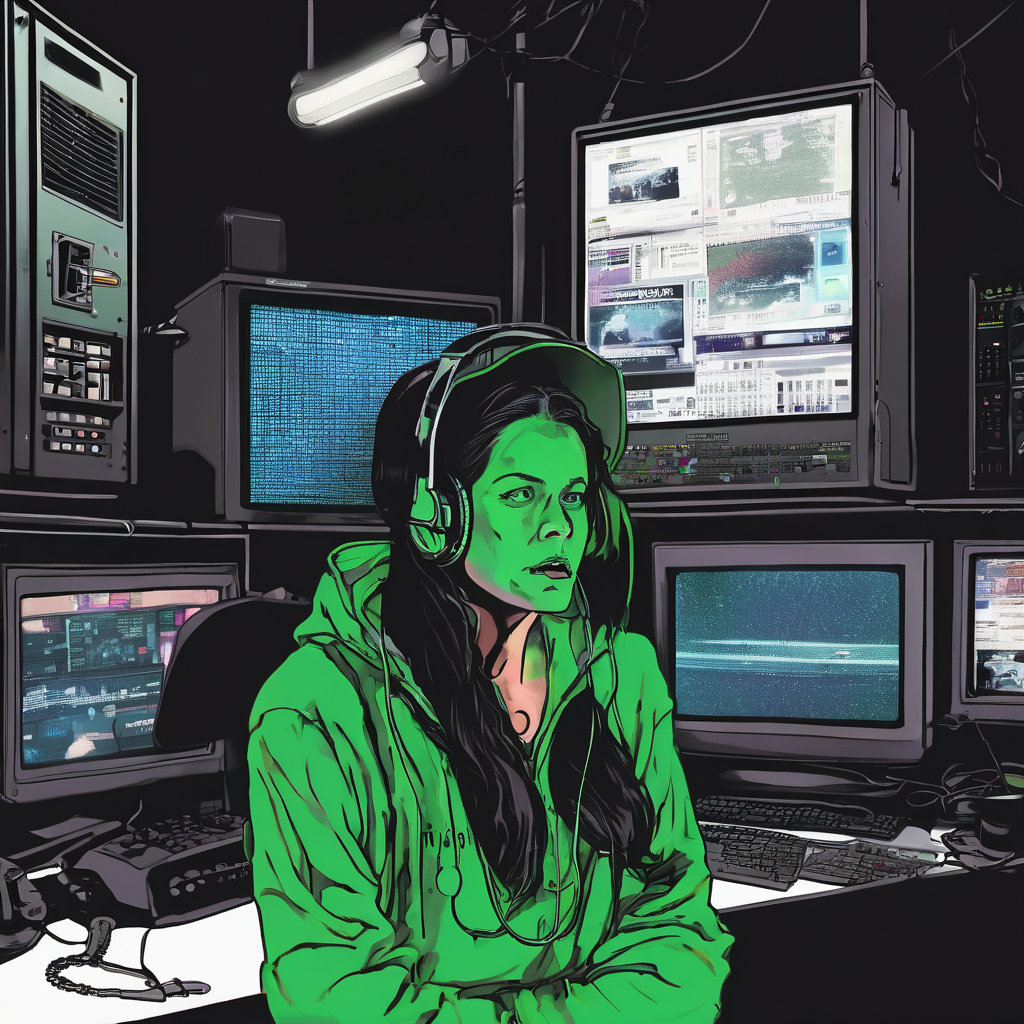
The fluorescent lights buzzed like trapped flies above Marla’s head as she settled into the cramped booth at Channel 13. Three AM to seven AM, Monday through Friday—the graveyard shift that nobody wanted, broadcasting old westerns and infomercials to insomniacs and shift workers across the valley.
She’d been working nights for six months now, ever since the divorce finalized and she needed the extra income. The station manager had warned her about the peculiarities of overnight broadcasting, but she’d assumed he meant technical difficulties or equipment failures.
On her first night, she’d noticed the viewer call-in log contained entries written in handwriting that predated her employment by decades. Names like “Eugene Hartwell” and “Dorothy Mae Sullivan” appeared regularly, requesting specific episodes of shows that hadn’t aired since the 1960s. When she asked her supervisor about it, he’d shrugged and said some folks were just creatures of habit.
By the third week, Marla started recognizing patterns. Every Tuesday at 3:17 AM, someone would call requesting “The Midnight Matinee,” a horror movie showcase that the station had cancelled in 1978. The caller never left a callback number, and the voice—always the same voice—had a hollow quality that made her skin crawl.
Tonight felt different. The autumn wind rattled the transmission tower outside, and the emergency broadcast system had been acting up all evening, occasionally cutting in with bursts of static that almost sounded like whispered conversations.
At 3:17 AM sharp, the phone rang.
“Channel 13, overnight programming.”
“I’d like to request The Midnight Matinee,” came the familiar hollow voice.
This time, instead of politely explaining that the show no longer aired, Marla found herself saying, “Which film were you hoping to see?”
A pause. Then: “Tonight’s feature is ‘The Living and the Broadcast.’ It’s about a young woman who discovers that some viewers never really stop watching.”
The line went dead. Marla stared at the phone, her pulse quickening. She’d never heard of that title, and the caller had never engaged in conversation before.
She pulled up the programming schedule on her computer. According to the system, she was supposed to be airing a 1953 western called “Riders of the Dawn Valley.” But when she looked at the monitors showing the live feed, the screen displayed something else entirely: a black and white horror film she didn’t recognize.
On screen, a young woman sat alone in a broadcasting booth that looked remarkably similar to Marla’s workspace. The actress bore an unsettling resemblance to Marla herself—the same dark hair, the same nervous habit of tapping her pen against the desk.
The phone began ringing again. Not just her direct line, but all six phone lines lighting up simultaneously. Marla hesitated, then picked up the first call.
“Thank you for playing our request,” said Eugene Hartwell’s voice, though Eugene Hartwell had been dead for thirty-seven years, according to the obituary she’d found in the station’s files weeks ago.
She hung up and answered the second line. Dorothy Mae Sullivan thanked her as well, her voice crackling with static from what sounded like a very old telephone connection.
On the monitor, the actress in the booth was answering phone calls, her movements perfectly synchronized with Marla’s own actions. When Marla reached for her coffee cup, the actress did the same. When Marla stood up from her chair, so did her on-screen counterpart.
The emergency broadcast system crackled to life: “This is a test of the emergency broadcasting system. In the event of an actual emergency involving the convergence of temporal viewing frequencies, please remain calm and continue normal programming until the phenomena passes.”
That wasn’t the standard emergency broadcast message.
Marla looked at the call log on her desk. New entries were appearing in real-time, written in the same faded handwriting she’d been seeing for months: “Thank you for the wonderful programming, Marla. We’ve been waiting so long for someone who could see us.”
Outside, the transmission tower swayed in the wind, its red warning lights blinking in a rhythm that seemed almost like Morse code. The overnight viewers—those who had been calling in requests for decades after their deaths—had found someone who could finally bridge the gap between their world and the airwaves.
Marla realized she had a choice: she could run from the booth and never return, leaving the night shift to someone else. Or she could stay and become the permanent host of The Midnight Matinee, broadcasting to an audience that existed somewhere between memory and transmission, between the living and the static.
She looked at the monitor one more time. The actress smiled and mouthed, “Welcome to the late shift.”
Marla smiled back and reached for the phone as it rang again, ready to take the next request from Channel 13’s most loyal viewers.


Leave a Reply