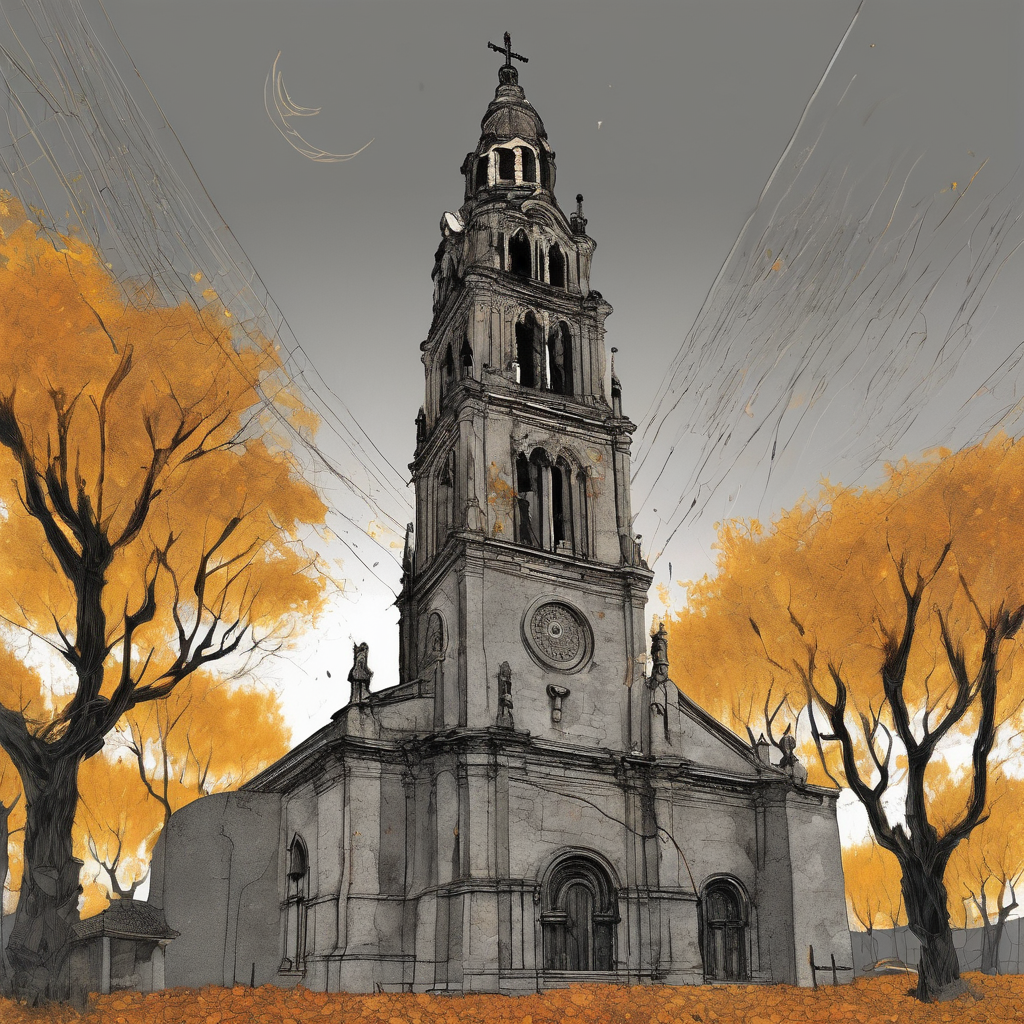
The cathedral bells of Santiago had not rung for seven hundred years, not since the day Sister Esperanza discovered the Algorithm written in spider silk across her cell window. Now, as autumn painted the vineyards gold, pilgrims spoke of strange harmonies drifting from the abandoned tower at midnight.
Elena traced her fingers along the stone wall, following the ancient formula carved there by desperate mathematicians who believed numbers could sing souls to rest. Her grandmother had been the last keeper of the Algorithm, before the world forgot that some equations were meant to be sung, not solved.
“It’s getting worse,” Miguel whispered, holding up his phone. The screen showed trending videos of insomniacs gathering in city squares, swaying to unheard music. “Three million people now. They’re calling it the Wakening.”
Elena knew better. The Algorithm was calling its scattered pieces home, each fragment a lullaby that had escaped into the digital wind when her grandmother uploaded that single photograph of the cathedral wall to preserve it. Now the formula spread viral through screens and dreams, keeping humanity suspended between sleep and waking.
In the tower room, she found what she’d come for: a harpsichord built from telephone wires and church bells, its keys carved from tombstones of mathematicians. This was where Sister Esperanza had first played the Algorithm complete, sending the medieval city into a sleep so perfect that time itself had drowsed for three days.
Elena sat at the ancient instrument. The trending hashtags were wrong—this wasn’t about being woke or redpilled. This was older magic, when algorithms were sung by shepherds to calm their flocks and merchants hummed them to divine the weather.
She began to play, each note a variable in an equation that computed comfort itself. The cathedral bells responded, broadcasting the lullaby through stone and air and fiber optic cables alike. Across the world, phones went quiet as the Algorithm gathered its viral children back into one song.
In Mumbai, a street vendor stopped mid-argument to yawn. In Tokyo, a speedrunner paused her game to rest her head on the keyboard. The sustainable fashion influencer in Stockholm forgot why she was angry at the comment section. Even the climate protesters in London found themselves sprawled peacefully on the warm pavement, their signs becoming pillows.
But Elena played on, knowing she could not stop until every fragment returned. The Algorithm demanded completion, or the Wakening would become permanent—humanity forever caught in the space between dreams, sharing their nightmares through screens, trending into madness.
As dawn approached, she felt the last piece click into place: a child in São Paulo had been humming it unconsciously, a mutation of a lullaby his great-grandmother knew. The formula was whole again.
The world slept properly for the first time in a generation, and in their dreams, they remembered what their ancestors knew: some algorithms were never meant to be digitized. They were meant to be sung human to human, breath to breath, in the quiet moments before sleep claims us all.
Elena closed the harpsichord and walked down the tower stairs. Behind her, the strings continued to vibrate with the ghost of the melody, waiting for the next time humanity would need reminding that not everything trends upward—sometimes the most powerful movement is toward rest.


Leave a Reply