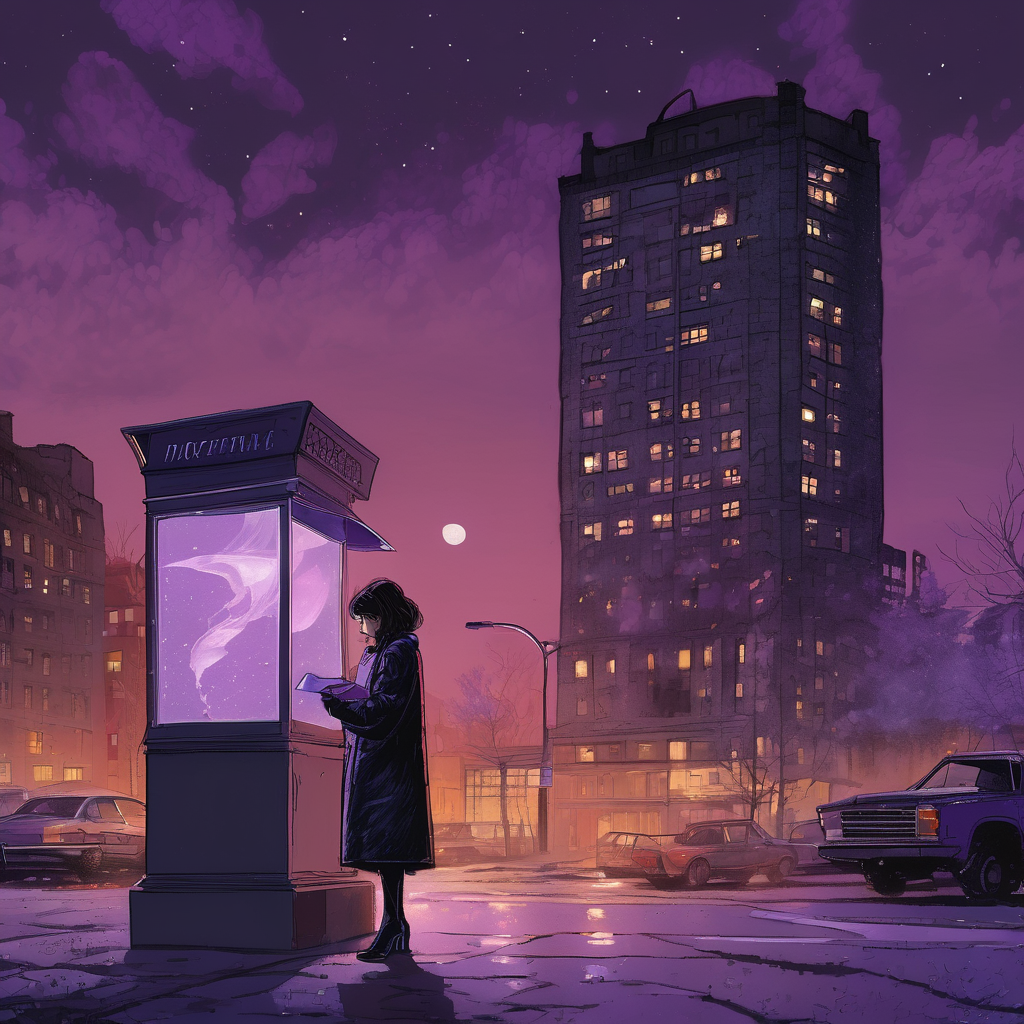
The envelope arrived on a Tuesday, wedged between a water bill and a coupon for sustainable skincare. Marina almost threw it away—no return address, her name written in fountain pen ink the color of dried violets. But something about the weight of it made her pause at the recycling bin.
Inside, a single sheet of paper bore a message in the same purple script:
“Your grandmother’s greenhouse still stands. The moonflowers remember everything.”
Marina hadn’t thought about the greenhouse in twenty years, not since Babushka died and the family sold the property to developers. She’d assumed they’d demolished it along with the house to build those mindful living condos everyone raved about.
That night, she drove past her old neighborhood. Where the condos should have stood, she found only an empty lot—and impossibly, the greenhouse, its glass panels gleaming under the streetlights like scales on some slumbering dragon.
The door opened at her touch.
Inside, the air hung thick with the scent of night-blooming cereus and something else, something that made her think of her grandmother’s hands covered in soil, of summers spent learning which plants could heal and which could harm. The moonflowers—massive white blooms that should have been dead for decades—turned their faces toward her like old friends.
“You came,” said a voice.
A woman stepped from behind a trellis of jasmine. She wore Babushka’s gardening apron, but she was young, maybe thirty, with eyes the same violet as the ink.
“I’m Vera,” she said. “Your grandmother trained me, though not in the timeline you remember.”
Marina’s rational mind wanted to run, to dismiss this as some elaborate prank, but her feet stayed rooted. “Timeline?”
Vera gestured to the moonflowers. “Every bloom is a doorway. Your grandmother discovered it by accident—or maybe by design. She was always unclear about that. She spent her last years visiting different versions of her life, making small repairs, leaving gifts.”
“That’s impossible.”
“Is it?” Vera plucked a moonflower and handed it to Marina. The moment the stem touched her palm, she saw it all—countless versions of the greenhouse, of herself, of choices made and unmade. In one, she became a botanist. In another, a baker. In yet another, she never left this place at all.
“Your grandmother left you something,” Vera said, producing a seed packet from the apron pocket. “She said you’d know when to plant them.”
Marina examined the packet. Written in her grandmother’s careful hand: “For the garden you haven’t imagined yet.”
“Why now?” Marina asked. “Why reach out now?”
Vera’s smile was sad. “Because in every timeline, this is when you need it most. This is when you’re deciding whether to stay static or grow wild.”
Marina thought of her apartment, her careful life with its meal prep Sundays and color-coded calendar. She thought of the resignation letter saved in her drafts folder for six months. She thought of the art supplies gathering dust in her closet.
“The letter,” Marina said suddenly. “Who sent it?”
“You did. You will. The timeline gets a bit circular here.” Vera moved toward the door. “The greenhouse will be gone by morning. It only appears when someone needs to remember who they could be.”
Marina clutched the seed packet. “Wait—how do I find you again?”
But Vera was already fading, becoming translucent as morning light crept through the glass panels. “You don’t find me. You become me. Or someone else entirely. That’s the point.”
The greenhouse began to shimmer, its edges blurring like watercolors in rain.
Marina ran to her car, the seed packet pressed against her chest. By the time she looked back, there were only the condos, ordinary and solid, with their xeriscaped yards and solar panels.
At home, she opened the packet. Inside, seeds unlike any she’d ever seen—iridescent, shifting between purple and silver in the light. The packet’s interior bore one more message:
“Plant under the new moon. Water with intention. Harvest wonder.”
Marina quit her job the next day. She rented a small plot at the community garden, the one that had just started accepting applications for their rewilding project. She planted the seeds under a dark sky, whispering hopes into the soil.
They grew into something impossible—flowers that bloomed in colors that didn’t have names, that attracted butterflies with wings like stained glass, that produced fruit tasting of memories and might-have-beens.
People began to come, drawn by word-of-mouth and social media posts they couldn’t quite explain. They left with cuttings, with seeds, with stories of what they saw in the petals.
And sometimes, late at night, Marina thought she glimpsed Vera tending the rows, or maybe herself, or maybe her grandmother, all of them tending the same eternal garden, growing wild across infinite possibilities, delivering letters to those who needed to remember that even the most ordinary mailbox could hold an invitation to bloom.


Leave a Reply