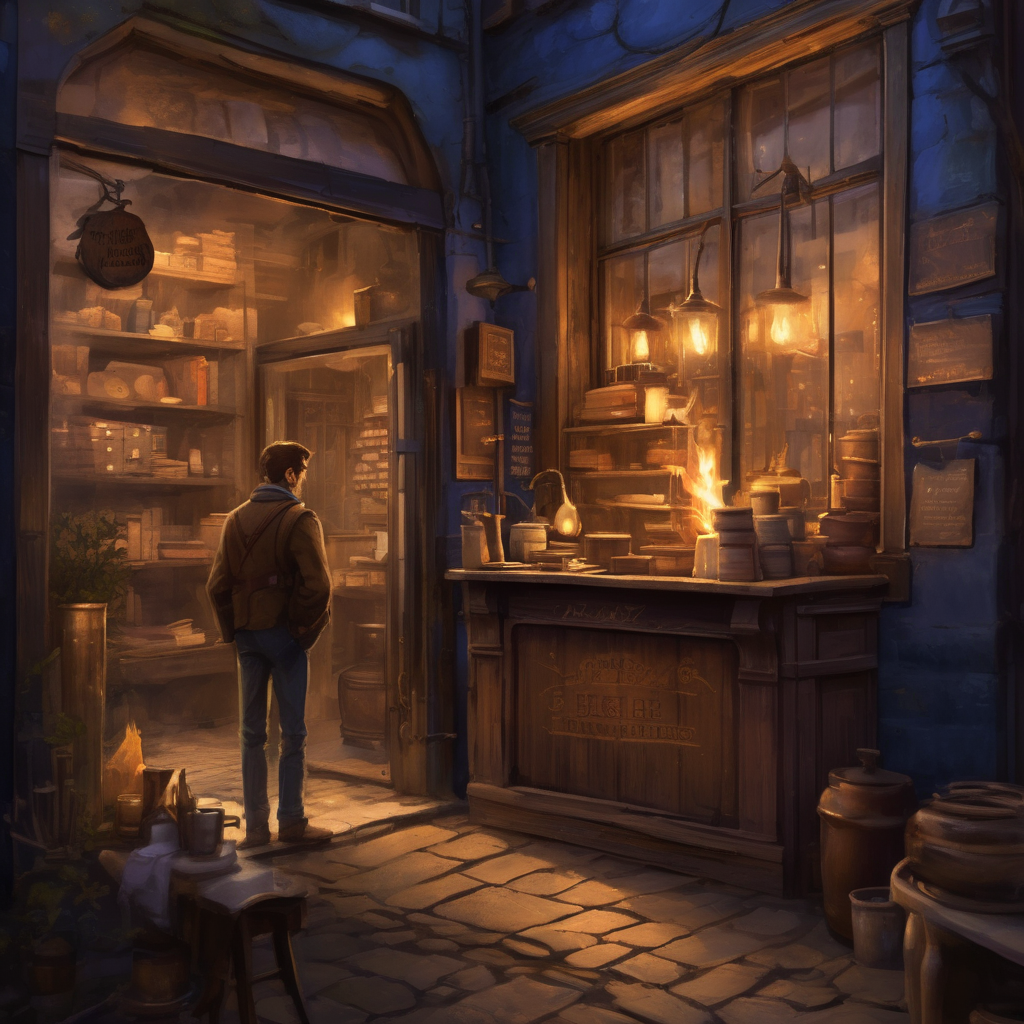
The smoke from the alley smelled of soot and regret. Elara clutched the lacquered box to her chest, its contents a dead weight against her ribs. Her apartment, a study in quiet luxury with its worn velvet and aged brass, had felt like a cage for weeks. Every book held a ghost, every teacup a memory.
“You have to see him,” Amelie had said, snapping her fingers. “It’s the only way to officially end this sad-girl era.”
It wasn’t a relationship, not really. Amelie had called it a ‘situationship,’ a word as flimsy and undefined as the thing itself. Two months of shared glances, half-promises, and breathless letters from Julian, a cartographer who wrote about coastlines as if they were lovers’ spines. And then, silence. A profound, echoing void.
The address Amelie had given her led to a sliver of a shop wedged between a dreaming bakery and a dozing bookbinder. The sign, painted in faded gilt, was just a single, stylized flame. Inside, a man sat at a heavy oak desk, meticulously sorting what looked like scorched butterflies but were, on closer inspection, fragments of burnt paper. He wasn’t old and stooped as she’d imagined. He was young, with kind eyes and fingers stained the colour of midnight.
“You’re here about the letters,” he said. It wasn’t a question.
Elara nodded, placing the box on his desk. He didn’t open it. “The process is simple. You tell me why they must be unwritten. Not the story of what happened. The reason it must be ash.”
“He left,” she said, the words thin. “He just…stopped.”
The man smiled gently. “That’s the story. Not the reason.” He gestured to a small, pot-bellied stove in the corner, glowing with a low, internal heat. “The fire needs a truth to feed on.”
Elara hesitated. She had rehearsed the grand betrayals, the dramatic exits. But the truth was smaller, more humiliating. A foolish, delulu hope clung to her that if she just said the right words, Julian might reappear.
“I still read them,” she confessed, her voice a whisper. “I rearrange the words in my head. I look for clues, for loopholes. I think if I can just understand the prose, I can change the ending.”
“Ah,” the man said, his eyes crinkling. “A common affliction. But still not the root. Look deeper. Past the hope. What was the moment the dream cracked?”
She squeezed her eyes shut, pushing past the memory of his hand on her back, past the scent of his cologne on her scarf. She landed on a different memory, one she had tried to bury. A dinner, late one evening. Julian, so charming, so eloquent, telling a story. And then he’d done it—he’d mimicked, with cruel precision, the stutter of a man at a nearby table. It was a fleeting, ugly moment, but in that instant, she had felt it. A sudden, visceral wave of… she didn’t have a word for it then, but Amelie had supplied it later. The ick. A feeling so profound it was like a physical revulsion, a key turning backward in a lock. The man she had been writing in her head, the poet of coastlines, could not coexist with this casual cruelty.
“He was unkind,” she said, the words finally solid, real. “To a stranger. For no reason. And I saw him.”
The man nodded, a slow, deep affirmation. “There it is. The unbearable truth.” He finally opened her box. He didn’t read the letters, just lifted them out, their fine cream paper whispering against his fingers. He handed the first one to her. “The fire will take the ink, the paper, the memory attached. It will leave only the lesson.”
One by one, she fed the pages into the stove’s small opening. The smoke that curled out didn’t smell like paper. It smelled of the cheap red wine they’d shared, of autumn rain on cobblestones, of the library where they first met. It was the scent of the whole sad, beautiful mirage turning to nothing. When the last corner of the last page blackened and dissolved, a strange lightness bloomed in her chest.
The man handed her a small, gray stone, smooth and still warm. “A souvenir.”
She walked home as the sky turned the colour of a bruise. The city felt the same, but she was moving through it differently. Back in her apartment, she didn’t light the candles or pour the wine. She went to the kitchen and assembled a meal of oddments on a single plate: a sharp cheddar, a crisp apple, three olives, and a sliver of dark chocolate. It was a strange, solitary collection, something just for her. It was, Amelie would have gleefully declared, a perfect girl dinner. She ate standing by the window, watching the lights of the city begin to prick the darkness. She wasn’t sure what this new era would be, only that it would be her own. The stone in her pocket was no longer warm, but it was solid, a real and definite thing.


Leave a Reply