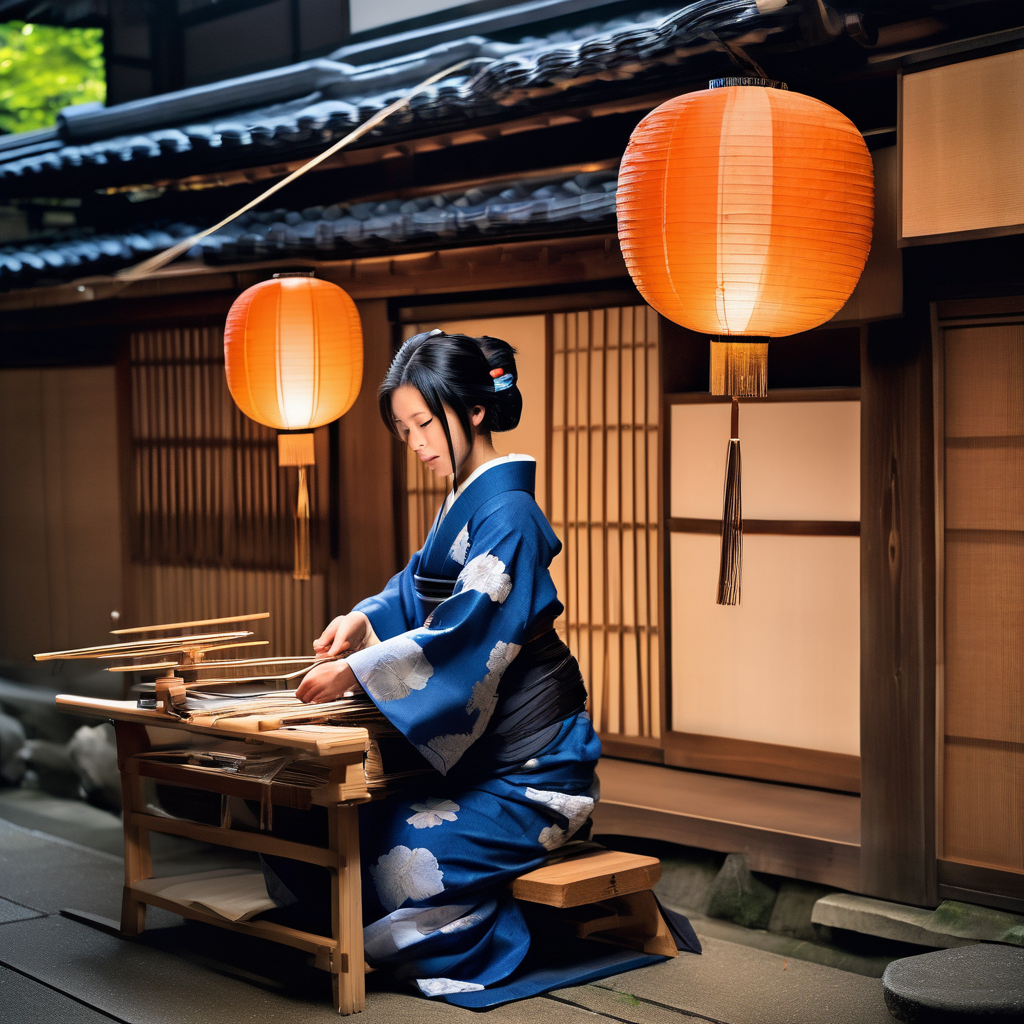
In the narrow alleys of Gion, where geishas flitted like butterflies between teahouses, a young woman named Emiko wove silk fabrics that shimmered like the moon on a clear Kyoto night. She was the daughter of a renowned silk weaver, and her fingers moved with a precision that belied her age as she worked the ancient loom passed down through generations of her family. The soft glow of lanterns cast a warm light on the threads as she dyed them in hues inspired by the cherry blossoms that bloomed in the Philosopher’s Path each spring.
As she worked, Emiko’s thoughts drifted to the wellness retreats that had become popular among the city’s tourists, promising a rejuvenation of body and spirit amidst the serene gardens and tranquil koi ponds. Her own mother had once found solace in such a retreat, returning with a renewed sense of purpose that had guided her through the challenges of raising Emiko alone. The memory of her mother’s stories, infused with the scent of matcha and the sound of shamisen music, filled Emiko’s heart with a deep affection for the traditions that bound her community together.
One day, a stranger arrived in Gion, drawn by the district’s mystique and the promise of an authentic cultural experience. He was a photographer from Brooklyn, captivated by the contrast between Kyoto’s ancient temples and its modern, sustainable architecture. As he wandered the streets, his lens captured the intricate patterns on Emiko’s silk fabrics, displayed in a small shop near the Kamo River. Enchanted by the beauty he saw, he sought out the weaver, hoping to capture the essence of her craft in his next project, a coffee table book celebrating the city’s rich cultural heritage.
Emiko, though initially hesitant, found herself drawn to the photographer’s passion and the stories he shared about his own city’s vibrant street art scene. As they talked, she learned about the influence of Japanese aesthetics on urban artists worldwide, and the way her own culture was being reinterpreted in unexpected, innovative ways. The exchange sparked a collaboration between Emiko and the photographer, one that would weave together their different perspectives into a tapestry as rich and complex as the silk fabrics she created.
Together, they crafted a series of images that juxtaposed Emiko’s traditional weavings with the photographer’s modern eye, set against the backdrop of Kyoto’s timeless landscapes. The project became a celebration of the city’s enduring spirit, a testament to the power of art to bridge the past and the present, and to the beauty that emerged when tradition and innovation were brought together in harmony. As their collaboration unfolded, Emiko’s fabrics began to tell a new story, one that was both deeply rooted in her heritage and open to the influences of a rapidly changing world.


Leave a Reply