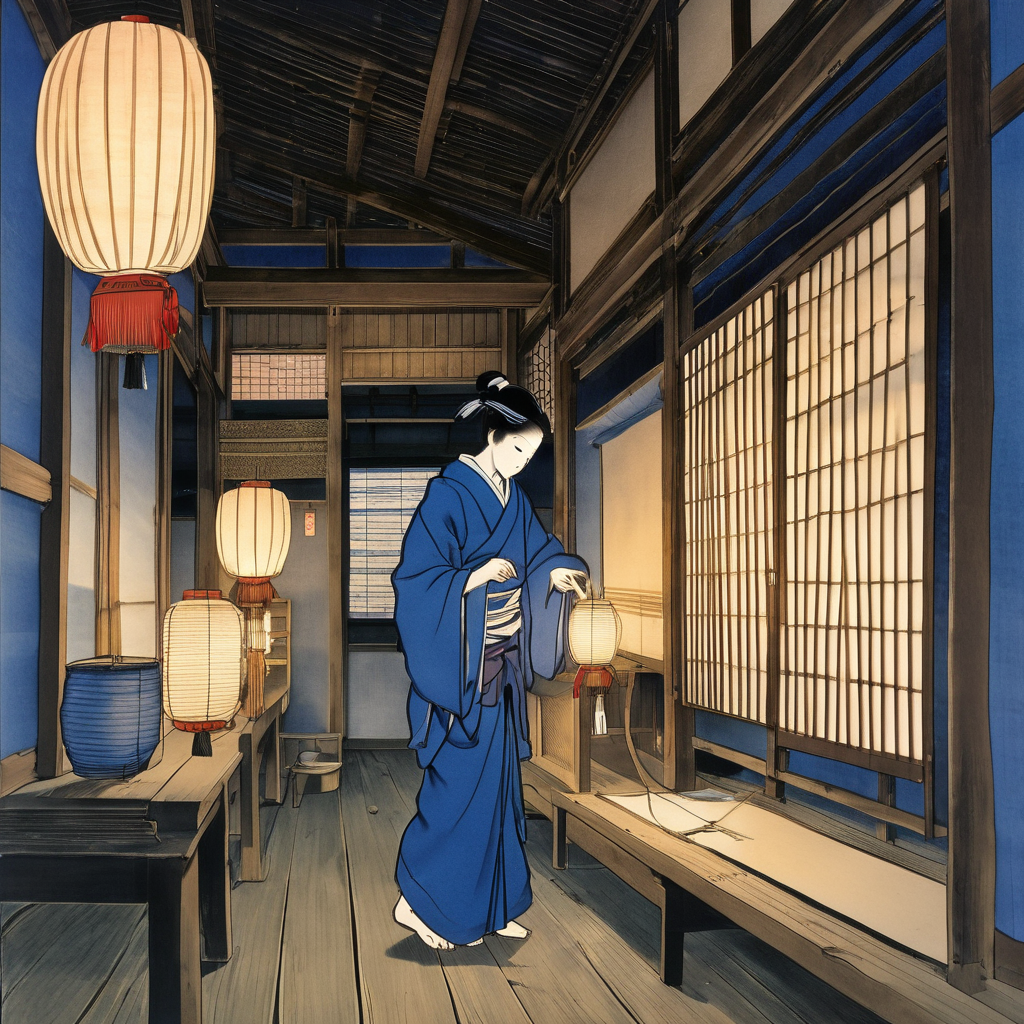
In the fading light of Edo’s twilight, the streets pulsed with a life of their own, as if the very fabric of the city was being rewoven with each passing moment. Amidst the crowded alleys and lantern-lit tea houses, a young silk weaver named Emiko toiled away in her small workshop, her fingers moving with a precision that belied the turmoil brewing within her. The sounds of the city outside – the clanging of swords from the samurai drills, the chatter of merchants hawking their wares, and the distant, mournful notes of a shamisen – blended into a cacophony that was both familiar and suffocating.
As she worked, Emiko’s thoughts turned to the recent edicts issued by the shogunate, restricting the use of certain dyes and patterns in traditional silk weaving, a craft that had been passed down through generations of her family. The restrictions were a thinly veiled attempt to exert control over the burgeoning influencer culture that had taken root among the city’s artisans, who used their unique crafts to build personal brands and amass followings on the nascent social media platforms. Emiko had seen firsthand how these influencers could mobilize public opinion, and she knew that the shogunate’s move was not just about aesthetics, but about suppressing a potential threat to their authority.
The air was thick with the scent of indigo and the soft glow of candlelight as Emiko’s loom clicked away, weaving a narrative of resistance into the very fabric of her creations. Her silks were not just beautiful; they told stories of defiance and freedom, of a world where art and identity were not bound by the strictures of tradition or authority. As the night deepened, Emiko’s workshop became a gathering place for like-minded artisans and creatives, all drawn by the promise of a rebellion that was as much about self-expression as it was about challenging the status quo.
Together, they pored over designs that blended traditional motifs with modern sensibilities, creating a visual language that was both a tribute to their heritage and a declaration of their independence. The movement was gaining momentum, with supporters from all walks of life – from the geisha of the pleasure quarters to the firebrand activists of the city’s underground – rallying behind the banner of creative freedom. As Emiko looked out upon the sea of faces gathered in her workshop, she knew that the true power of their rebellion lay not in its ability to topple the existing order, but in its capacity to reimagine the very fabric of their society.
In the twilight, as the stars began to twinkle over Edo, Emiko’s loom fell silent, but the story it told continued to unfurl, a testament to the enduring power of art to shape the world, thread by thread, moment by moment. The city’s pulse quickened, a rhythm that was both a reflection of the turmoil within and a harbinger of the change that was to come, as if the very darkness itself was being rewoven into a brighter, bolder fabric, one that would soon illuminate the streets of Edo with a light that was both fierce and beautiful.
By
The Silk Weaver’s Rebellion in Edo’s Twilight


Leave a Reply