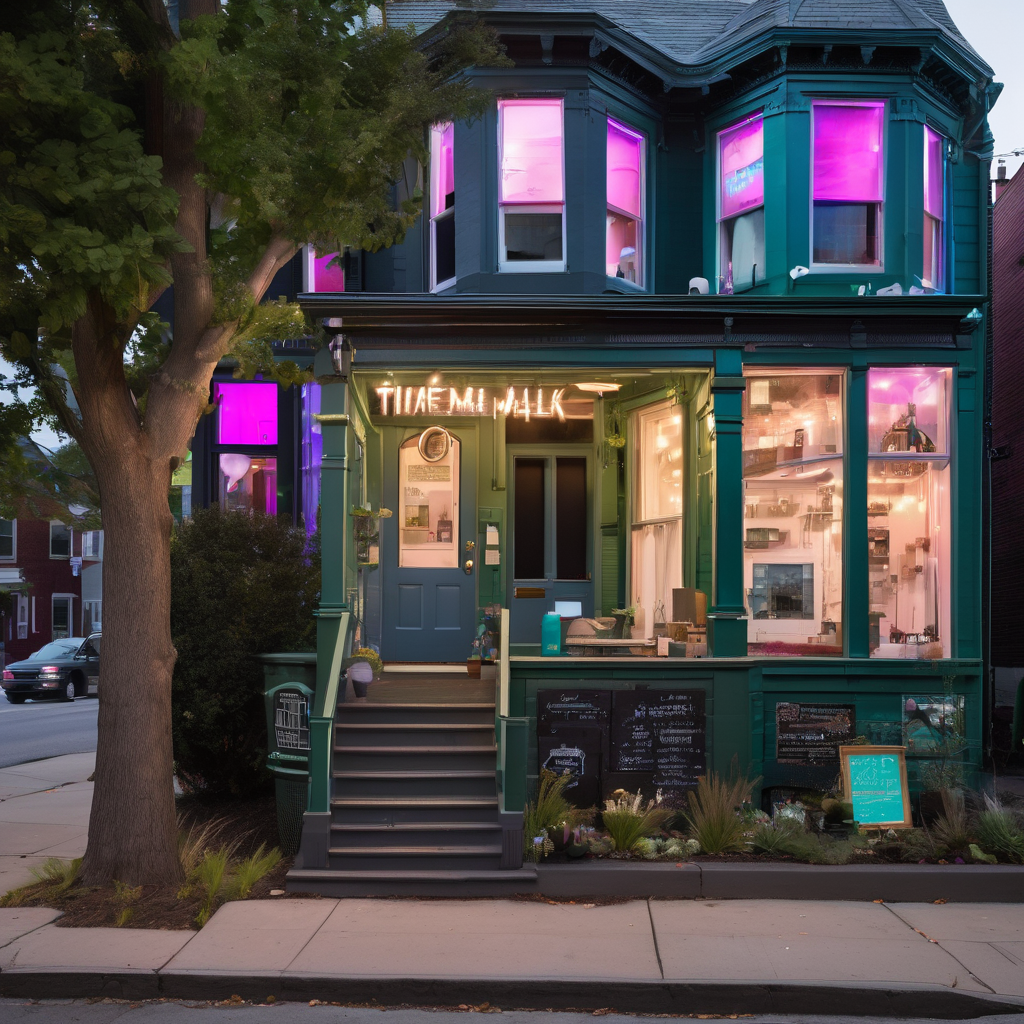
Mrs. Chen’s fingers traced the rim of her teacup as she watched the neighborhood transform outside her kitchen window. Where Mr. Peterson’s rose garden once bloomed, a sleek coffee shop now displayed chalkboard signs promising oat milk lattes and sustainability. The old corner market had become a boutique selling crystals and sage bundles to young professionals seeking wellness through retail therapy.
At ninety-three, she had become the last original resident on Maple Street, her modest house squeezed between renovated Victorians worth more than she could fathom. The developers had been circling for months, leaving business cards in her mailbox like breadcrumbs leading toward an inevitable sale.
“Mrs. Chen?” A voice called from her front porch. Through the lace curtains, she spotted Emma, the yoga instructor from three houses down, holding a casserole dish. Emma had moved in last spring, part of the wave of millennials drawn to the neighborhood’s “authentic character”—though they seemed determined to curate that character into something entirely different.
Mrs. Chen opened the door to Emma’s concerned smile. “I brought you some lasagna. Plant-based, of course. I noticed you haven’t been out to your garden lately.”
The kindness was genuine, Mrs. Chen knew, but it carried the weight of assumption—that she was frail, alone, gradually fading like the last light bulb in an abandoned house. She accepted the dish graciously, invited Emma in for tea.
“This place has such good energy,” Emma said, settling into the worn armchair where Mr. Chen used to read his evening paper. “Very grounding. Though you might consider some feng shui adjustments—maybe declutter a bit? I know a wonderful organizer who specializes in mindful living spaces.”
Mrs. Chen poured the tea, saying nothing about the careful arrangement of forty-seven years of marriage, how each photograph and ceramic figurine held its precise place in the geography of memory. Emma meant well, but she saw only objects where Mrs. Chen saw constellation points in a life fully lived.
“The Hendersons put their house on the market yesterday,” Emma continued. “Cash offers already coming in. This whole area is really blowing up. You could probably get enough to buy somewhere warmer, more age-appropriate.”
That evening, after Emma left, Mrs. Chen sat in her kitchen as darkness settled over Maple Street. One by one, windows lit up in the surrounding houses—the blue glow of screens, the warm yellow of designer pendant lights, the color-changing LEDs that Emma used for her meditation corner. But Mrs. Chen’s kitchen remained illuminated by the same overhead fixture she’d installed in 1976, casting everything in its familiar amber embrace.
She thought about the morning glories that would bloom again in her backyard come spring, how they climbed the same trellis Mr. Chen had built with wood from the old lumber yard. She thought about the loose floorboard in the hallway that creaked in B-flat, and the way afternoon sun slanted through her bedroom window at exactly 3:17, warming the quilt her mother had sewn by hand.
This wasn’t stubbornness, she realized. This was resistance of the most essential kind—not against change itself, but against the assumption that everything old must be swept away to make room for everything new. Sometimes the last light in the window wasn’t a signal of abandonment, but a beacon insisting that some things were worth keeping, worth tending, worth the radical act of staying put.
Mrs. Chen finished her tea, turned off every light except the kitchen fixture, and settled into her evening routine. Outside, the neighborhood hummed with its contemporary rhythms, but inside, time moved at its own pace, measured not in market value or trend cycles, but in the steady persistence of a life refusing to be displaced.
Tomorrow she would tend her garden. Tomorrow she would be here still.


Leave a Reply