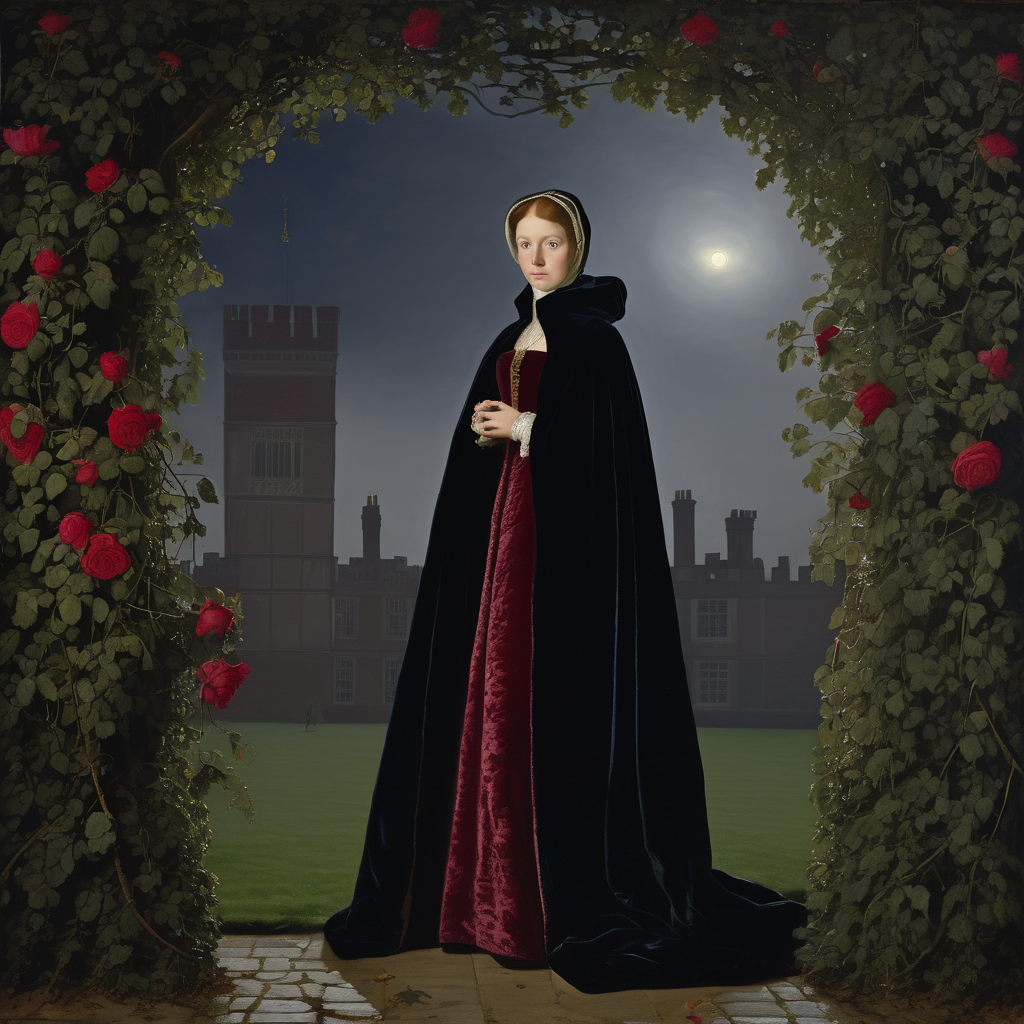
In the flickering torchlight of Hampton Court, where whispers coiled like smoke through the tapestried halls, Lady Elara navigated the perilous dance of ambition and survival. The year was 1533, and King Henry VIII’s court buzzed with the fervor of reform, but Elara, a sharp-eyed ward of a minor noble, had her own quiet revolution brewing. She was no simpering maid; she embodied the unyielding spirit of a girl boss, charting her rise amidst the scheming lords and envious ladies.
Elara’s days began with rituals of self-care, stolen moments in the herb-scented chambers where she steeped in lavender baths to soothe the bruises of courtly intrigue. “One must tend the inner garden before facing the thorns,” she murmured to her reflection, a mantra that fortified her against the endless parades and petitions. But lately, shadows seemed to linger longer, as if the very walls harbored secrets.
It started with a viral rumor, spreading faster than the pox through the privy chambers: Queen Anne Boleyn’s latest gown, a daring ensemble of crimson velvet slashed with gold, was said to enchant the king’s gaze like witchcraft. Elara, ever the opportunist, seized upon it. She had observed how trends at court could topple fortunes— a favored dance, a whispered jest—and she became the unwitting influencer, subtly promoting the style among the ladies-in-waiting. “Wear it boldly,” she advised her confidante, Mira, “and watch how it elevates you above the fray.”
Yet, beneath this glittering facade, unease gnawed at Elara. Sir Reginald, the king’s dour chamberlain, had taken to quiet quitting his duties, vanishing for hours into the labyrinthine gardens, his ledgers left unattended. Whispers suggested he plotted with foreign agents, perhaps tied to the shadowy cabal opposing the king’s divorce. Elara, drawn by curiosity and a budding romance with the handsome captain of the guard, resolved to uncover the truth.
One moonless night, cloaked in a hood of midnight wool, Elara followed Reginald’s spectral form to the old Tudor rose arbor. There, amid the thorny blooms, she overheard fragments of conspiracy: bribes from Rome, forged letters to undermine the Boleyn alliance. Her heart raced as the captain, her secret paramour, emerged from the shadows, his sword drawn not in betrayal but alliance. “I’ve watched him too,” he confessed, his voice a warm anchor in the chill. “Together, we end this.”
In the ensuing confrontation, Reginald’s mask crumbled, revealing a man broken by loyalties divided, his quiet quitting a facade for deeper despair. Elara’s influence proved her weapon; she spread a counter-rumor, viral in its speed, painting Reginald as a loyalist turned by grief, sparing him the axe while exposing the true plotters.
As dawn gilded the court, Elara stood taller, her self-care rituals now shared with her captain in tender, stolen mornings. The shadows receded, but she knew they would return—trends shifted like the Thames’ tides, and in the Tudor court, survival demanded one remain forever vigilant, a girl boss in a world of kings and fools.


Leave a Reply