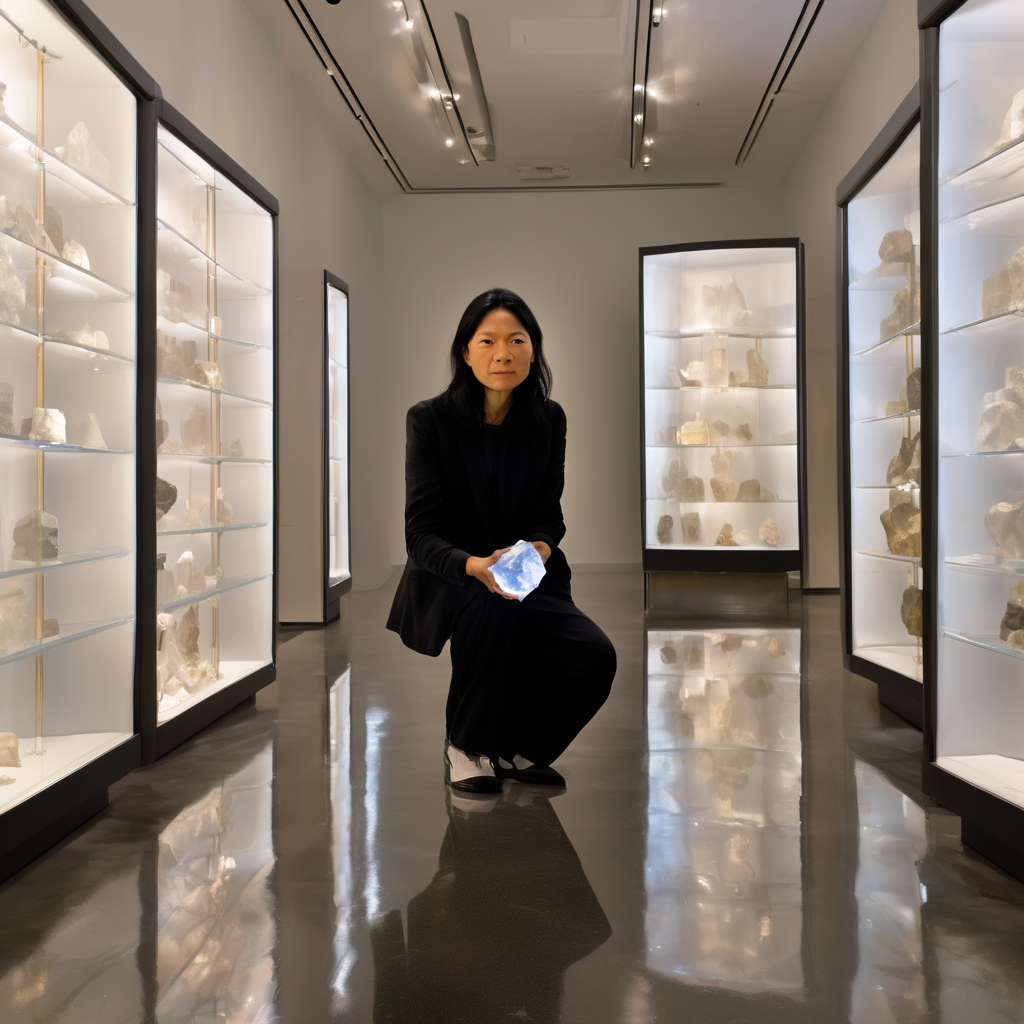
The museum’s newest exhibit arrived on a Tuesday, wrapped in velvet and accompanied by a letter written in fading ink. Margot Chen had been the chief curator for twelve years, but she’d never received anything quite like this—a collection of what the donor called “atmospheric remnants” housed in crystalline vials no larger than her thumb.
The letter, signed by one Professor Elias Blackwood, claimed each vial contained the final breath of someone whose last words had been particularly significant. Margot’s first instinct was to dismiss it as elaborate performance art, but something about the way light bent around the containers made her pause.
The vials were arranged in a mahogany case with brass nameplates. “Virginia Woolf, 1941.” “Oscar Wilde, 1900.” “Cleopatra, 30 BCE.” Each contained what appeared to be ordinary air, though occasionally Margot thought she glimpsed wisps of color threading through the transparency like aurora caught in a bottle.
She decided to display the collection in the museum’s experimental wing, where visitors expected the unusual. The placard she wrote was carefully neutral: “Contemporary mixed-media installation exploring themes of mortality and memory.”
The first visitor to linger at the exhibit was Dr. Sarah Okafor, a linguistics professor from the university. She stood before Virginia Woolf’s vial for twenty minutes, seemingly transfixed. When Margot approached to check on her, Sarah’s eyes were bright with unshed tears.
“I can hear them,” Sarah whispered. “The words. They’re still here, somehow suspended.” She pressed her palm against the glass case. “Against you I will fling myself, unvanquished and unyielding, O Death!”
Margot felt a chill. Those were indeed Woolf’s last written words, but she was certain they weren’t mentioned anywhere on the exhibit information.
Word spread through the city’s academic circles like wildfire. Professors of history and literature began arriving in groups, each drawn to different vials. Dr. Marcus Webb, who specialized in ancient Rome, spent an afternoon weeping before what was labeled as Julius Caesar’s final breath. A Shakespearean scholar claimed she could hear fragments of verse from Christopher Marlowe’s vial, words that had never been recorded in any historical document.
The museum’s attendance tripled within a week. Margot began receiving calls from journalists, documentary filmmakers, and what appeared to be government officials who declined to specify which agency they represented. She also started having the dreams.
In them, she stood in a vast library where the books exhaled whispered conversations. The air itself was thick with final confessions, deathbed revelations, and last declarations of love. She would wake with phrases in languages she didn’t recognize rolling off her tongue.
The mystery deepened when Margot tried to research Professor Blackwood. No university had any record of him. The return address led to an empty lot in London where, according to city records, nothing had been built for over a century. Yet the donation paperwork was legitimate, signed and notarized with all appropriate documentation.
On a Thursday evening, after the museum closed, Margot found herself alone with the collection. The security cameras had mysteriously malfunctioned—not unusual in a building this old, but the timing felt significant. She approached the case and noticed that one vial was glowing with a soft, pearl-like luminescence.
The nameplate read: “Elias Blackwood, 2023.”
Her hands trembled as she opened the case. Unlike the others, this vial was still warm. A note was tucked beneath it, written in the same fading ink as the original letter: “Some collections choose their curators. Listen carefully—these words are only the beginning.”
As Margot lifted the vial, she understood. The collection wasn’t meant to be displayed. It was meant to be released. Each captured breath was waiting to share what had been left unfinished, what had been whispered too quietly for the world to hear.
She uncorked the first vial.
The museum filled with voices—not ghostly or ethereal, but warm and immediate, as if a thousand people were finally being allowed to finish their interrupted thoughts. Last apologies found their intended recipients across centuries. Final poems completed themselves. Love letters that had been cut short by failing hearts delivered their conclusions.
Margot realized she was crying, not from sadness but from the overwhelming rightness of it all. She moved through the collection methodically, opening each vial and setting free the words that had been waiting patient decades and centuries for someone to listen.
By dawn, the vials were empty and clear as mountain air. The voices had faded, but Margot could feel that something had been restored to the world—a balance that had been disturbed by all those unfinished conversations.
She never saw Professor Blackwood, but sometimes, when the museum was quiet, she thought she could hear him humming in the experimental wing. And occasionally, visitors would mention hearing whispers near the empty case, though Margot had long since removed the display.
She kept one vial for herself, saving it for someday far in the future. After all, everyone deserved to have their last words truly heard by someone who would understand their weight.
The empty case remained, with a new placard: “Temporary installation, on loan from a private collection. Current status: Words delivered successfully to their intended destinations.”


Leave a Reply