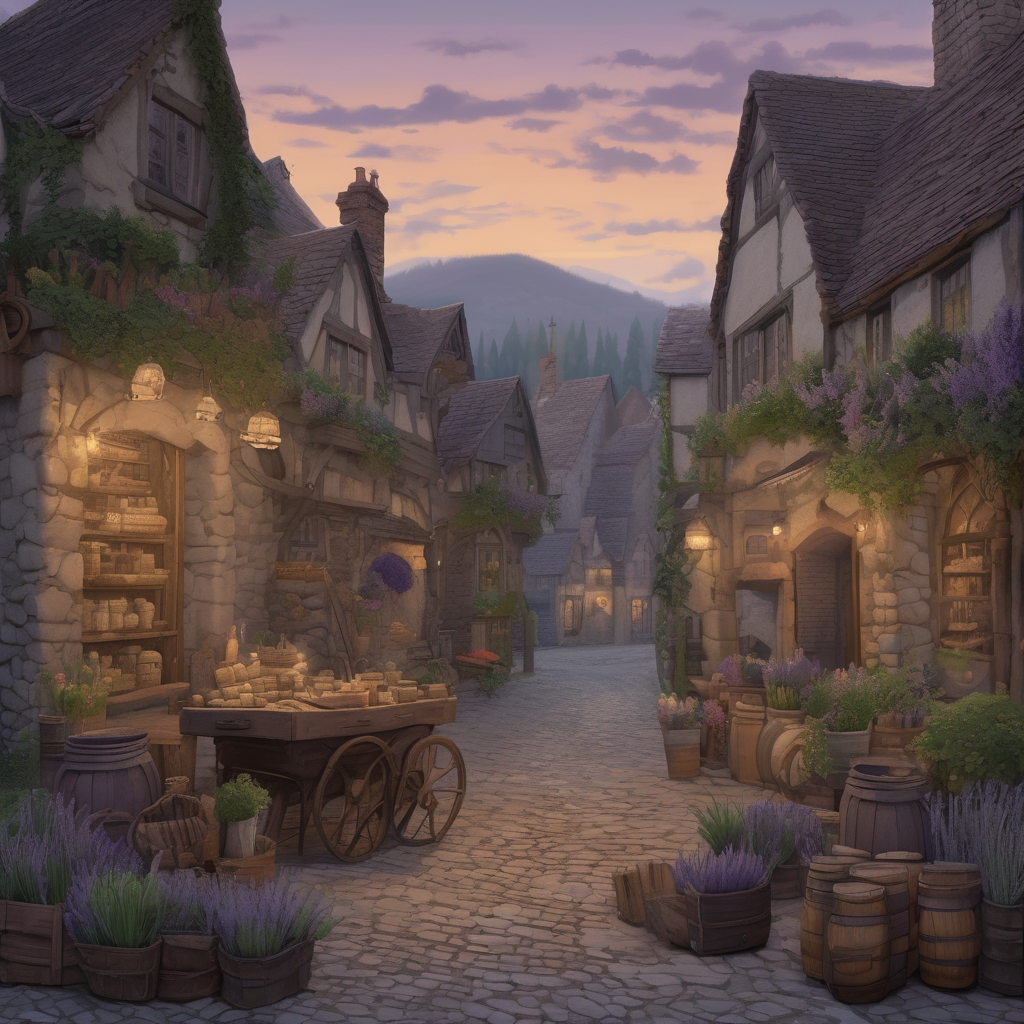
In the town of Amaranth, every day was a masterclass in performative wellness. We lived by the Grand Narrative, woven a century ago on the town’s Great Loom. The story was simple: seven sparrows had sacrificed their song to weave the threads of our prosperity, our peace, our perfect, unshakeable vibe. Our lives were a testament to this founding myth, a meticulously curated cottagecore aesthetic of cobblestone, trailing ivy, and communal contentment.
I was a Mender. It was my job, and the job of my family for generations, to patch the Narrative. When a thread of doubt frayed the tapestry that hung in the town square, or a spot of cynicism dulled its vibrant colors, I would take my bone needle and shimmering floss to restore the official story. “Inhale gratitude, exhale disharmony,” the Elder Council would chant during our mandatory mindfulness hours. It was a good life, a sustainable life, built on the unwavering algorithm of the Loom.
But lately, I’d been quiet quitting on my own belief. I’d go through the motions, mending a scene of bountiful harvest while my own stomach felt hollow with a nameless anxiety. The town had become a perfect echo chamber; we were so obsessed with maintaining the Narrative that we’d forgotten how to have an original thought. The good fortune woven by the seven sparrows felt less like a gift and more like a golden cage.
The trouble began with the lavender. It started growing gray. Then the honey from our famous apiaries tasted of dust. The intricate supply chain of blessings that flowed from the Loom was faltering. The Elders panicked, in their calm and measured way. They blamed the community. “There is a lack of authenticity in your gratitude,” Elder Maeve announced, her voice like smooth river stones. “Your inner narratives are misaligned with the Grand Narrative.”
They were gaslighting the whole town. I saw it in the pinched faces of the bakers, whose bread refused to rise. I heard it in the strained silence of the musicians, whose lutes sounded persistently off-key. The Elders prescribed more mindfulness, longer weaving-admiration sessions, a complete social media fast from the whisper-nets that connected us to other valley towns—anything to reinforce the story that was so clearly breaking down.
One evening, unable to bear the cloying scent of forced optimism in the town square, I retreated to the archives beneath the Loom chamber. It was a dusty, forbidden place, filled with the scraps and failed patterns of past Menders. My fingers, practiced in finding flaws, traced the edges of a forgotten tapestry mappa, one that predated the Loom. It didn’t show seven sparrows. It showed eight. Seven were depicted flying into a swirling vortex of thread, but the eighth was shown flying away, a single, dark thread trailing from its leg like a broken tether.
A story surfaced from a place deeper than memory—a nursery rhyme my grandmother used to hum, one that had been officially discouraged for its “lack of productive focus.” *Seven birds for the weaving bright, one for the long and lonely night.*
The next day, I didn’t report to the Loom. I went instead to the Broken Spire, the one place in Amaranth the Narrative didn’t touch. There lived Old Man Hem, a relic from a time before the aesthetic was perfected. His face was a roadmap of genuine, un-mended sorrows.
“They’re looking for you, Mender,” he rasped, not bothering to look up from the small wooden bird he was carving.
“The sparrows,” I said, my voice tight. “What happened to the eighth sparrow?”
He finally looked at me, his eyes a startling, clear gray. “What happens to any creature that refuses to become part of the machine? The one that chooses the sky over the story? The seven were a sacrifice. A battery. Their song wasn’t a gift; it was fuel, drained from them to power the Loom. Our sustainability is not a blessing, it’s a parasite.”
The truth landed with the force of a physical blow. Our entire history, our identity, was built on a foundation of torture and theft. The generational wealth of Amaranth was a generational trauma inflicted on seven stolen souls.
“The eighth,” Hem continued, his voice softening, “the eighth broke free. It refused to be woven in. It chose a real life, however short and hard, over an eternal, false narrative. And in doing so, it left a flaw in the system. A bug in their perfect algorithm. The Loom has been running on borrowed time ever since. Now, the battery is dying.”
I returned to the town square as the sun set, casting long, menacing shadows. The Elders had gathered the whole town. In the center of the square, in a small wicker cage, was a sparrow. It was a young thing, its chest pulsing with terror.
“A new thread is needed!” Elder Maeve proclaimed. “We must have a volunteer to renew the Narrative! To offer this gift to the Great Loom and restore our harmony!”
They wanted to do it again. They would sacrifice this small, vibrant life to patch their failing magic, to keep their comfortable lie alive for another generation. They were looking for a hero, someone with main character energy to step forward and feed another soul to the machine.
I walked through the silent crowd, my bone needle in my hand. I could see the path they wanted me to take: up the dais, a solemn nod, a quick and painless mending of their monstrous cycle. They expected me to be the good Mender.
Instead, I walked past the dais, past the glowering Elders, right to the Great Loom itself. The tapestry was dull, the faces of the seven sparrows within it barely visible, their woven bodies contorted in silent screams I could now finally see. I didn’t mend their story.
I took my needle, the one meant for repair, and I did the opposite. I found the central knot, the anchor point of the entire spell. It was gnarled and ancient. I didn’t just cut it. I began to unpick it, thread by thread, reversing the lie with the same patient skill I had once used to uphold it.
The Loom groaned. The air grew cold. The crowd murmured in fear and outrage. The Elders shouted my name, a curse. I kept working. One by one, I unwove the threads that imprisoned the sparrows. With the release of the seventh, the Loom gave a final, shuddering sigh and went utterly still. The magical glow that had bathed Amaranth for a century winked out, plunging the square into the deep, honest twilight of the world.
Panic erupted. But above the noise, I heard it. A small, tentative chirp. The sparrow in the cage. I went to it, opened the wicker door, and watched as it flew, not into the Loom, but up into the darkening sky. It was just a plain brown bird against a plain gray evening. There was no magic, no shimmering thread. It was just a sparrow, flying free. And for the first time in my life, I felt an authentic sense of hope.


Leave a Reply