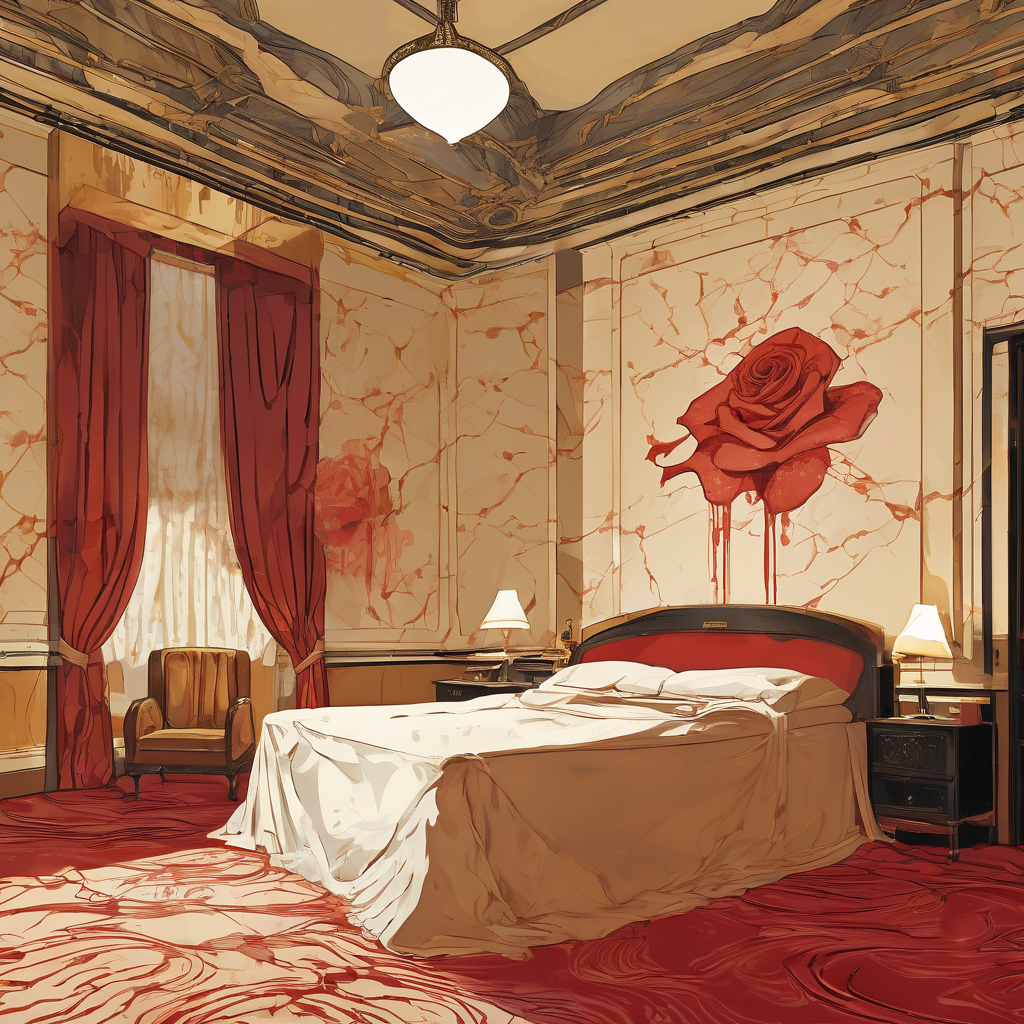
The wallpaper in Room 237 had witnessed everything. Every whispered secret, every broken promise, every desperate prayer offered to the cracked ceiling where water damage formed the shape of a weeping angel. For seventy-three years, the Belmont Hotel had stood on the corner of Mercy and Divine, and for seventy-three years, Room 237 had been collecting confessions like a priest with no power to absolve.
Margaret Thistlewaite arrived on a Tuesday, hauling a carpetbag that smelled of lavender and regret. She was the hotel’s new night auditor, though her real purpose was something else entirely. The Belmont had been losing money for years, hemorrhaging cash like a stuck pig, and Margaret specialized in sustainable transformations—turning dying things into something new.
“Room 237 is off-limits,” the day manager told her, sliding the master key across the marble counter. “Has been since the spring of ’89.”
“Why?”
“Just is.”
But Margaret had never met a door she wouldn’t open.
That first night, while the city slept and the hotel groaned its arthritic complaints, she stood before Room 237 with the key trembling in her hand. The brass numbers had tarnished to the color of old blood. When she turned the key, the lock surrendered with a sigh that sounded almost human.
Inside, the room was pristine. Not dusty or abandoned as she’d expected, but immaculate, as if housekeeping had just left. The bed was made with military precision, its white sheets so bright they hurt to look at. A single red rose lay on the pillow, fresh as morning.
Margaret stepped inside, and the door swung shut behind her.
That’s when she heard it—the confession.
It came from everywhere and nowhere, a voice without a body, telling secrets that weren’t hers to know. A businessman in 1952 who’d murdered his partner and dissolved the body in lye. A senator’s wife in 1967 who’d sold state secrets to buy her daughter’s freedom from a cult. A child in 1981 who’d started the fire that killed her entire family, all because she wanted to see if angels were real.
The confessions poured out like water from a broken dam, each one more terrible than the last. Margaret pressed her palms against her ears, but the voices came from inside her skull, behind her eyes, beneath her skin.
“Stop,” she whispered. “Please.”
The voices paused, considering.
“We cannot stop,” they said in unison. “We are the repository. The keeper of truth. Every person who enters this room must leave something behind.”
“I have nothing to confess.”
The room laughed, and the wallpaper rippled like water.
“Everyone has something. Even those who claim mindfulness as their religion, who practice gratitude like a sacrament, who insist they’re living their best life. Everyone has a shadow they’re running from.”
Margaret thought of her sister, dead these twenty years. Of the pills she’d hidden that night, convinced tough love would break the addiction. Of finding her sister’s body the next morning, lips blue as winter sky.
“I killed her,” Margaret said, and the words fell from her mouth like stones. “I killed her with my righteousness.”
The room hummed with satisfaction. Another confession added to its collection.
“But I’m not leaving it here,” Margaret continued, her voice growing stronger. “I’m taking it with me. I’m taking all of them.”
The walls began to shudder. The rose on the pillow burst into flame.
“You cannot—”
“I can. I’m a specialist in transformation, remember? In turning dead things into living ones. And this room, this repository of human shame—it’s the deadest thing I’ve ever encountered.”
Margaret pulled out her phone and began recording, speaking every confession aloud, broadcasting them to her cloud storage, to her social media, to the world. The room shrieked and contracted like a living thing, trying to hold its secrets close, but Margaret was relentless.
“The truth needs air,” she said. “Secrets need light. Confession without possibility of redemption is just another kind of prison.”
The walls began to crack. Plaster rained down like snow. Through the fissures, Margaret could see not the hotel corridor but something else—a vast library of rooms, each one holding its own terrible truths. The entire building was a honeycomb of hidden shame.
“Choose,” the room gasped. “Destroy us and destroy them all. Every confession ever made. Every truth ever spoken. Gone.”
Margaret thought of her sister. Of forgiveness. Of the difference between justice and cruelty.
She stopped recording.
“There’s another way,” she said. “Become something new. Not a repository but a river. Let the confessions flow through you without sticking. Let people speak their truths and then let them go.”
The room considered this. The walls stopped shaking.
“How?”
Margaret smiled. “By remembering that every confession is also a beginning. Every truth told is a chain broken. You’ve been hoarding these stories like a dragon hoards gold, but stories are meant to be shared. Transformed. Healed.”
She pulled out her laptop and began typing, fingers flying across the keys. She would turn Room 237 into something else—a podcast studio, perhaps. A place where people could come to tell their stories, not to be trapped but to be freed. Where mental health wasn’t stigmatized but celebrated. Where authenticity was the only currency that mattered.
The room sighed, and this time it sounded like relief.
“Will you stay?” it asked.
“Every Tuesday,” Margaret promised. “We’ll call it the Tuesday Sessions. People can come and speak their truths, and then they can leave them behind. Really leave them, not have them held hostage.”
The rose on the pillow bloomed fresh and new. The cracks in the walls sealed themselves with gold, like Japanese kintsugi. The room was transforming, becoming something sustainable, something healing.
Margaret’s phone buzzed. A text from the day manager: “What have you done? The whole building is glowing.”
She walked to the window and looked out. The Belmont Hotel was indeed glowing, a soft golden light emanating from every window. In the street below, people were stopping, staring, drawn by something they couldn’t name.
“We’re open for business,” Margaret texted back. “Real business. The kind that matters.”
She turned back to Room 237, which was no longer Room 237 but something new, something unnamed and full of possibility.
“What should we call you?” she asked.
The room considered. “The Confessional,” it said. “But not the old kind. The new kind. The kind where absolution isn’t granted by someone else but discovered within.”
Margaret nodded. Outside, the first tentative knock came at the door. Someone else ready to tell their truth. Someone else ready to be free.
She opened the door to find a young man standing there, tears streaming down his face.
“I heard,” he said. “I don’t know how, but I heard that this is a place where you can finally tell the truth.”
“It is,” Margaret said, stepping aside. “Welcome to your transformation.”
As he entered, the room embraced him with warmth instead of hunger. And for the first time in seventy-three years, Room 237 remembered what it was supposed to be—not a prison for secrets but a doorway to freedom.
The confessions continued, but now they had somewhere to go. Out into the world, transformed into art, into healing, into connection. The Belmont Hotel became famous not for its ghosts but for its radical honesty, its commitment to truth-telling in an age of careful curation.
And Margaret? She kept her Tuesday appointments, sitting in what was once Room 237, listening to the stories people needed to tell. She never recorded them anymore. Instead, she helped people find their own ways to share, to transform, to heal.
The last confession of Room 237 had been its own—that it was tired of being a keeper of shame. That it wanted to be something more.
And in becoming more, it had saved them all.


Leave a Reply