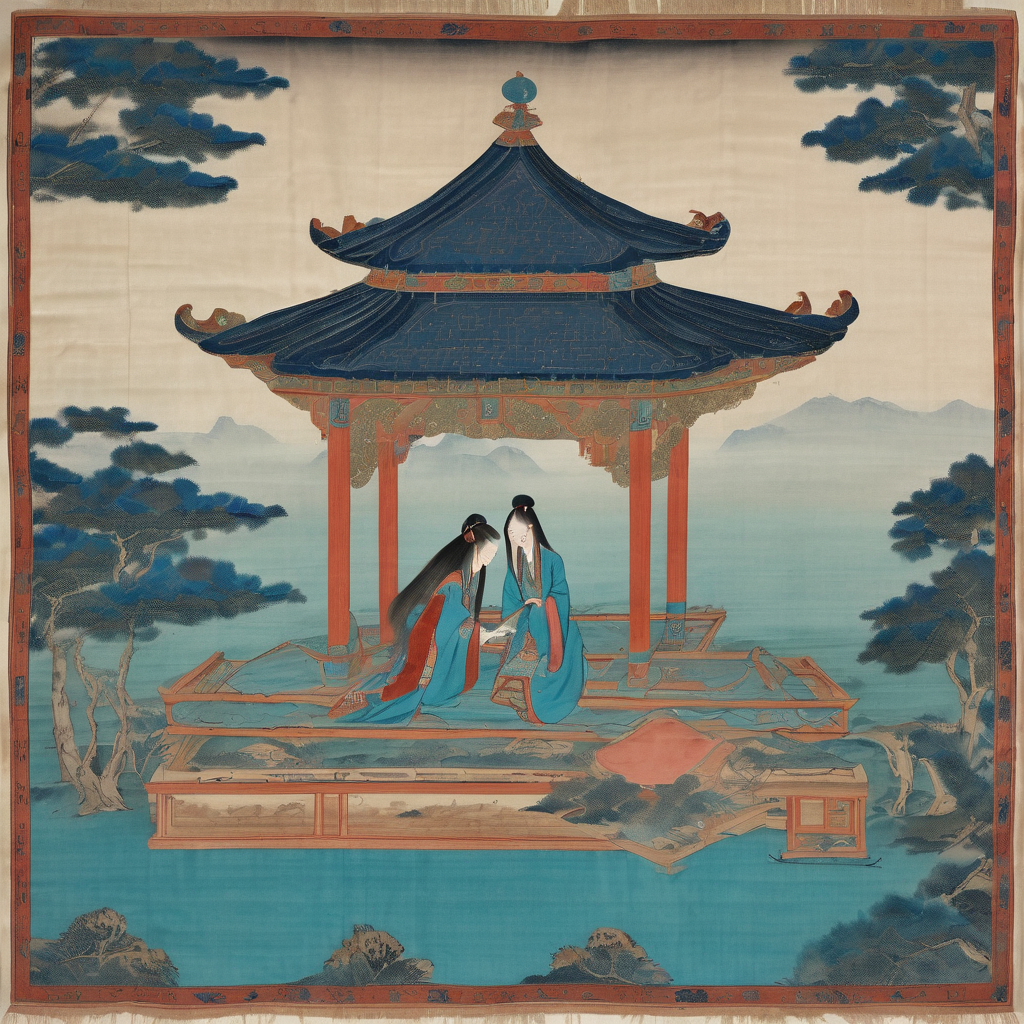
In the mist-shrouded gardens of Xanadu, a young woman named Naranjiya sat cross-legged on a velvet cushion, her slender fingers deftly weaving the finest threads of Mongolian silk into intricate patterns that danced with the essence of the steppes. As the daughter of the revered Silk Weaver to Kublai Khan, she had spent years mastering the ancient art of transforming raw silk into tapestries that told the stories of her people’s nomadic heritage and the mystical connection to the land and the spirits that roamed it.
One day, while collecting rare dyestuffs in the nearby forests, Naranjiya stumbled upon a secluded glade where a group of shamans were performing a sacred ritual to honor the ancient deity, Tengri. Entranced by the hypnotic rhythms and the fragrance of burning juniper, she felt an inexplicable pull to join the ceremony. As she participated in the trance-like dance, her senses merged with the whirling energies, and she began to perceive the hidden patterns that wove the universe together – the same patterns she had been replicating in her silk weavings.
Upon her return to the palace, Naranjiya’s weavings took on a new level of sophistication and depth, as if the essence of the ritual had infused her creations with an otherworldly essence. Kublai Khan himself took notice, commissioning her to craft a grand tapestry that would adorn the walls of his imperial court. As she worked tirelessly, pouring her soul into the masterpiece, the threads seemed to come alive, shimmering with an ethereal glow that captivated all who beheld it.
The Khan, enraptured by the beauty and mystique of Naranjiya’s art, summoned her to his chambers, where he revealed to her the secrets of his own dreams and the mystical longing that drove him to build a vast empire that would unite the warring tribes and bring peace to the land. In that intimate moment, Naranjiya realized that her weavings were not just mere decorations, but doorways to the very fabric of reality, and that she, the Silk Weaver’s daughter, held the power to shape the destiny of the Mongol Empire.


Leave a Reply