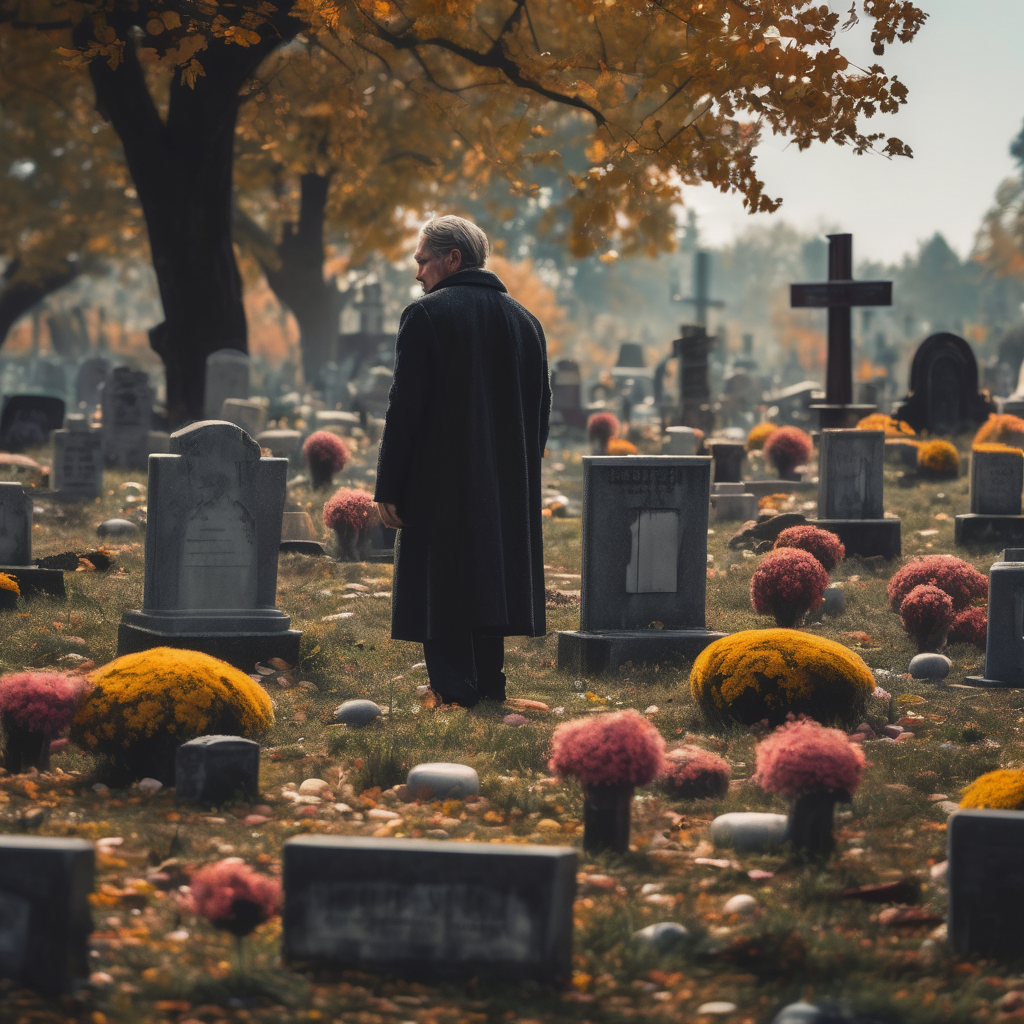
Margot first noticed the peculiar man at the farmers market on a Tuesday morning when the October air still held summer’s dying warmth. He moved between the stalls with deliberate slowness, pausing not at the heirloom tomatoes or artisanal honey, but beside elderly customers who wheezed as they examined produce. When Mrs. Chen from the flower shop began coughing near the dahlia display, he appeared at her elbow with a small glass vial, pretending to admire the blooms while positioning the container near her mouth.
The man wore a charcoal wool coat despite the mild temperature, and his pockets bulged with what sounded like wind chimes when he walked. Margot might have dismissed him as eccentric if not for the incident with the sparrow.
A small bird had fluttered down from the market’s oak tree, landing near the bread vendor’s feet with obvious distress. Its tiny chest heaved rapidly, wings trembling against the pavement. The man in the coat approached immediately, kneeling beside the creature with another vial—this one no larger than a thimble. As the sparrow’s breathing slowed and finally ceased, Margot could have sworn she saw something shimmer between bird and glass, like heat rising from summer asphalt.
The man sealed the vial with a cork stopper and slipped it into his coat with the reverence of someone handling precious gemstones.
Margot followed him.
Through the market’s maze of vendors, past the community garden where morning glories wound around chain-link fencing, and down Maple Street where houses sat shoulder to shoulder like old friends sharing secrets. He turned into Evergreen Cemetery, moving with the familiarity of frequent visits.
Among the weathered headstones and granite angels, the man’s true purpose revealed itself. He walked slowly through the grounds, pausing at fresh graves where flowers still held color and earth remained soft. From his coat, he withdrew vials of varying sizes, each filled with what appeared to be nothing more than air. But as he uncorked them one by one, releasing their contents above the burial sites, Margot felt something profound in the shifting atmosphere.
The cemetery seemed to exhale.
A warmth spread through the autumn air, carrying with it the essence of whispered lullabies and shared laughter, of fierce arguments and gentle forgiveness. The released breaths found their way back to the earth, completing journeys that had been interrupted by death’s abrupt arrival.
The man noticed Margot watching from behind a marble monument. Instead of anger or embarrassment, his expression held only gentle curiosity.
“They don’t always get to finish,” he said, approaching with hands clasped behind his back. “The last breath, I mean. Sometimes it gets caught in traffic, so to speak. Between leaving and arriving where it needs to go.”
Margot stepped from her hiding place. “What happens to them? The breaths you collect?”
“Nothing dramatic,” he smiled. “I simply help them find their way home. Some need to visit loved ones first, carry final messages. Others want to touch favorite places one more time—a childhood bedroom, a garden they tended, a library where they spent countless hours.”
He gestured toward the graves around them. “Eventually, they all return here, to nourish what remains. Death is just another kind of breathing, you see. In, then out.”
As if summoned by his words, a gentle breeze moved through the cemetery, rustling leaves and carrying the faint scent of jasmine from someone’s long-ago wedding bouquet. Margot understood then that she was witnessing not collection, but delivery—a postal service for the space between heartbeats, ensuring nothing precious was ever truly lost.
The man tipped his hat and continued his rounds, coat pockets chiming softly with each step, while Margot remained among the headstones, feeling for the first time the weight and wonder of every breath moving through her lungs.


Leave a Reply